InitiatingEasyQ1
PMP Preparation
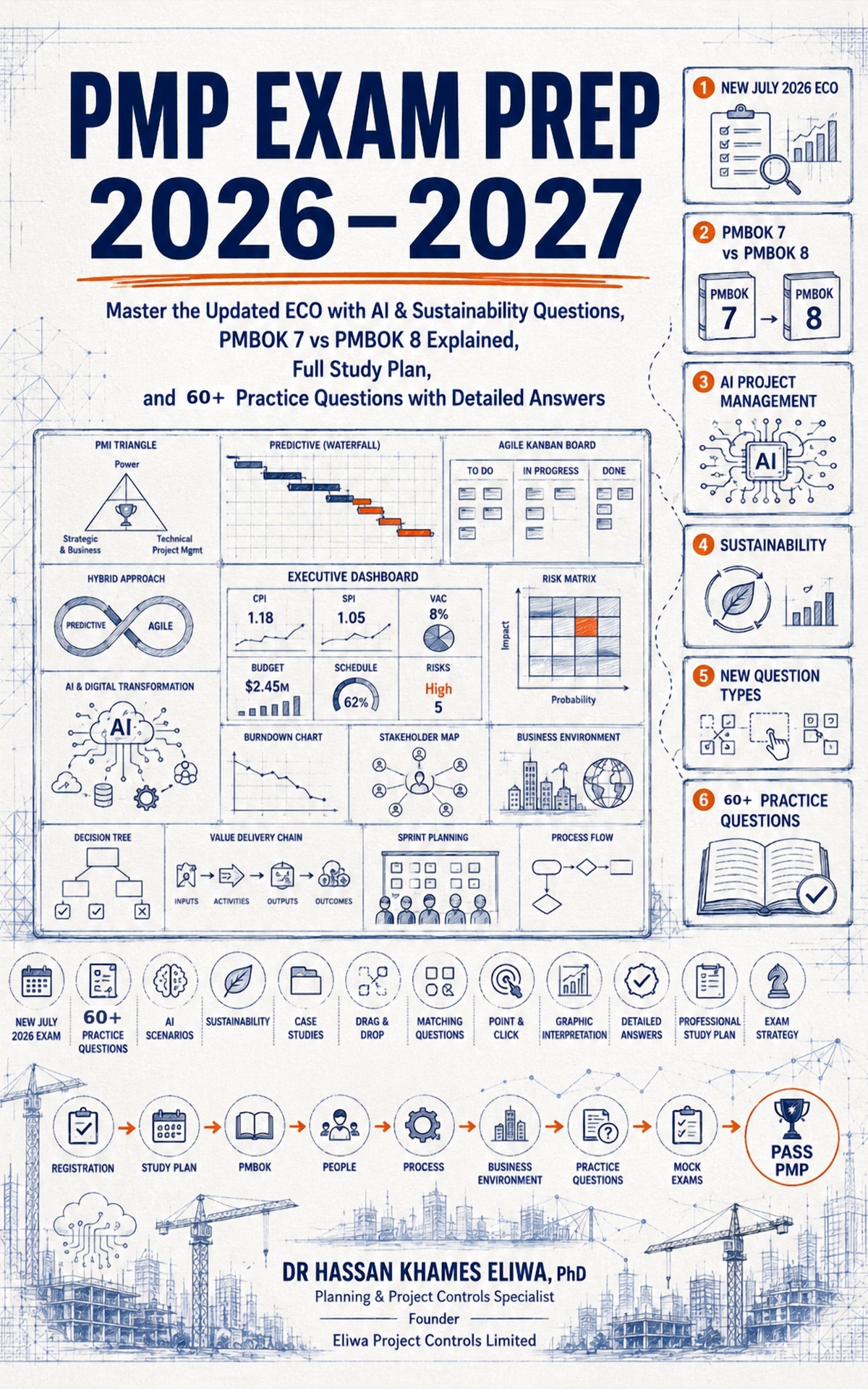
PMP Question Bank — 120+ practice questions
Exam-style questions written by certified practitioners. Each answer includes a worked explanation and is tagged by knowledge area and difficulty.
Last updated · Reviewed by Dr. Hassan Eliwa, PhD
Showing 120 of 120 questions.
InitiatingMediumQ2
Who develops the project charter?
InitiatingEasyQ3
When should the project manager be assigned?
InitiatingMediumQ4
Which output of Initiating is most useful for early stakeholder engagement?
InitiatingEasyQ5
Which document presents the financial justification for the project?
InitiatingMediumQ6
Which is NOT typically part of the project charter?
InitiatingMediumQ7
What is the purpose of the Identify Stakeholders process?
InitiatingHardQ8
An assumption log is started in which process?
InitiatingEasyQ9
Benefits management plan describes:
InitiatingMediumQ10
Which of these is an enterprise environmental factor?
InitiatingMediumQ11
Which of these is an organisational process asset?
InitiatingHardQ12
A sponsor signs the charter but later asks the PM to change a strategic objective. The PM should first:
PlanningEasyQ13
Which document defines what is included and excluded from the project?
PlanningMediumQ14
The WBS is decomposed to the level of:
PlanningEasyQ15
Which technique decomposes scope hierarchically?
PlanningMediumQ16
Which best describes a milestone?
PlanningMediumQ17
Three-point estimating uses which formula (PERT beta)?
PlanningHardQ18
Standard deviation in PERT is calculated as:
PlanningMediumQ19
What is the primary purpose of the network diagram?
PlanningEasyQ20
What is total float?
PlanningMediumQ21
Schedule compression by adding resources to critical activities is called:
PlanningMediumQ22
Fast-tracking primarily increases which risk?
PlanningEasyQ23
Which estimating technique uses statistical relationships between historical data and other variables?
PlanningEasyQ24
Analogous estimating is:
PlanningMediumQ25
Which is the most accurate estimating technique?
PlanningHardQ26
Reserve analysis distinguishes between:
PlanningMediumQ27
Cost aggregation produces:
PlanningEasyQ28
The Plan Quality Management process focuses on:
PlanningMediumQ29
The cost of quality (COQ) includes:
PlanningMediumQ30
RACI is a type of:
PlanningMediumQ31
Communications channels for n stakeholders:
PlanningMediumQ32
Risk appetite is best described as:
PlanningMediumQ33
EMV is calculated as:
PlanningHardQ34
Which risk response transfers ownership of a threat to a third party?
PlanningMediumQ35
Which is an opportunity response strategy?
PlanningMediumQ36
Plan Procurement Management produces:
PlanningHardQ37
Which contract type carries the highest risk for the seller?
PlanningHardQ38
Which contract type carries the highest risk for the buyer?
PlanningMediumQ39
Stakeholder engagement levels are:
PlanningEasyQ40
The Requirements Traceability Matrix links:
ExecutingEasyQ41
Which process focuses on building, developing and managing the project team?
ExecutingMediumQ42
A team is in the storming stage of Tuckman. Best response?
ExecutingMediumQ43
Co-location is most beneficial because it:
ExecutingEasyQ44
Most effective conflict resolution technique is:
ExecutingMediumQ45
Which is a leadership style focused on empowering teams to take ownership?
ExecutingEasyQ46
Quality assurance focuses on:
ExecutingMediumQ47
A key output of Manage Communications is:
ExecutingMediumQ48
Direct and Manage Project Work produces:
ExecutingMediumQ49
Which is the best response to an unidentified risk that materialises?
ExecutingHardQ50
Implement Risk Responses is in which Process Group?
ExecutingMediumQ51
Conduct Procurements output is:
ExecutingMediumQ52
Manage Stakeholder Engagement focuses on:
ExecutingMediumQ53
Which is a tool of Develop Team?
ExecutingMediumQ54
Which Executing process establishes ground rules and team charter?
ExecutingHardQ55
A team member misses repeated commitments. Best response?
ExecutingMediumQ56
Which is NOT a source of team conflict?
ExecutingEasyQ57
What is the difference between motivation and morale?
ExecutingMediumQ58
Tuckman stages in order:
ExecutingMediumQ59
Which Herzberg category includes pay and working conditions?
ExecutingMediumQ60
Maslow places self-actualisation at:
Monitoring & ControllingEasyQ61
Earned Value SPI = ?
Monitoring & ControllingEasyQ62
Earned Value CPI = ?
Monitoring & ControllingMediumQ63
SV = ?
Monitoring & ControllingMediumQ64
CV = ?
Monitoring & ControllingMediumQ65
EAC assuming typical performance:
Monitoring & ControllingMediumQ66
EAC assuming atypical (one-off) variance:
Monitoring & ControllingHardQ67
TCPI to meet BAC = ?
Monitoring & ControllingMediumQ68
VAC = ?
Monitoring & ControllingEasyQ69
Which is NOT a tool of Control Schedule?
Monitoring & ControllingMediumQ70
Variance analysis is performed in which process?
Monitoring & ControllingMediumQ71
Perform Integrated Change Control output includes:
Monitoring & ControllingHardQ72
EV = 80, PV = 100, AC = 95. SPI = ?
Monitoring & ControllingHardQ73
Same data: CPI = ?
Monitoring & ControllingHardQ74
Same data with BAC = 1000. EAC typical = ?
Monitoring & ControllingMediumQ75
Quality control output includes:
Monitoring & ControllingEasyQ76
Validate Scope produces:
Monitoring & ControllingMediumQ77
A control chart shows a run of seven points above the mean. This indicates:
Monitoring & ControllingMediumQ78
Which chart prioritises problems by frequency?
Monitoring & ControllingMediumQ79
Cause-and-effect diagram is also called:
Monitoring & ControllingMediumQ80
Control Risks is now called:
Monitoring & ControllingMediumQ81
Control Procurements key tools include:
Monitoring & ControllingHardQ82
An approved change request requires updates to which baseline first?
Monitoring & ControllingMediumQ83
Forecasting in Control Costs produces:
Monitoring & ControllingMediumQ84
Trend analysis examines:
Monitoring & ControllingMediumQ85
A negative SV with positive CV typically means:
Monitoring & ControllingMediumQ86
BEI (Baseline Execution Index) measures:
Monitoring & ControllingHardQ87
If CPI = 1.0 and SPI = 0.9, the project is:
Monitoring & ControllingMediumQ88
Work performance reports are produced in:
ClosingEasyQ89
Which process formally ends the project?
ClosingMediumQ90
Lessons learned are documented:
ClosingMediumQ91
Final product or service transition occurs in:
ClosingMediumQ92
Procurement closure precedes administrative closure because:
ClosingEasyQ93
Final report is an output of:
ClosingMediumQ94
Knowledge transfer is part of:
ClosingMediumQ95
Cancelled projects still require:
ClosingMediumQ96
Which is NOT typically an output of closure?
ClosingHardQ97
Customer refuses to sign acceptance at closure. PM should:
ClosingMediumQ98
Phase gate review primarily decides:
ClosingMediumQ99
Benefits realisation typically occurs:
ClosingMediumQ100
The single best source of lessons learned is:
Professional ResponsibilityEasyQ101
A vendor offers the PM an expensive gift. Best response:
Professional ResponsibilityMediumQ102
PMI Code of Ethics core values are:
Professional ResponsibilityMediumQ103
You discover a colleague falsified progress data. You should:
Professional ResponsibilityMediumQ104
You are asked to certify a milestone you know is not complete. You should:
Professional ResponsibilityMediumQ105
Cultural difference makes a team member uncomfortable with public praise. PM should:
Professional ResponsibilityHardQ106
A government client demands an undocumented fee for permit. PM should:
Professional ResponsibilityMediumQ107
PMI requires PMP holders to:
Professional ResponsibilityMediumQ108
Fairness in PMI ethics requires you to:
Professional ResponsibilityHardQ109
You are offered a role where you would have to misrepresent your experience. You should:
Professional ResponsibilityMediumQ110
Your project will pollute a local water source legally but unethically. You should:
AgileEasyQ111
Velocity in agile measures:
AgileMediumQ112
Burndown chart shows:
AgileMediumQ113
Product Owner is responsible for:
AgileMediumQ114
Scrum Master role:
AgileMediumQ115
Definition of Done is set by:
AgileMediumQ116
Daily stand-up duration:
AgileHardQ117
Hybrid project: which earned value technique works best?
AgileMediumQ118
Sprint retrospective focuses on:
ProcurementMediumQ119
A bidder conference is used to:
ProcurementMediumQ120
Make-or-buy analysis is part of:
Featured Academy
Featured Academy Learning Pages
The latest Academy tracks and knowledge pillars, sorted newest first.
Learning track
Project Controls Fundamentals
Scope, schedule, cost, risk, quality and reporting — the six disciplines that hold every successful capital project together, taught from first principles.
Read article
Learning track
Earned Value Management
From PV / EV / AC to SPI, CPI, EAC, ETC, VAC and TCPI — the full toolkit for measuring and forecasting project performance.
Read article
Learning track
Planning and Scheduling
Baseline development, critical path, float erosion, recovery schedules and forensic delay analysis — explained for working planners.
Read article
Learning track
Risk and Reserves
Quantitative risk analysis, contingency reserve sizing, complexity scoring and risk-adjusted forecasting for capital projects.
Read article
Learning track
PMP and PMI Foundations
Concept maps, formulas, ITTOs and reference questions that mirror how PMI exams test EVM and project controls knowledge.
Read article
Learning track
Construction Controls
Productivity, labour efficiency, variation orders, subcontractor scoring and field-level reporting tailored to construction.
Read article
Knowledge pillar
Guides and Long-Form Articles
Practitioner-written explainers across EVM, planning, forecasting, risk and PMO design — read as a syllabus or as a refresher.
Read article
Knowledge pillar
Q&A and Exam-Style Questions
Concept questions in the style of PMP / PMI examinations, plus practical scenarios from real construction and PMO environments.
Read article
Knowledge pillar
Interactive Calculators
More than thirty client-side calculators covering EVM, schedule, risk, construction productivity, contingency, PMO maturity and career planning.
Read article
Knowledge pillar
Case Studies and Insights
Auto-synced articles from PMMilestone Intelligence Center bring fresh case studies, failure patterns and project-intelligence commentary into the Academy.
Read article Knowledge pillars
Knowledge pillars across the Academy
Deep-dive pillar articles covering EVM, delay analysis, scheduling, risk and project controls — refreshed on every visit.
Knowledge pillar
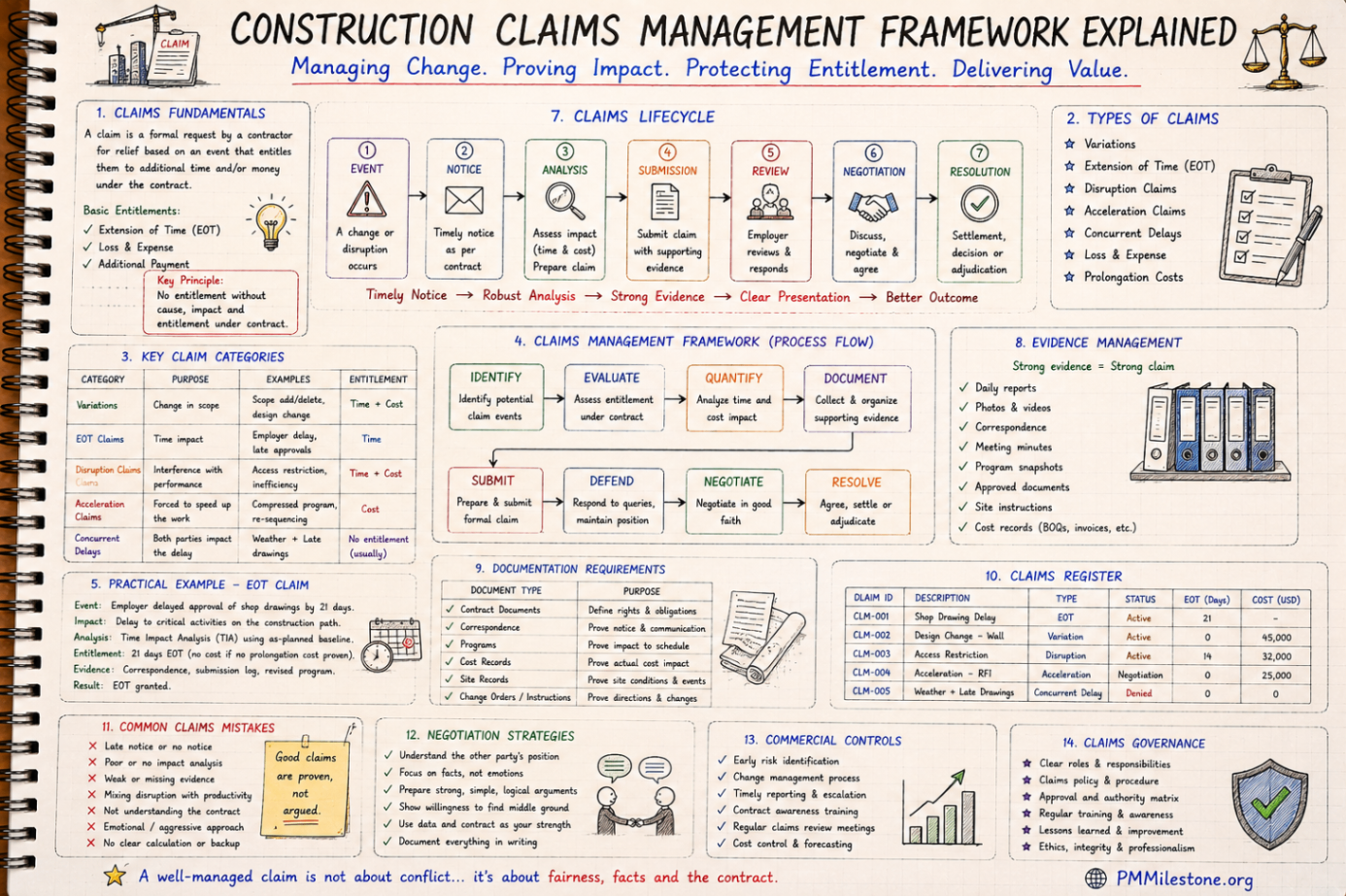
Construction Claims Management Framework Explained
A practical claims management framework for construction and infrastructure projects covering entitlement, records, analysis, negotiation and governance.
Read pillar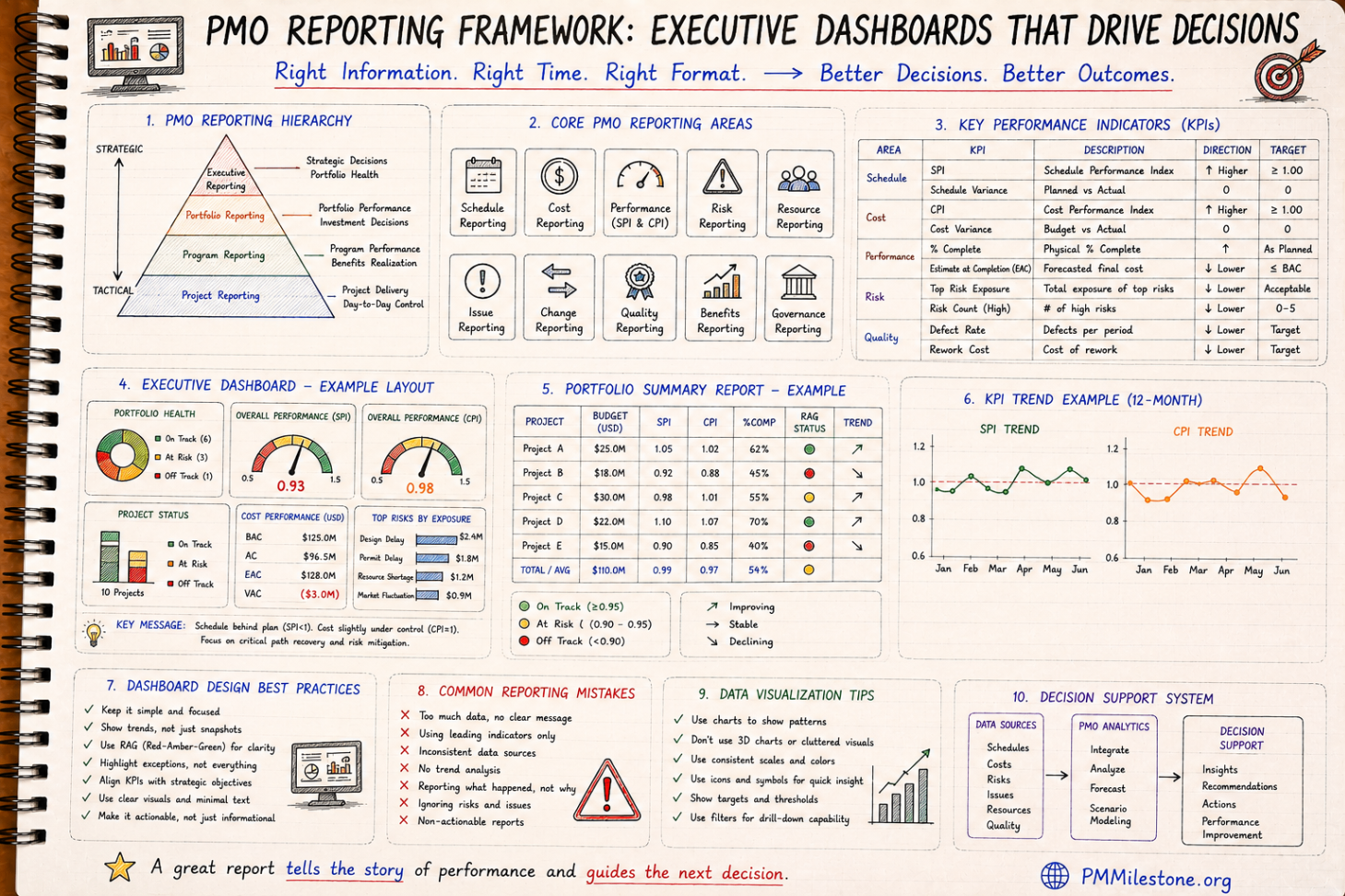
Knowledge pillar
PMO Reporting Framework
A reference guide to executive PMO reporting covering dashboard structure, KPI choice, portfolio views, reporting cadence and common reporting mistakes.
Read pillarKnowledge pillar
Guides and Long-Form Articles
Practitioner-written explainers across EVM, planning, forecasting, risk and PMO design — read as a syllabus or as a refresher.
Read pillarKnowledge pillar
Q&A and Exam-Style Questions
Concept questions in the style of PMP / PMI examinations, plus practical scenarios from real construction and PMO environments.
Read pillarKnowledge pillar
Interactive Calculators
More than thirty client-side calculators covering EVM, schedule, risk, construction productivity, contingency, PMO maturity and career planning.
Read pillarKnowledge pillar
Case Studies and Insights
Auto-synced articles from PMMilestone Intelligence Center bring fresh case studies, failure patterns and project-intelligence commentary into the Academy.
Read pillar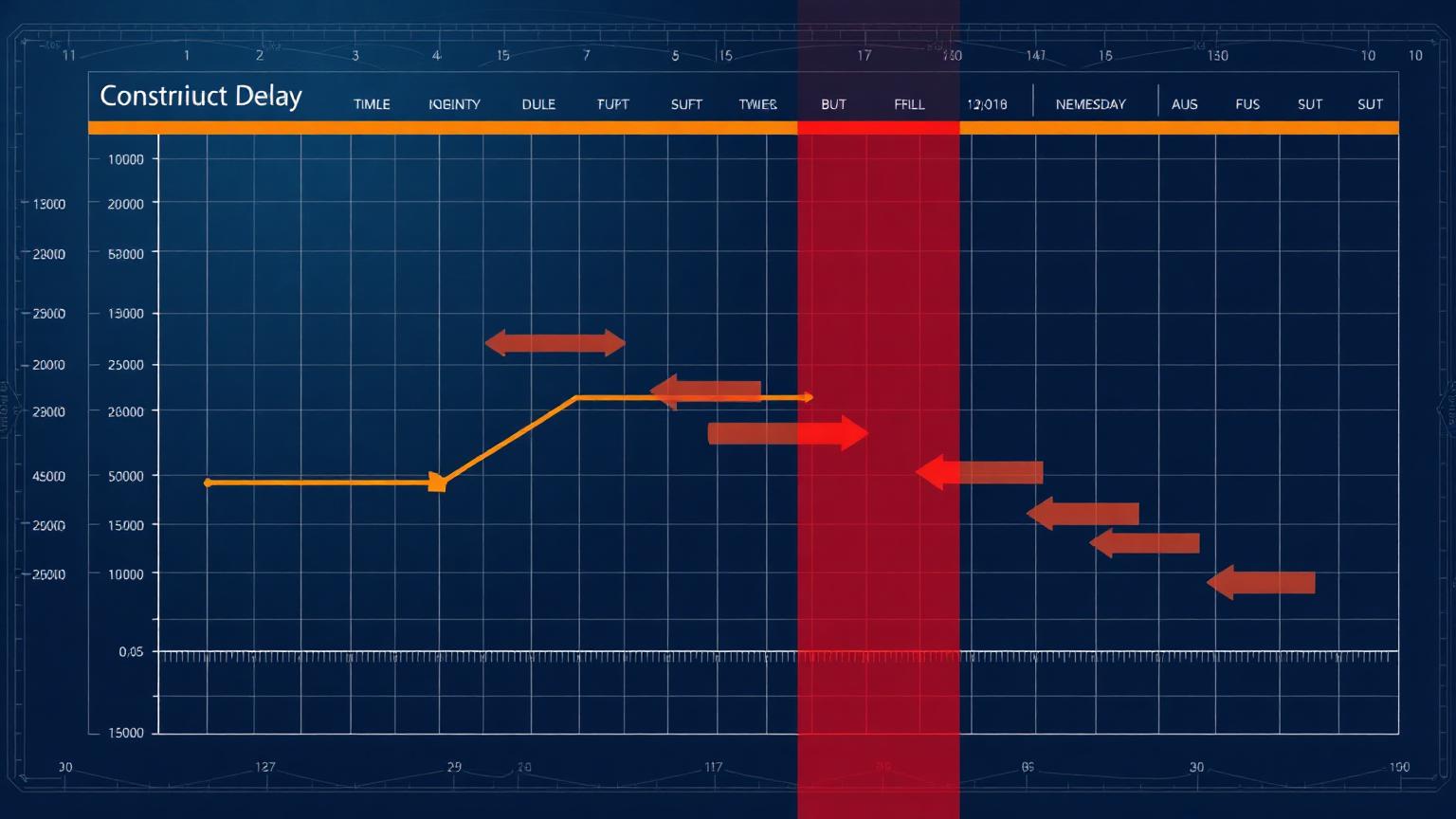
Knowledge pillar
The Complete Construction Delay Analysis Guide
A complete, practitioner-led walkthrough of construction delay analysis: delay categories, methodologies, claims preparation and mitigation strategies for real EPC and building projects.
Read pillar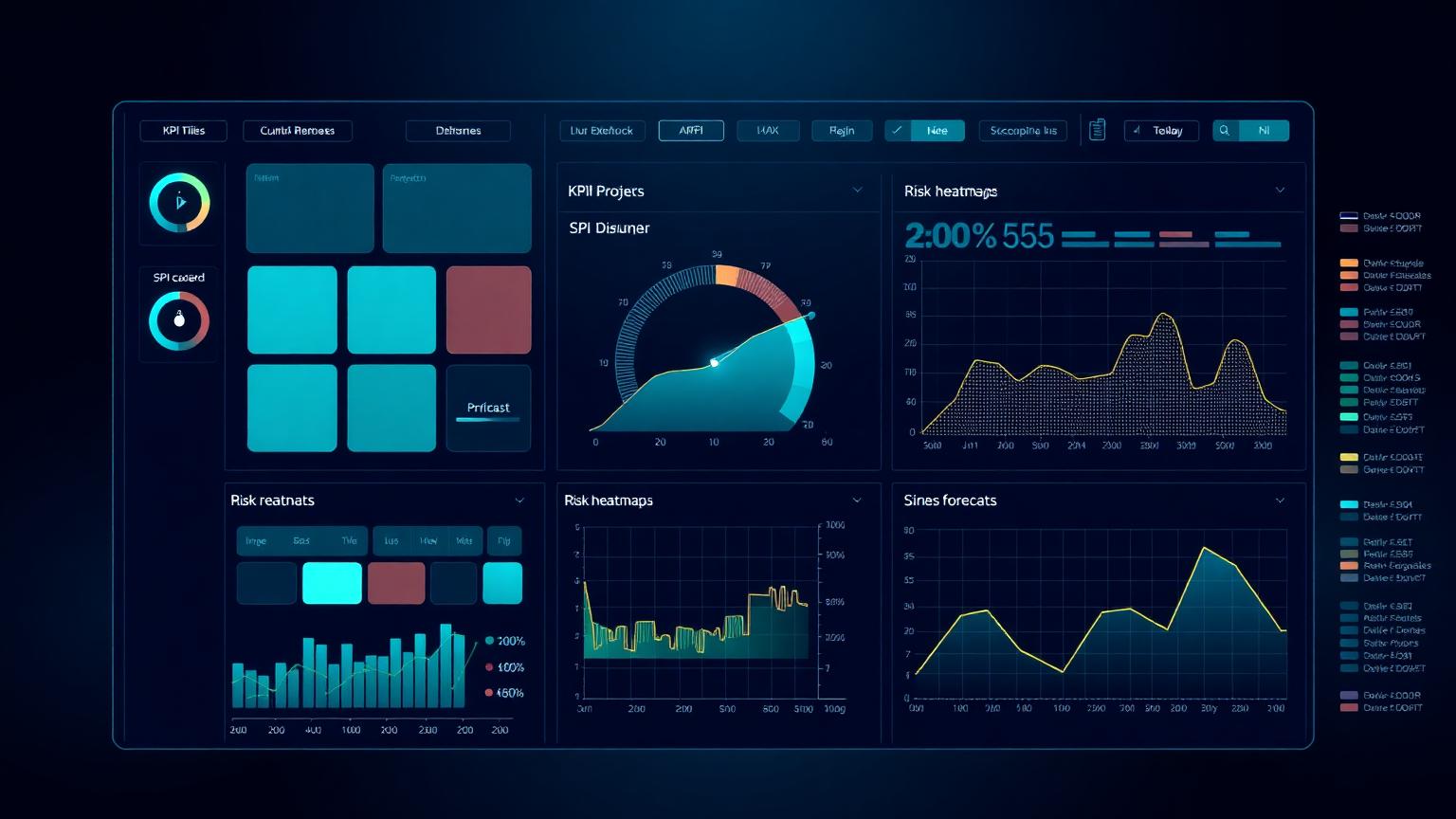
Knowledge pillar
Project Controls Dashboard Design Masterclass
How to design project controls dashboards that drive real decisions — KPI selection, EVM visualisation, risk indicators, layout patterns and the most common dashboard mistakes.
Read pillar
Knowledge pillar
The Complete Guide to Project Forecasting
How professional project controls teams forecast cost, schedule, productivity and cash flow — and how to combine them into a single risk-adjusted view a board can act on.
Read pillar
Knowledge pillar
Construction Productivity Management
How to measure, benchmark and improve construction productivity at crew, discipline and project level — and use it as a leading indicator for schedule and cost.
Read pillar
Knowledge pillar
PMO Reporting and Executive Dashboards
How to design PMO reports and executive dashboards that drive decisions instead of just describing status — KPI hierarchies, narrative structure and the cadence that keeps them honest.
Read pillar
Knowledge pillar
Risk Management for Mega Projects
How risk management actually works on mega projects — beyond the register, into quantitative analysis, reserve sizing, risk-adjusted forecasts and structured recovery.
Read pillarEnterprise Upgrade
Upgrade to Enterprise-Level Project Intelligence
Discover the Elite Project Controls System — a professional intelligence framework for modern project controls, forecasting, executive reporting, AI PM workflows and risk management.
- ★Executive-grade KPI frameworks
- ★AI-powered project workflows
- ★Forecasting & risk intelligence
- ★PMO-ready reporting templates