PMP and PMI Foundations: Concept Maps, Formulas and Reference Material for the Modern Exam

What the exam is really testing
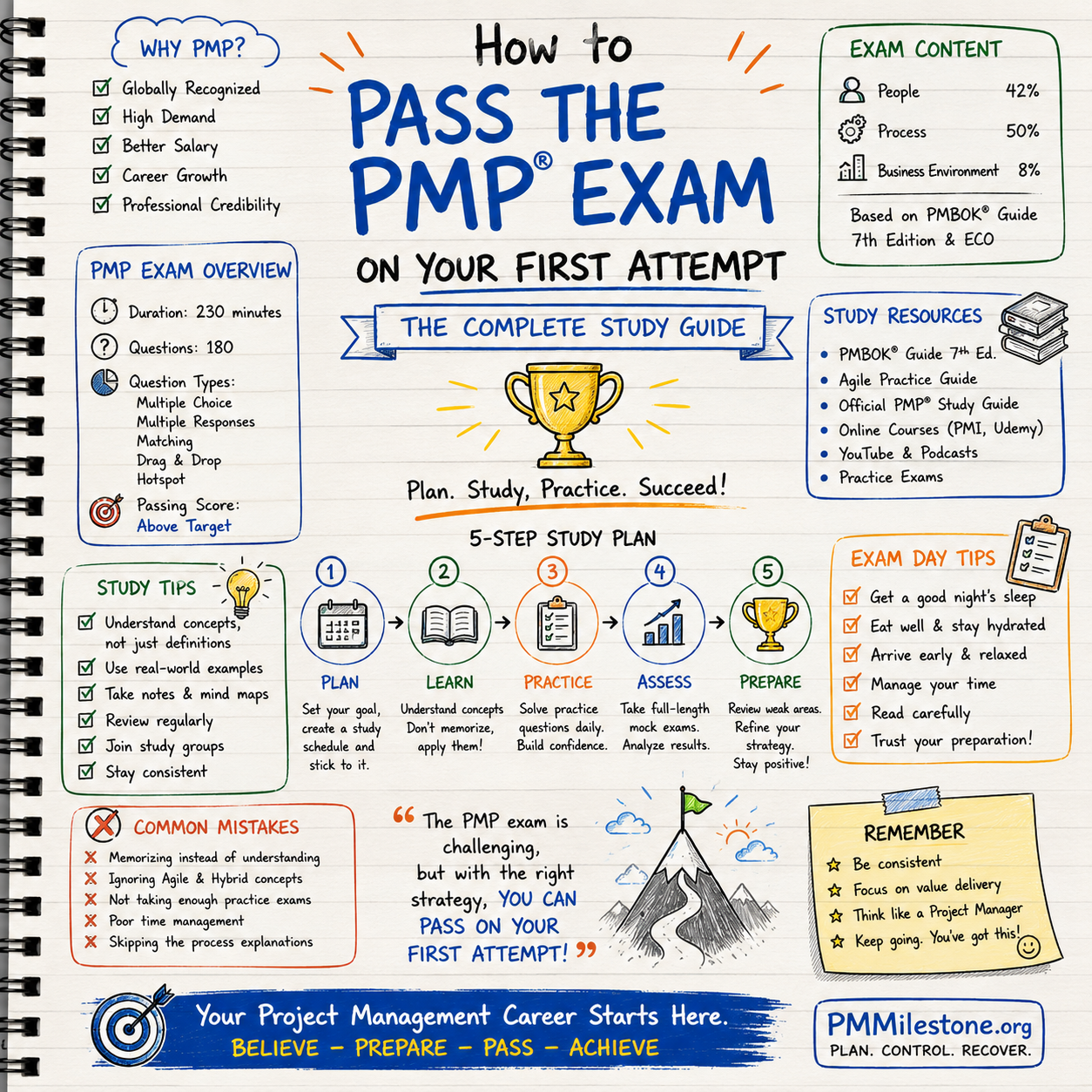
The PMP exam is not a memory test. It is a test of professional judgement framed in PMI's specific vocabulary. Candidates who memorise definitions but cannot reason in the PMI worldview tend to fail; candidates who internalise the worldview find that the wording of each question gives away the answer.
That worldview values predictive planning, stakeholder engagement, evidence-based decisions, ethical conduct and a strong bias toward proactive risk management. Almost every question is structured so that one option clearly reflects this worldview and the others reflect common, but inferior, real-world habits.
Process groups and knowledge areas
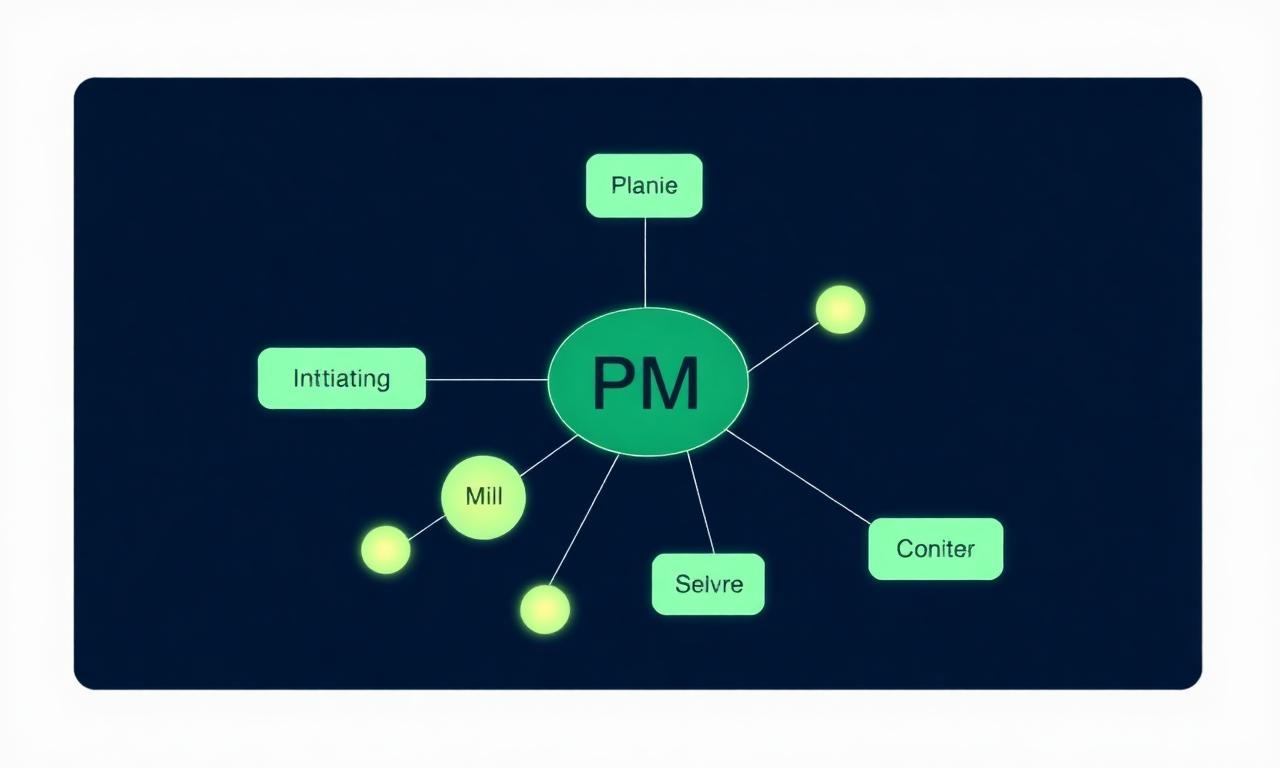
PMI's process groups — Initiating, Planning, Executing, Monitoring and Controlling, and Closing — describe what kind of work is happening at a given moment, not when in calendar time it happens. They cycle through every phase of a project and every iteration of an agile delivery.
Knowledge areas cut across the process groups. Integration, scope, schedule, cost, quality, resource, communications, risk, procurement and stakeholder management each carry their own techniques, but PMI tests them as facets of a single integrated discipline. Strong candidates can place any scenario into the right intersection of process group and knowledge area within seconds.
The formula set you actually need
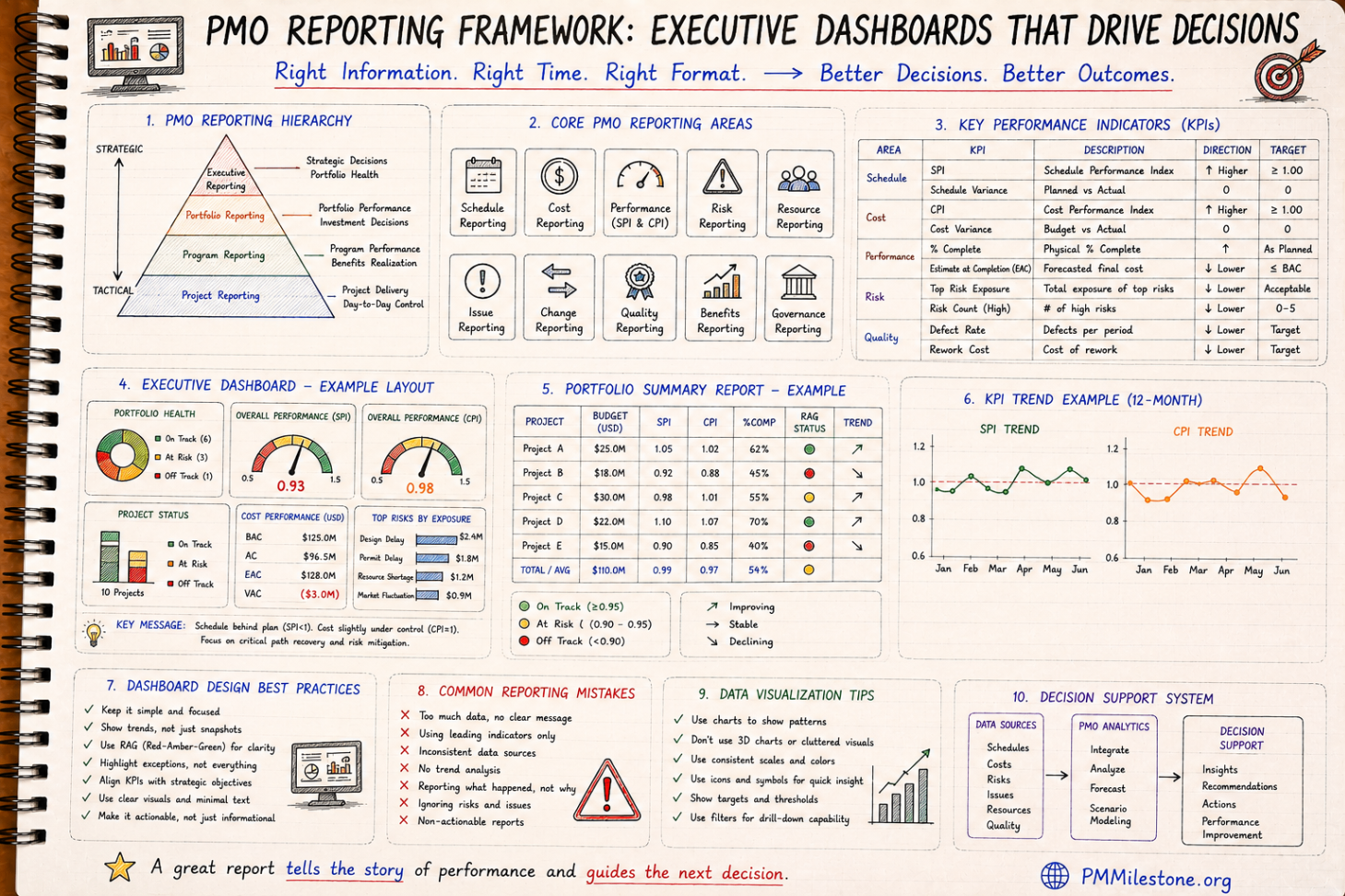
Despite the reputation, the formula set on the exam is small. EVM dominates: PV, EV, AC, SV, CV, SPI, CPI, EAC variants, ETC, VAC and TCPI. Beyond EVM, candidates need to know PERT (three-point estimate), standard deviation, communication channels, expected monetary value, and a handful of contract-type calculations.
Memorising the formulas is the easy part. The harder skill is recognising which formula a question wants, often from a one-paragraph scenario. Practising with the same calculators used in real project controls work — the SPI, CPI, EAC and TCPI tools in this Academy — builds that pattern recognition far faster than flash cards.

ITTOs without panic
Inputs, tools and techniques, and outputs (ITTOs) appear intimidating because the standard lists them in dense tables. The practical reality is that ITTOs are not random; they follow patterns. The output of one process is typically the input of the next; the same handful of tools (expert judgement, data analysis, meetings) appear repeatedly; and the rare ITTOs are precisely the ones the exam tends to test.
Build a small map of the recurring ITTOs and focus deeper study on the unusual ones. Trying to memorise every ITTO line is both unnecessary and counter-productive.
Agile and hybrid content
Modern PMP content is roughly half predictive, half agile and hybrid. Candidates should be comfortable with Scrum vocabulary, servant leadership, value-driven delivery, retrospectives and the idea that planning happens continuously rather than once.
The crucial insight is that PMI does not treat agile and predictive as opposites. They are two ends of a continuum, and the exam frequently asks which end of the continuum is most appropriate for a given scenario. Practitioners who already work in hybrid environments — most large capital projects do — usually find this content intuitive.
How to study efficiently
The most efficient PMP study plan is short, intense and structured. Read a single high-quality study guide cover to cover. Build personal concept maps for each knowledge area. Run timed practice questions every day, scoring at least 75% before booking the exam. Spend most of the time not on questions you got wrong, but on questions you got right for the wrong reasons.
Use the Academy calculators to internalise the EVM formulas. Use the Q and A pillar to build pattern recognition for the question style. By exam day, the goal is not to recall facts under pressure; it is to recognise which lens the question wants you to apply.
Why the foundations matter even if you do not sit the exam
Even practitioners who never plan to take the PMP benefit from learning its foundations. The vocabulary is the de facto lingua franca of global project management, and the worldview — proactive, integrated, evidence-led — happens to align tightly with strong project controls practice.
Treat the PMP foundations as a structured way to deepen your project controls thinking, not as a separate study burden. The two reinforce each other on every page.
Connecting exam language to project controls work
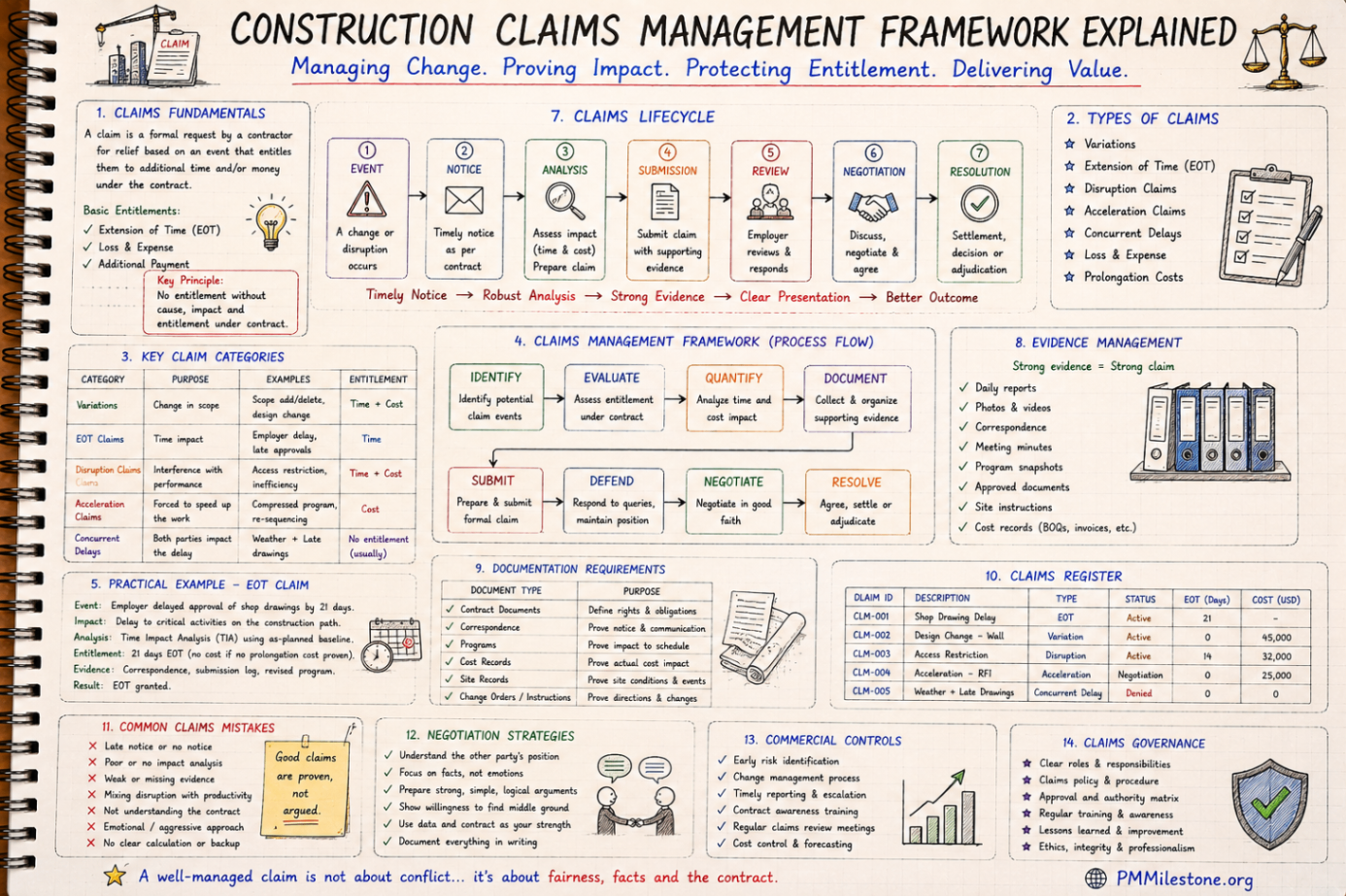
The fastest way to make PMI study useful is to translate each concept into a project controls artefact. Scope management becomes WBS discipline. Schedule management becomes baseline logic and update cadence. Cost management becomes budget, commitment, actual and forecast control. Risk management becomes reserve sizing and risk-adjusted forecasting. Communications management becomes executive reporting that tells the truth clearly.
This translation prevents exam preparation from becoming abstract. A candidate who can connect a situational question to a real controls workflow will answer more calmly and will also bring stronger habits back to work. The point is not to collect credentials for their own sake; it is to sharpen the professional judgement behind every schedule update, cost report and recovery recommendation.
Next steps on PMMilestone
Use these pages to deepen the topic, verify terminology, compare real cases and move from theory into applied project controls practice.
Related calculators
Open the calculators referenced in this article and run them against your own project numbers.
SPI Calculator
Schedule Performance Index — measure schedule efficiency.
Open Earned ValueCPI Calculator
Cost Performance Index — measure cost efficiency.
Open ForecastingEAC Forecast Calculator
Estimate at Completion — forecast final project cost.
Open ScheduleEarned Schedule Calculator
Time-based schedule performance (SPI(t)).
OpenOther learning tracks
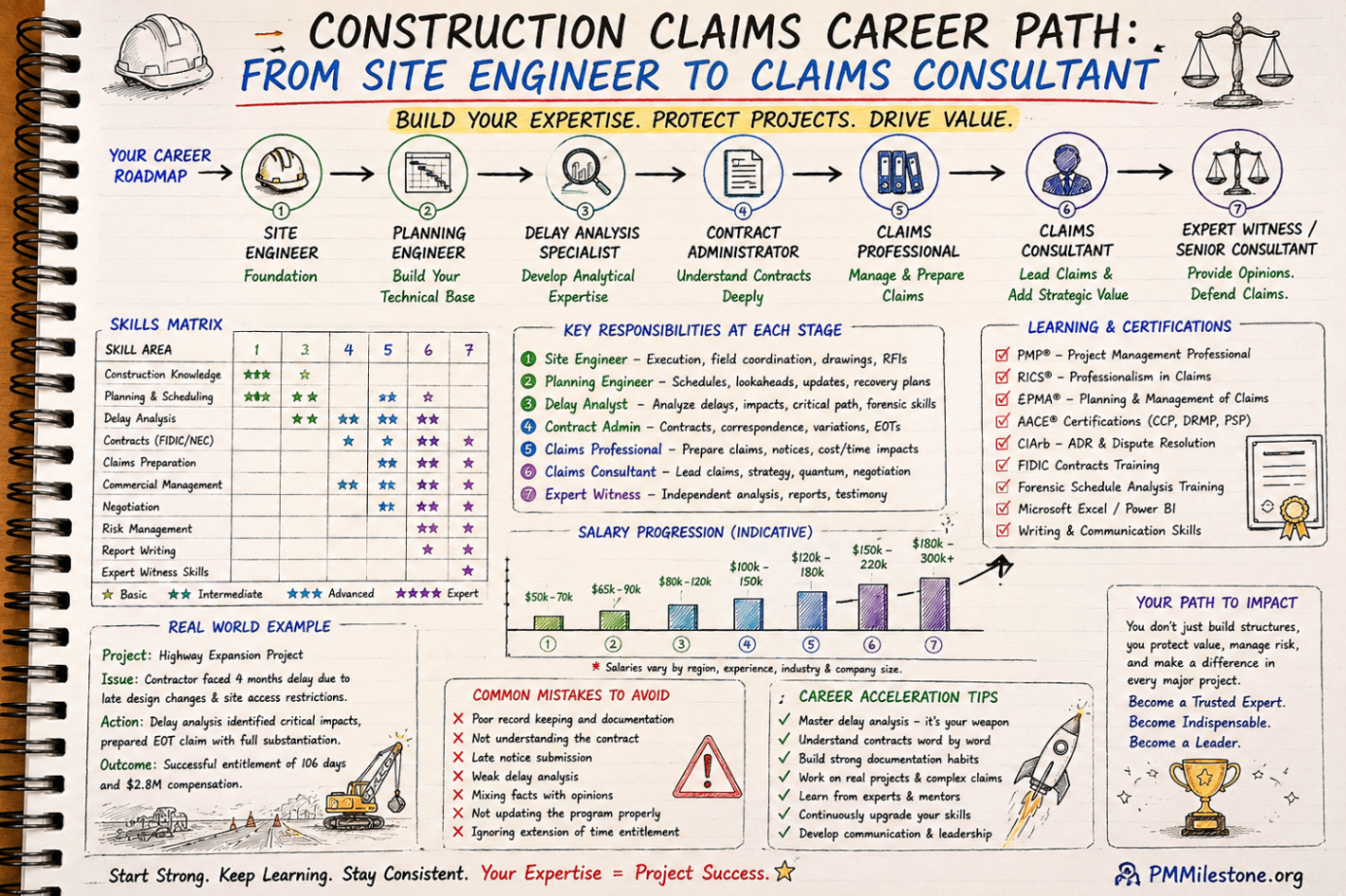
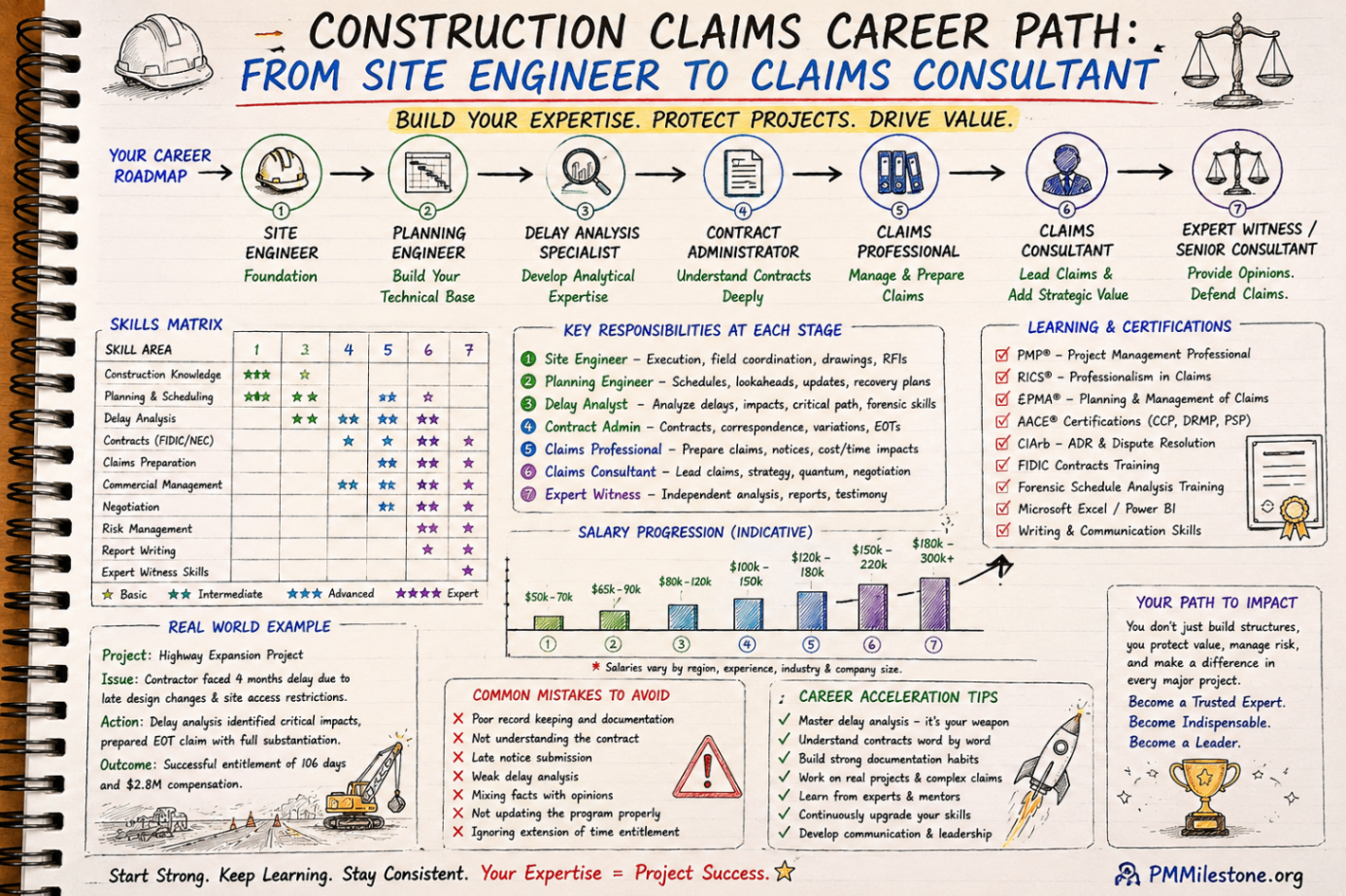
Construction Claims Career Path
A practical roadmap for engineers moving from site delivery into planning, delay analysis, claims, commercial controls and senior claims consulting.
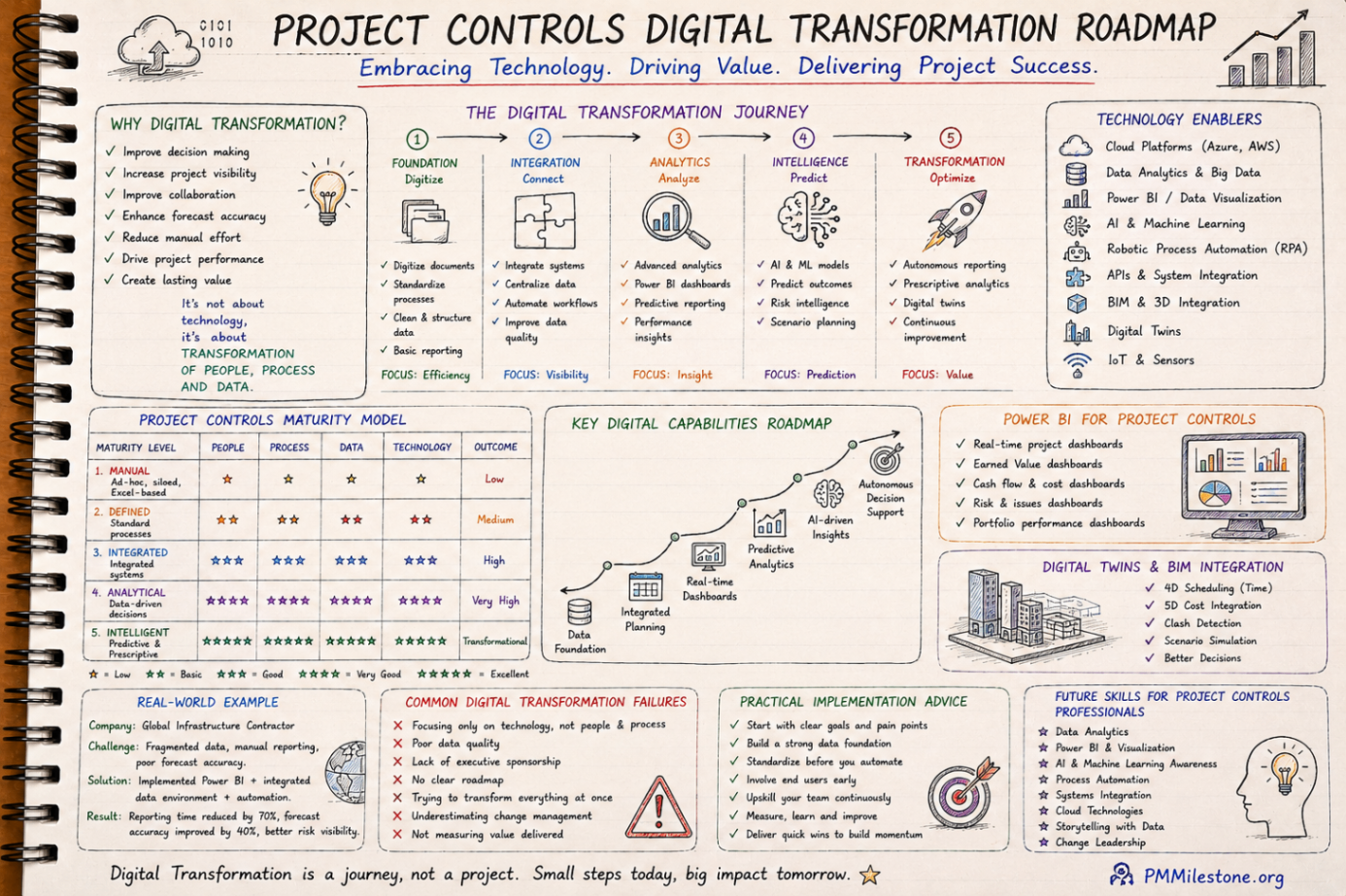
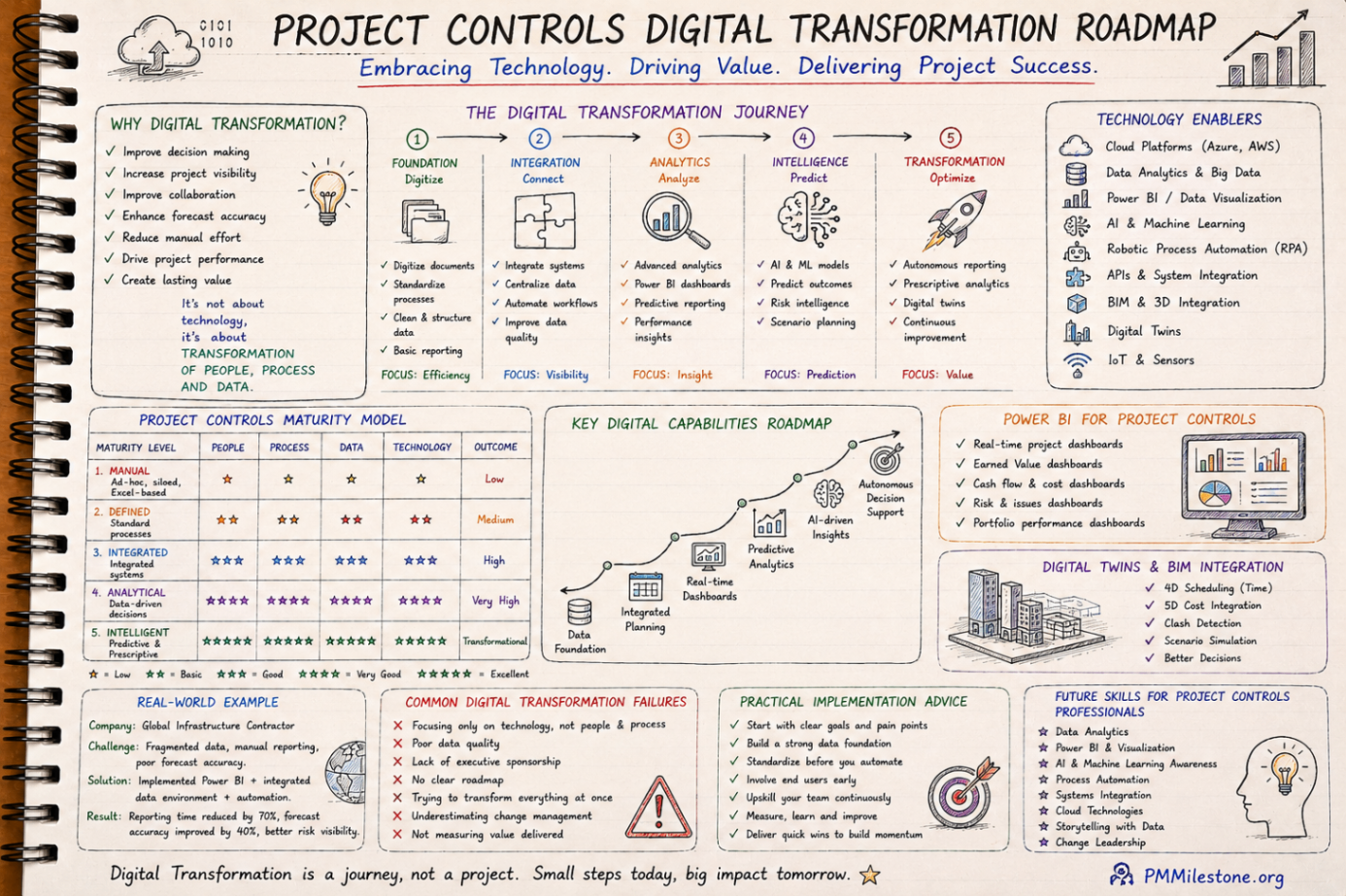
Project Controls Digital Transformation Roadmap
A future-focused guide to modern project controls through data integration, reporting automation, Power BI, AI, BIM and digital PMO capability building.
Project Controls Fundamentals
Scope, schedule, cost, risk, quality and reporting — the six disciplines that hold every successful capital project together, taught from first principles.