Delay Claims Library

EOT, concurrent delay, disruption and time entitlement — a practitioner reference

A working reference for planners, project controls engineers, commercial managers and PMO leads. Covers the six core delay categories, the five established delay analysis methods, contractual notice mechanics and a documentation checklist you can apply on a live project from Monday morning. Written for people who have to defend an EOT, not for people who teach it.

Note. This page is educational reference material, not legal advice. Treatment of delay, concurrency and acceleration varies materially by jurisdiction, governing law and bespoke contract drafting. Always review your specific contract and obtain qualified legal advice before issuing or defending a formal claim.

How to use this library

The structure mirrors how delay entitlement actually unfolds on a project. First, classify the event under one of the six delay categories — that classification determines who carries the time and cost risk. Second, select the delay analysis method that fits the records you have, not the answer you want. Third, comply with the contractual notice machinery, because the strongest entitlement in the world fails if notice is late or in the wrong form. Fourth, maintain the documentation pack from day one — every senior planner has a story about an EOT lost because nobody photographed a blocked access.

The library deliberately stays close to the language used by the Society of Construction Law Delay and Disruption Protocol (2nd edition), the AACE International Recommended Practice 29R-03 on Forensic Schedule Analysis, and the standard FIDIC and NEC4 clauses. Where jurisdictions diverge sharply — concurrent delay, constructive acceleration — that divergence is flagged in the entry itself.

Six delay categories

Who carries the time and cost risk

Classification first, analysis second. Misclassifying an event at the outset is the most common reason delay claims are abandoned in the second round of expert exchange.

Category 01

Extension of Time (EOT)

A contractual mechanism granting additional time to the original completion date when delay is caused by events that are not the contractor's risk under the contract.

When it applies

Whenever a delay event impacts the critical path and falls within an EOT clause — typically employer changes, late information, exceptional weather, force majeure or differing site conditions. The EOT preserves the contractor's right to relief from liquidated damages and may, depending on the cause, carry an entitlement to prolongation cost.

Evidence needed

Notice issued within the contractual window, an updated baseline programme, contemporaneous progress records, a delay event log, and a properly executed delay analysis (TIA, windows or impacted as-planned) demonstrating critical-path impact rather than mere float consumption.

Practitioner note

EOTs are won and lost on documentation discipline in the first week, not on legal argument months later. Treat the contractual notice clause as a non-negotiable controls deliverable.
Category 02

Concurrent Delay

Two or more delay events of approximately equal causative potency occurring during the same period, where at least one is an employer-risk event and at least one is a contractor-risk event.

When it applies

Common on complex projects where employer-driven design changes coincide with contractor productivity issues. The treatment of concurrency varies by jurisdiction and contract: SCL Protocol, Malmaison, apportionment and 'but-for' approaches all produce different EOT outcomes.

Evidence needed

Daily delay logs marking which events were on the critical path each day, fragnets isolating each cause, and a clear statement of which method the analysis follows. Concurrency claims fail when the analysis tries to retrofit a method to the answer.

Practitioner note

Document concurrency the day it arises. Reconstruction six months later in a hearing room is the most expensive way to prove the obvious.

Category 03

Compensable Delay

Delay caused by the employer or by events for which the employer carries the time and cost risk. The contractor is entitled to both an extension of time and recovery of prolongation cost.

When it applies

Late information, late access, employer-instructed variations, suspensions, unforeseen ground conditions where the contract assigns them to the employer, or breach of an implied duty to cooperate.

Evidence needed

Same as EOT, plus a properly built prolongation cost model — site overheads, head-office overheads, finance charges and idle resources — segregated from disruption and acceleration costs.

Practitioner note

Quantum is where most compensable claims collapse. A precise time entitlement paired with a sloppy cost build undermines both.

Category 04

Non-Excusable Delay

Delay caused by the contractor or its subcontractors, suppliers and design consultants. Carries no time relief and exposes the contractor to liquidated or general damages.

When it applies

Slow mobilisation, low productivity, defective work, subcontractor failure, supplier non-performance and contractor-side design errors.

Evidence needed

Honest internal reporting. A contractor who suppresses non-excusable delay loses the credibility needed when a genuine EOT event later arrives.

Practitioner note

Strong PMOs separate the internal log of non-excusable delay from the external EOT register. Mixing them is how contractors accidentally waive entitlement.

Category 05

Disruption Claims

A claim for the cost of reduced productivity caused by employer-risk events, even where the overall completion date is not delayed. Disruption is a loss-of-productivity claim, not a time claim.

When it applies

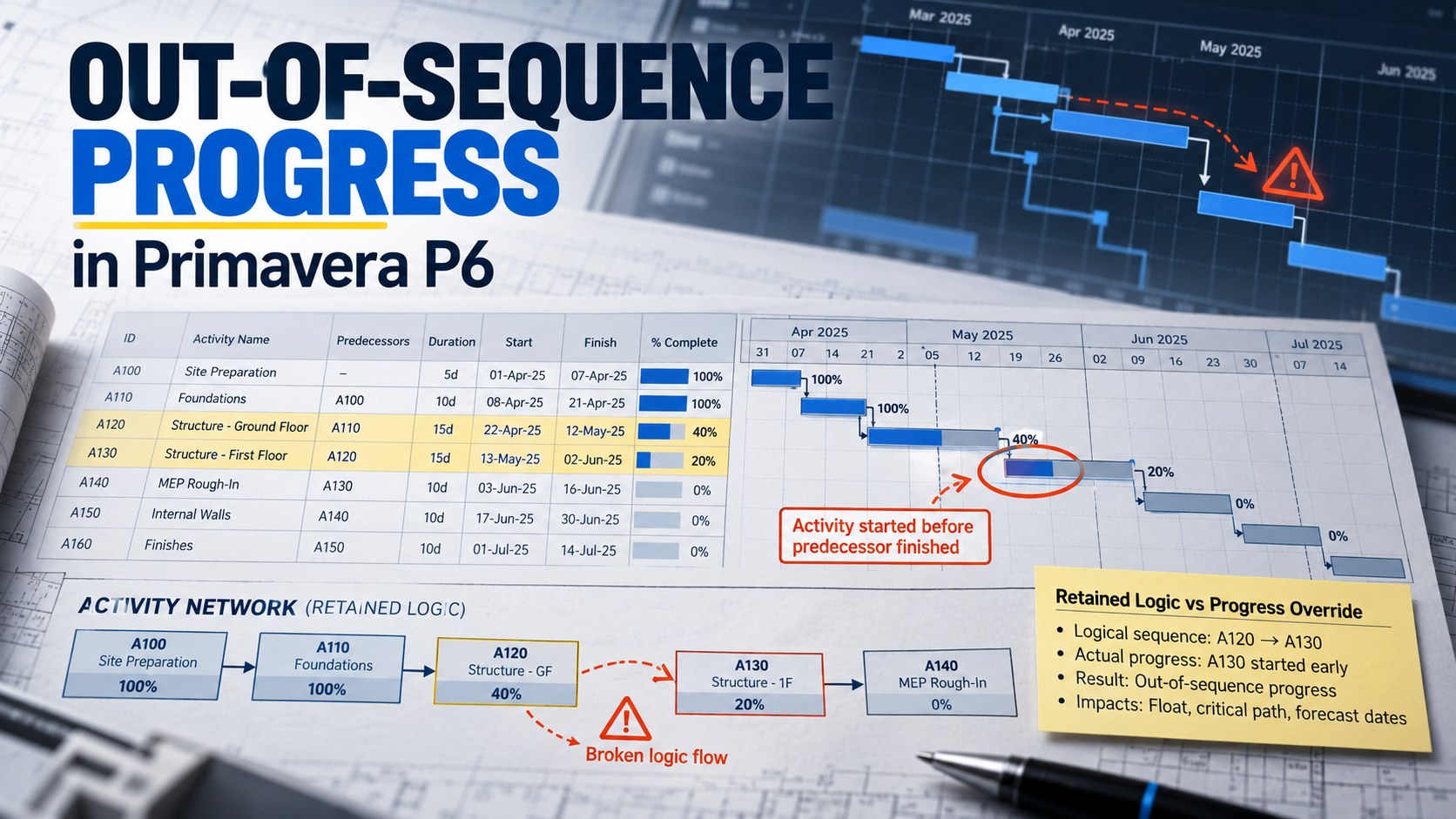
Out-of-sequence working, stacking of trades, repeated late information, design churn, restricted access and excessive variations — all of which slow the labour curve without necessarily moving the end date.

Evidence needed

Measured-mile, baseline productivity studies, earned-hours analysis or industry productivity loss tables (MCAA, Leonard) tied to contemporaneous records. Disruption is rarely won on opinion alone.

Practitioner note

Disruption is the single most under-claimed loss on capital projects, because it requires productivity data the contractor never collected.

Category 06

Acceleration Claims

A claim for the cost of accelerating the works — overtime, additional shifts, extra crews, expedited procurement — either by direct instruction (directed acceleration) or by refusal to grant a justified EOT (constructive acceleration).

When it applies

Directed: the employer instructs the contractor to recover or maintain the date despite a legitimate EOT event. Constructive: the employer denies a valid EOT, leaving the contractor to accelerate to avoid LDs.

Evidence needed

Evidence that an EOT was properly applied for and not properly granted, plus contemporaneous records of the acceleration measures actually deployed and their incremental cost.

Practitioner note

Constructive acceleration claims are jurisdiction-sensitive. Some legal systems recognise the doctrine; others do not. Check the governing law before committing acceleration spend.

Five analysis methods

Choosing a method that the records actually support

A defensible delay analysis matches the method to the evidence available. The five recognised methods are summarised below with the conditions under which each is strongest and weakest.

MethodTypeSummaryBest whenWeakness
Time Impact Analysis (TIA)ProspectiveInsert a fragnet representing the delay event into the contemporaneous approved schedule at the date the event occurred, then re-run CPM. The shift in the critical path predicts the delay impact.Strong, properly updated contemporaneous schedules exist and the analysis is performed close to the event.Sensitive to the quality of the contemporaneous schedule. Garbage in, garbage out.
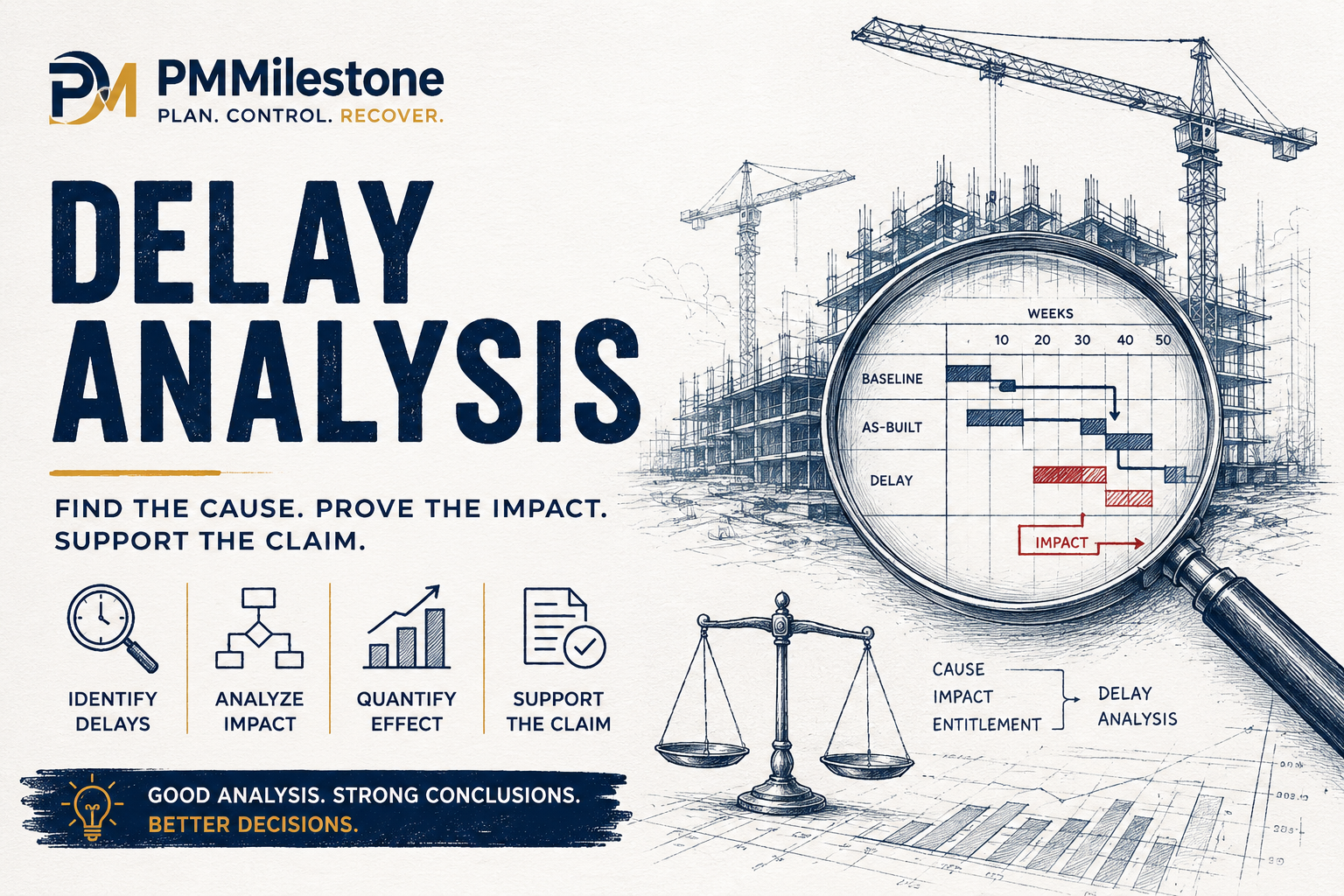
Windows Analysis (Time-Sliced)RetrospectiveDivide the project into time windows (monthly or per major milestone). For each window, compare the planned and actual critical path and assign cause to the slip observed in that window.Long projects with multiple overlapping events, where a single analysis cannot fairly allocate all causes.Labour-intensive. Window length materially affects the result, so the choice must be defended.
Collapsed As-Built (But-For)RetrospectiveBuild a fully detailed as-built schedule, then remove the employer-risk delay events and re-run logic. The difference between the actual and collapsed completion dates is the entitlement.Disputes where contemporaneous schedules are weak but as-built records are strong.Adversarial. Often produces dramatically different answers depending on which events are stripped out.
As-Planned vs As-BuiltRetrospectiveOverlay the original baseline against the as-built record and identify total slippage by activity. Used as a high-level diagnostic, not a forensic analysis.Early-stage discussions, mediation and informal entitlement assessment.Does not isolate cause. Will not survive expert challenge in arbitration or litigation.
Impacted As-PlannedProspective (theoretical)Insert delay events into the original baseline (not the contemporaneous schedule) and re-run CPM. Quick and cheap, but generally treated as the weakest method in modern protocols.Pricing a notice of delay quickly, before a formal analysis can be performed.Ignores actual progress. Rarely accepted in formal dispute resolution.

Time Impact Analysis (TIA)

Insert a fragnet representing the delay event into the contemporaneous approved schedule at the date the event occurred, then re-run CPM. The shift in the critical path predicts the delay impact.

Run the Delay Impact Calculator

Windows Analysis (Time-Sliced)

Divide the project into time windows (monthly or per major milestone). For each window, compare the planned and actual critical path and assign cause to the slip observed in that window.

Run the Delay Impact Calculator

Collapsed As-Built (But-For)

Build a fully detailed as-built schedule, then remove the employer-risk delay events and re-run logic. The difference between the actual and collapsed completion dates is the entitlement.

Run the Delay Impact Calculator
Notice requirements

Why most EOT claims fail in the first 28 days

Modern construction contracts make notice a condition precedent to entitlement. The mechanics are deceptively simple — and routinely ignored.

RequirementPractitioner detail
TriggerAwareness — actual or constructive — of an event likely to cause delay or additional cost. Not the moment the impact is fully understood.
FormWritten notice in the contractually specified medium (letter, contract management system, email per the communications protocol). Verbal notice almost never qualifies.
TimingWithin the contractual window — commonly 7, 14, 21 or 28 days. Late notice is the single most cited reason for EOT denial.
ContentIdentification of the event, the contractual clause relied on, anticipated impact on time and cost, and a commitment to follow-up particulars.
ParticularsFollow-up submission within the contractually required period (often 28 days from the end of the event) containing the delay analysis, cost build and supporting records.
Continuing eventUpdated particulars at the contractually required intervals while the event is ongoing. A single particulars submission for a six-month event is rarely sufficient.

Common failure mode. A notice issued internally to the project manager but never formally transmitted to the contract administrator via the contractually nominated communications channel. Under many standard forms (FIDIC 20.1, NEC4 61.3) this is treated as no notice at all. Audit your notice register monthly against the contractual communications protocol.

Documentation checklist

What to keep from day one — eighteen records that win EOT claims

If even half of these are kept consistently, the contractor's position is materially stronger than the typical defendant in a construction dispute.

1

Signed and accepted baseline programme (with sequencing, logic and resource loading).

2

Monthly approved schedule updates with progress data dates and narrative.

3

Daily site diaries: weather, manpower, equipment, deliveries, instructions received.

4

Photographic record dated against the programme reference.

5

Request for Information (RFI) log with issue, response and response time.

6

Variation Order (VO) and Change Order log with priced and unpriced VOs separately tracked.

7

Site Instruction (SI) register, cross-referenced to drawings issued.

8

Subcontractor and supplier delay notices, received and issued.

9

Weekly progress meeting minutes signed by both parties.

10

Non-conformance reports (NCRs) and quality records.

11

Resource histograms versus baseline curves (planned vs actual).

12

Earned value report (PV / EV / AC) by control account, monthly.

13

Float consumption report by critical and near-critical path activities.

14

Productivity records by trade — earned hours and crew composition.

15

Contemporaneous correspondence: letters, transmittals, contract notices.

16

Health and safety incident log where it caused stop-works.

17

Force majeure and weather day log with met-office data references.

18

Permit and approvals log: building consent, council, utility, environmental.

Run the analysis

Calculators that translate this reference into a working answer

The library tells you what each method is. The calculators help you actually quantify entitlement on your own data.

FAQ

Practitioner questions on delay and disruption

Short, direct answers to the questions PMOs ask when an EOT or disruption claim first lands on their desk.

What is the difference between delay and disruption?

Delay claims target the completion date and prolongation cost. Disruption claims target lost productivity within the period of works, whether or not the end date moves. A project can have significant disruption with no overall delay, or vice versa. The evidence base, analytical method and quantum approach are different for each.

Why does notice matter so much in EOT claims?

Most modern construction contracts make notice a condition precedent to entitlement. Where notice is required within, say, 28 days and is not given, courts and tribunals in many jurisdictions will deny the claim regardless of merit. Notice protects the employer's ability to mitigate. A late but otherwise perfect claim is a defeated claim.

Which delay analysis method is the most defensible?

There is no single best method. The SCL Protocol favours Time Impact Analysis prospectively and Windows Analysis retrospectively, but the most defensible method on a given project is the one supported by the records actually kept. A poorly executed TIA loses to a well-executed As-Planned vs As-Built. Choose the method that fits the evidence, not the answer you want.

How is concurrent delay typically treated?

The dominant English approach (Malmaison line, reflected in SCL Protocol guidance) grants the contractor an EOT for true concurrency but denies prolongation cost. Some US jurisdictions apportion both time and cost. Civil-law jurisdictions vary widely. Always check governing law and any bespoke contract drafting before assuming a position.

Can I claim disruption without a baseline productivity study?

It is possible but considerably weaker. Measured-mile analysis using your own productivity during an unimpacted period is the strongest evidence. Where measured-mile is unavailable, industry studies (MCAA, Leonard, NECA) can be used, but the burden of proving applicability falls on the claimant.

Is acceleration ever recoverable without an instruction?

Constructive acceleration — where the employer denies a valid EOT and the contractor accelerates to avoid liquidated damages — is recognised in some US jurisdictions and not in others. In English law it has limited traction. Never rely on it as a planned recovery strategy; treat it as a remedy of last resort with documented mitigation steps.

How do float and critical path interact with EOT entitlement?

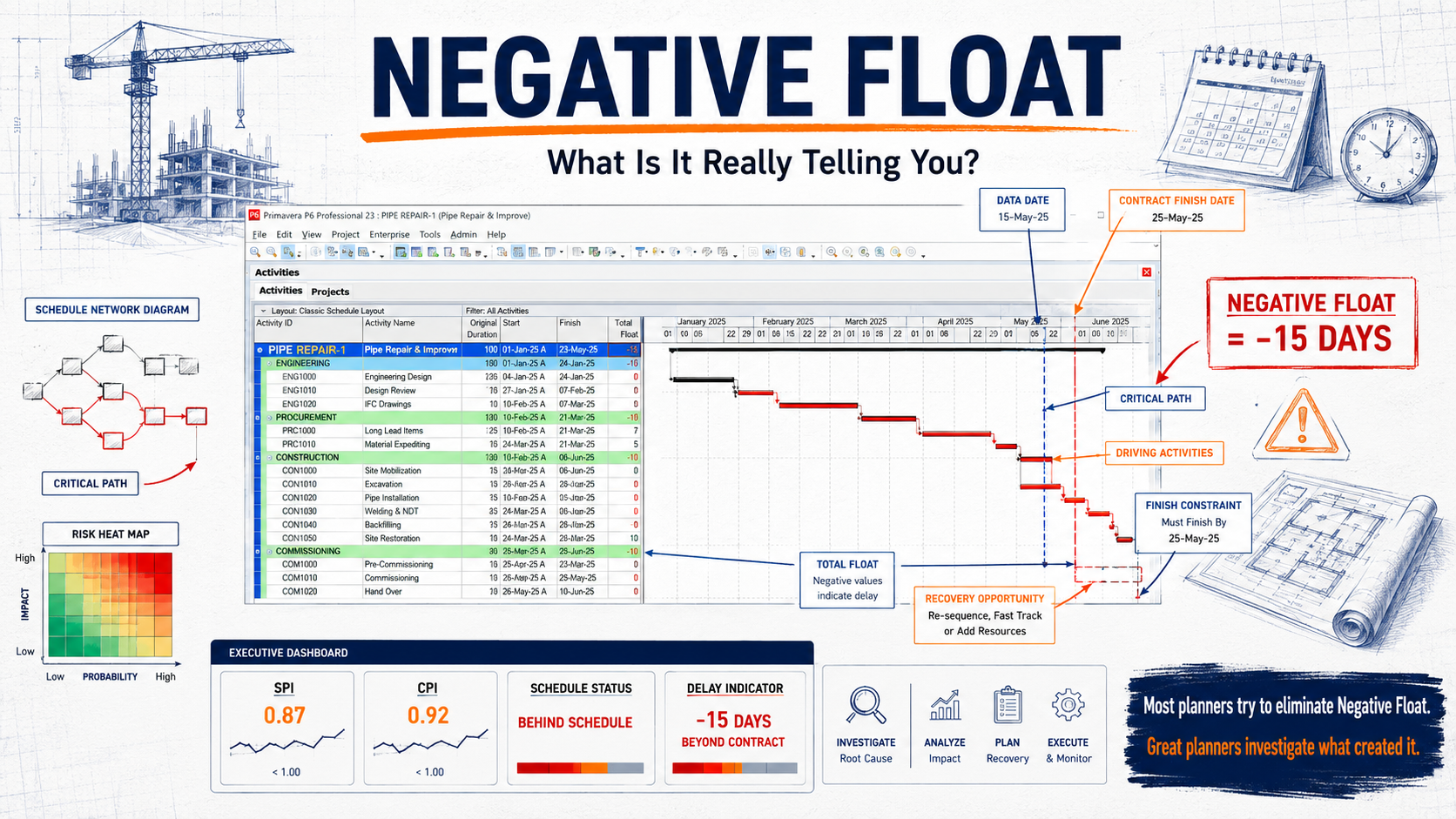
Most contracts treat total float as a project resource available to whichever party needs it first. Consuming float does not, in itself, create an EOT entitlement — only delay to the contractual completion date does. This is why a delay event on a non-critical activity may produce no time relief, even when it produces real disruption.

What records should a planner keep from day one to protect EOT rights?

An accepted baseline, contemporaneous monthly updates, a delay event log, a notice register, signed weekly progress minutes, daily site diaries, and a fragnet library of every claimed event. Most EOT failures trace back to records that were never kept, not to legal arguments lost.

From reading to routine

Pair this reference with the Recovery Playbooks

Delay entitlement is one half of the picture. Once the time impact is established, the parallel question is what to do about it — that is where the Recovery Playbooks pick up.

Featured Academy

Featured Academy learning pages

Hand-picked tracks, pillars and deep-dives — rotated on every refresh so you discover something new each visit.

Browse all learning tracks
Earned value management S-curves and KPI gauges
Learning track

Earned Value Management Learning Track

A structured EVM track — from the three core curves through SPI, CPI, SV, CV, TCPI and EAC, ending in earned schedule and probabilistic forecasting.

Read article
Open glowing editorial book in a dark navy library
Knowledge pillar

Guides and Long-Form Articles

Practitioner-written explainers across EVM, planning, forecasting, risk and PMO design — read as a syllabus or as a refresher.

Read article
Delay Analysis Masterclass diagram: process, delay types, methods, concurrent delay logic and claim success checklist
Knowledge pillar

Delay Analysis Masterclass

A masterclass on how senior project controls professionals prove time entitlement — delay types, methods, critical-path impact, concurrent delay logic, documentation discipline and EOT strategy.

Read article
Risk distribution and mega project silhouette
Knowledge pillar

Risk Management for Mega Projects

How risk management actually works on mega projects — beyond the register, into quantitative analysis, reserve sizing, risk-adjusted forecasts and structured recovery.

Read article
Primavera P6 learning path infographic showing eight stages from foundation to advanced topics with typical P6 workflow and best practices
Learning track

The Ultimate Primavera P6 Learning Path for Real Projects

Master Primavera P6 in eight deliberate stages — from interface and WBS to baselines, updates, EVM integration and advanced delay analysis — based on real construction and EPC projects.

Read article
Dark navy project controls dashboard with Gantt charts and KPIs
Learning track

Project Controls Fundamentals

Scope, schedule, cost, risk, quality and reporting — the six disciplines that hold every successful capital project together, taught from first principles.

Read article
Dark navy collage of construction project photos and editorial layouts
Knowledge pillar

Case Studies and Insights

Auto-synced articles from PMMilestone3.com bring fresh case studies, failure patterns and project-intelligence commentary into the Academy.

Read article
Dark navy earned value dashboard with glowing S-curves
Learning track

Earned Value Management

From PV / EV / AC to SPI, CPI, EAC, ETC, VAC and TCPI — the full toolkit for measuring and forecasting project performance.

Read article
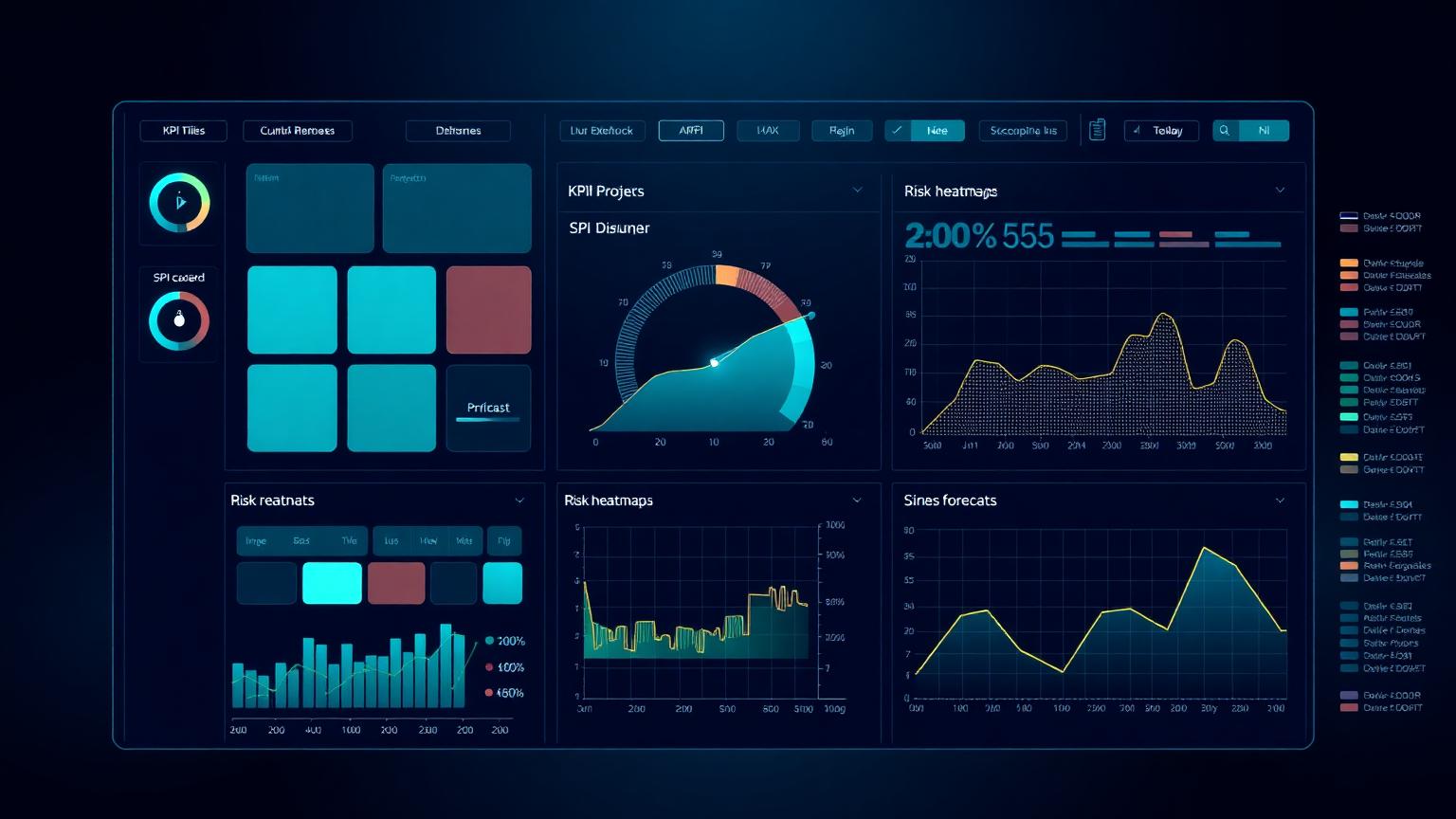
Dark navy executive project controls dashboard with KPI tiles, S-curve and risk heatmap
Knowledge pillar

Project Controls Dashboard Design Masterclass

How to design project controls dashboards that drive real decisions — KPI selection, EVM visualisation, risk indicators, layout patterns and the most common dashboard mistakes.

Read article
Construction site at night with cranes and overlaid dashboards
Learning track

Construction Controls

Productivity, labour efficiency, variation orders, subcontractor scoring and field-level reporting tailored to construction.

Read article
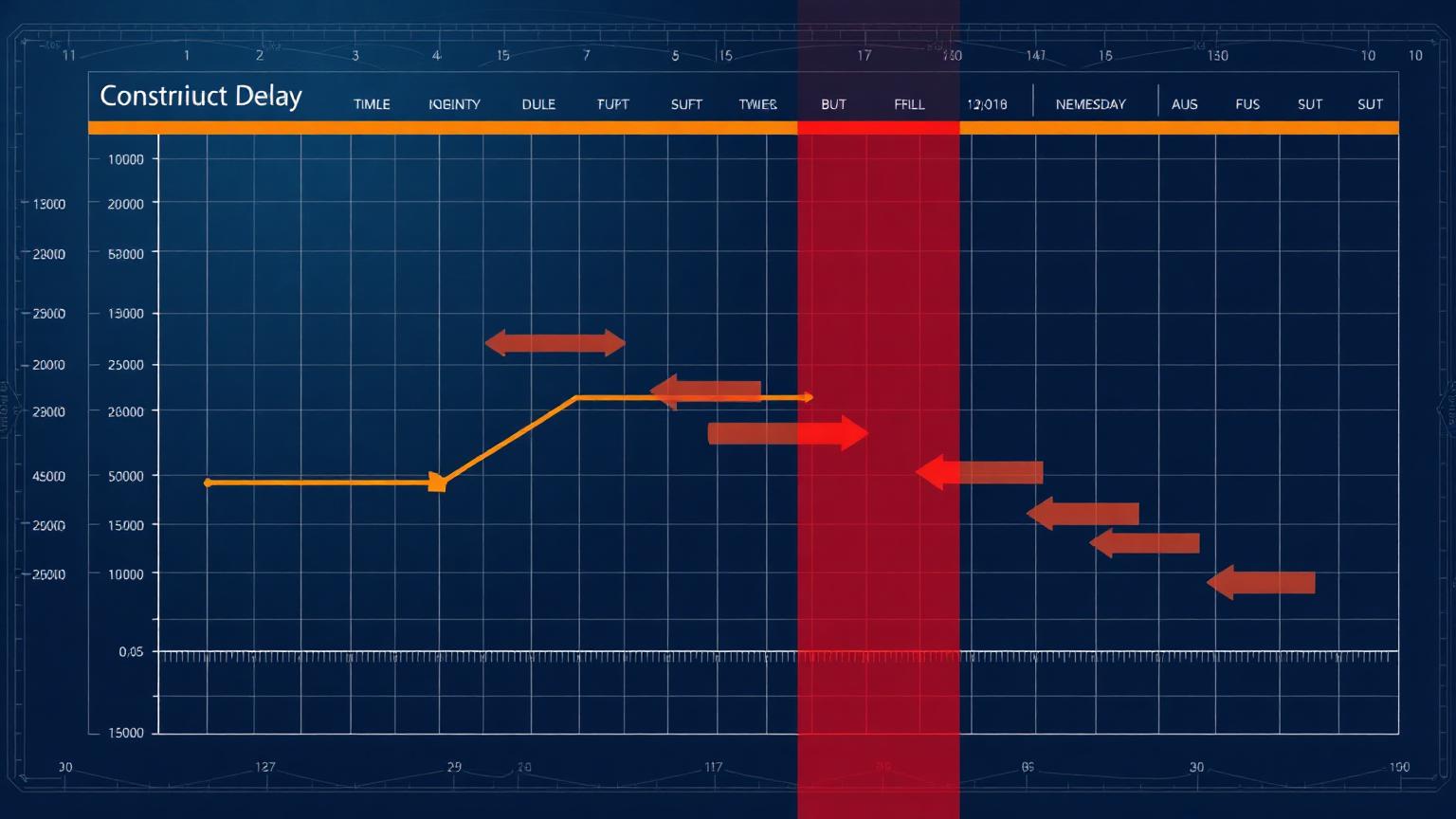
Dark navy timeline graphic showing a delayed construction schedule with critical path impact bands
Knowledge pillar

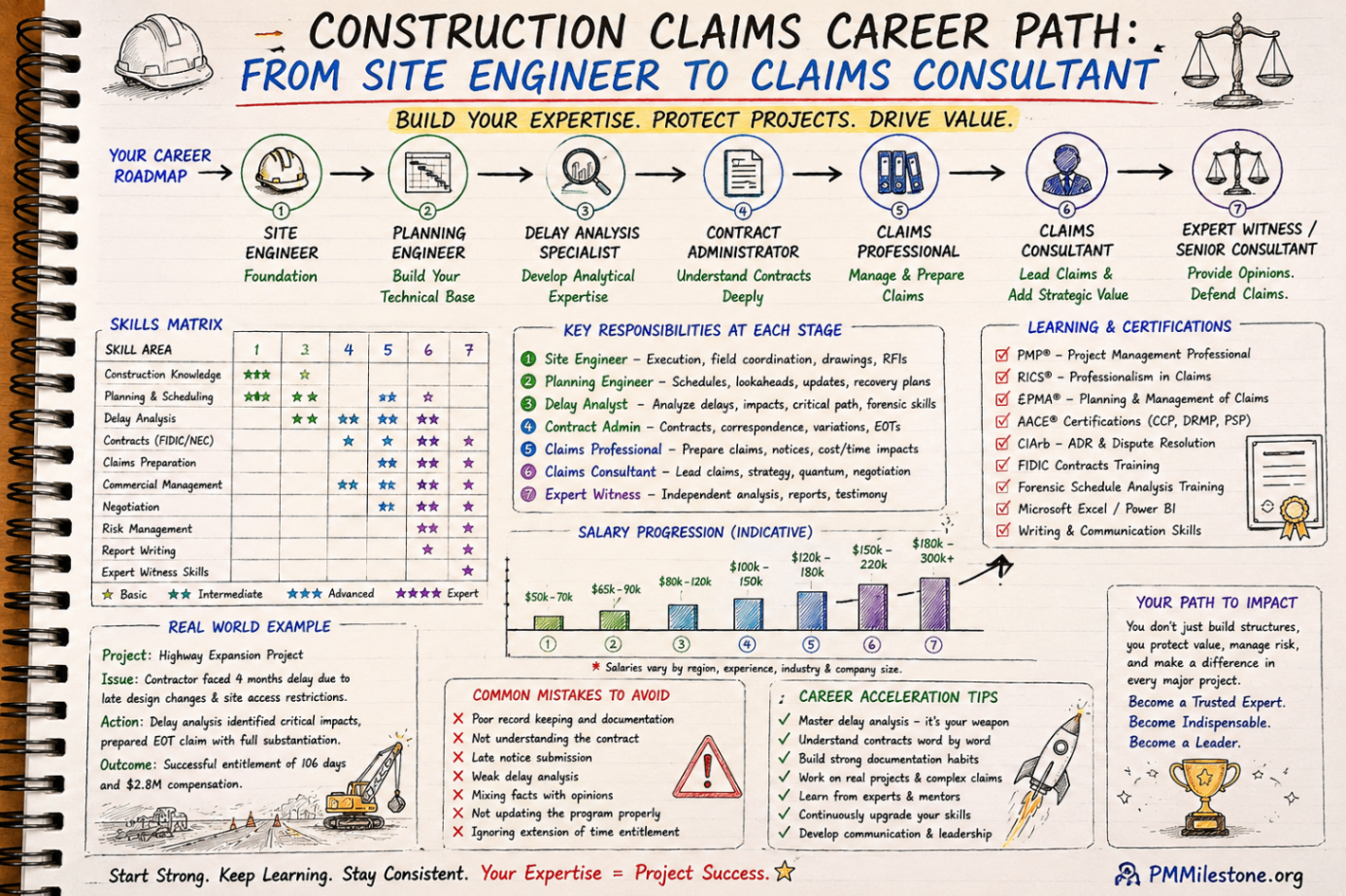
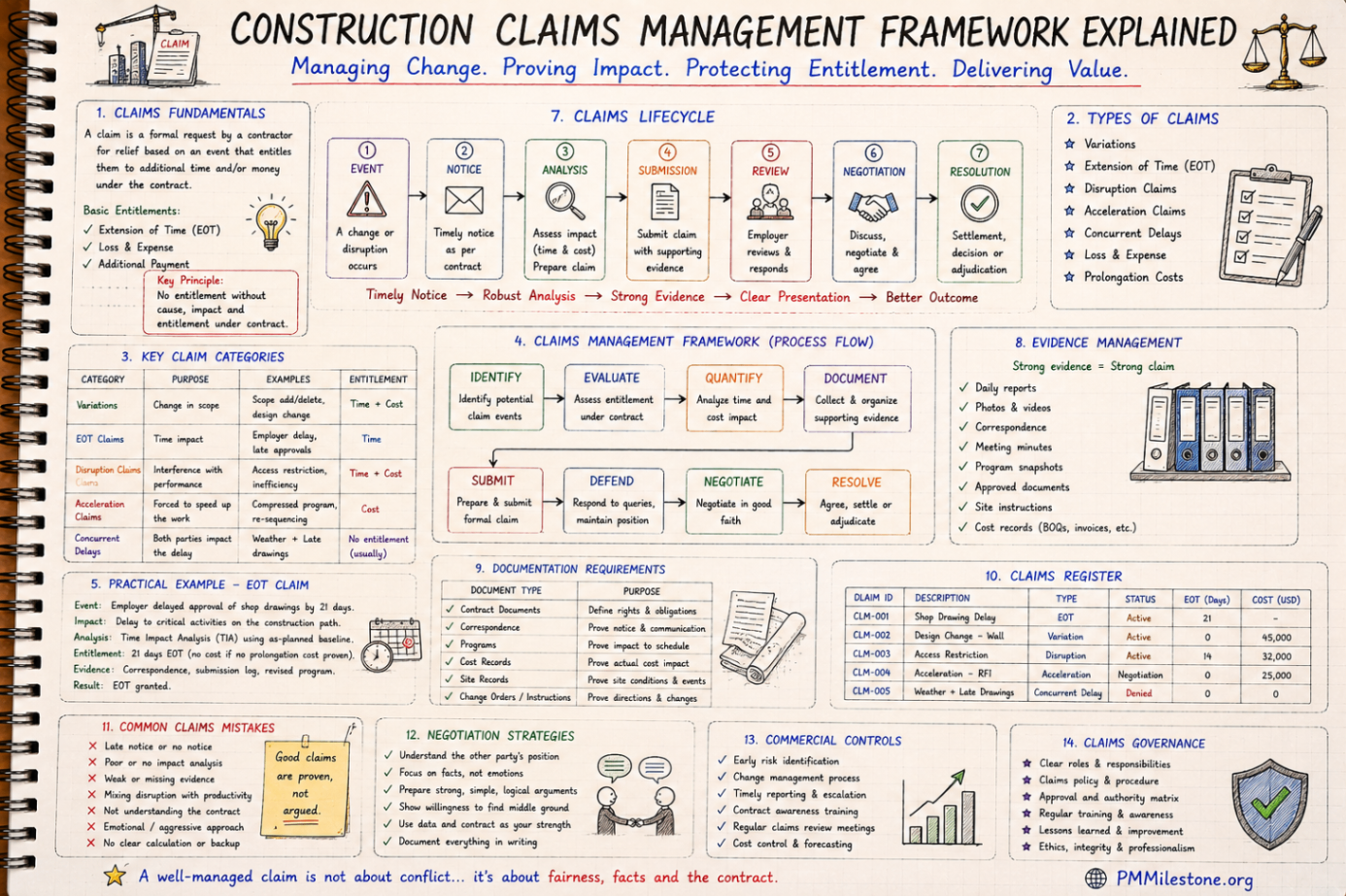
The Complete Construction Delay Analysis Guide

A complete, practitioner-led walkthrough of construction delay analysis: delay categories, methodologies, claims preparation and mitigation strategies for real EPC and building projects.

Read article
Construction productivity charts overlaid on worksite silhouettes
Knowledge pillar

Construction Productivity Management

How to measure, benchmark and improve construction productivity at crew, discipline and project level — and use it as a leading indicator for schedule and cost.

Read article
Knowledge pillars

Knowledge pillars across the Academy

Deep-dive pillar articles covering EVM, delay analysis, scheduling, risk and project controls — refreshed on every visit.

Browse all knowledge pillars
Open notebook with question marks under soft blue light
Knowledge pillar

Q&A and Exam-Style Questions

Concept questions in the style of PMP / PMI examinations, plus practical scenarios from real construction and PMO environments.

Read pillar
Construction productivity charts overlaid on worksite silhouettes
Knowledge pillar

Construction Productivity Management

How to measure, benchmark and improve construction productivity at crew, discipline and project level — and use it as a leading indicator for schedule and cost.

Read pillar
Delay Analysis Masterclass diagram: process, delay types, methods, concurrent delay logic and claim success checklist
Knowledge pillar

Delay Analysis Masterclass

A masterclass on how senior project controls professionals prove time entitlement — delay types, methods, critical-path impact, concurrent delay logic, documentation discipline and EOT strategy.

Read pillar
Dark navy timeline graphic showing a delayed construction schedule with critical path impact bands
Knowledge pillar

The Complete Construction Delay Analysis Guide

A complete, practitioner-led walkthrough of construction delay analysis: delay categories, methodologies, claims preparation and mitigation strategies for real EPC and building projects.

Read pillar
Risk distribution and mega project silhouette
Knowledge pillar

Risk Management for Mega Projects

How risk management actually works on mega projects — beyond the register, into quantitative analysis, reserve sizing, risk-adjusted forecasts and structured recovery.

Read pillar
Dark navy executive project controls dashboard with KPI tiles, S-curve and risk heatmap
Knowledge pillar

Project Controls Dashboard Design Masterclass

How to design project controls dashboards that drive real decisions — KPI selection, EVM visualisation, risk indicators, layout patterns and the most common dashboard mistakes.

Read pillar
Dark navy collage of construction project photos and editorial layouts
Knowledge pillar

Case Studies and Insights

Auto-synced articles from PMMilestone3.com bring fresh case studies, failure patterns and project-intelligence commentary into the Academy.

Read pillar
Executive PMO dashboard with KPI tiles and portfolio heatmap
Knowledge pillar

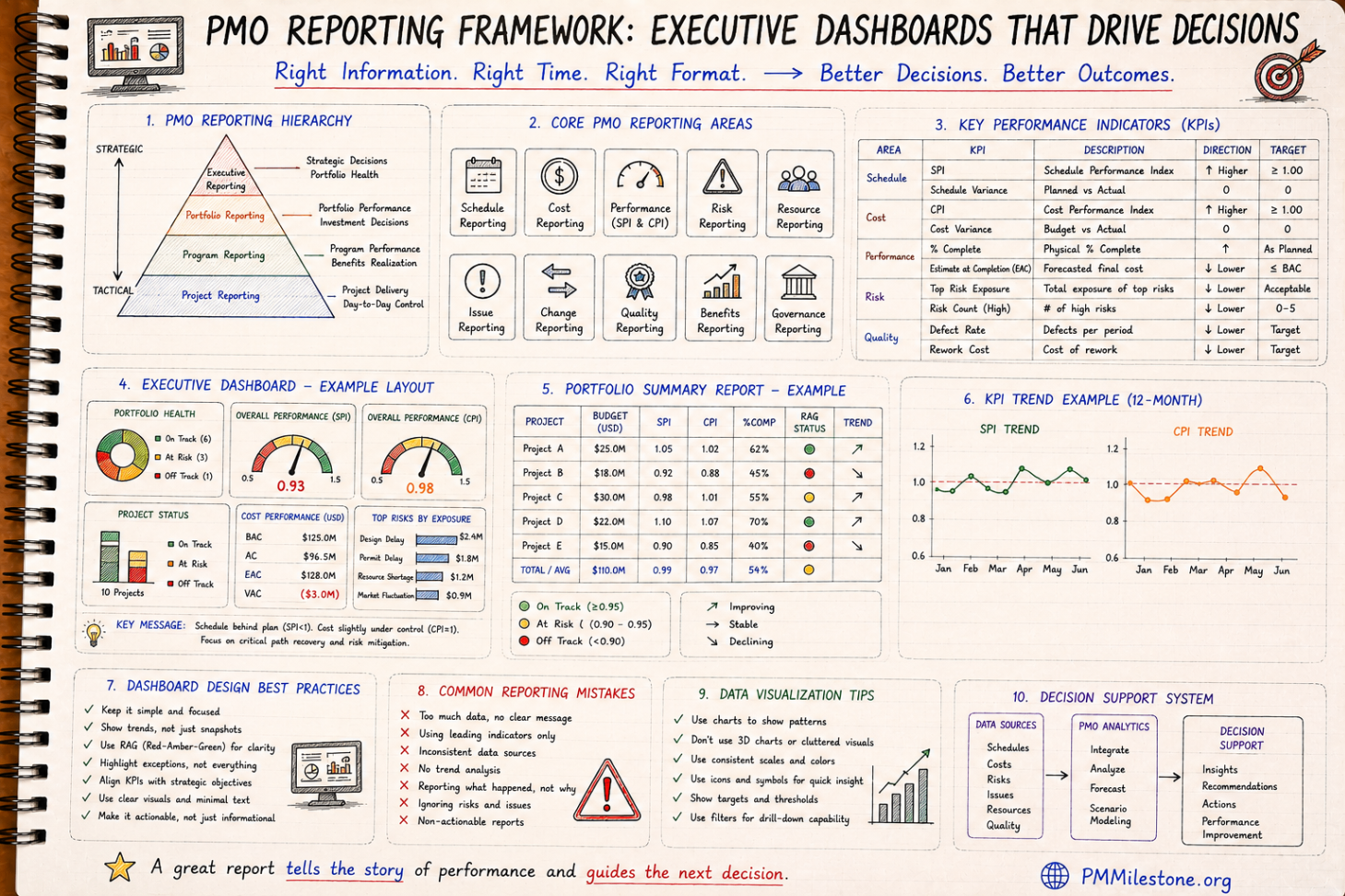
PMO Reporting and Executive Dashboards

How to design PMO reports and executive dashboards that drive decisions instead of just describing status — KPI hierarchies, narrative structure and the cadence that keeps them honest.

Read pillar
Open glowing editorial book in a dark navy library
Knowledge pillar

Guides and Long-Form Articles

Practitioner-written explainers across EVM, planning, forecasting, risk and PMO design — read as a syllabus or as a refresher.

Read pillar
Dark navy floating glass calculator cards with glowing inputs
Knowledge pillar

Interactive Calculators

More than thirty client-side calculators covering EVM, schedule, risk, construction productivity, contingency, PMO maturity and career planning.

Read pillar
Project forecasting cockpit with probabilistic S-curves
Knowledge pillar

The Complete Guide to Project Forecasting

How professional project controls teams forecast cost, schedule, productivity and cash flow — and how to combine them into a single risk-adjusted view a board can act on.

Read pillar
Complete Earned Value Management framework diagram showing PV, EV, AC, CPI, SPI, forecasting, curves, pitfalls and key takeaways
Knowledge pillar

The Complete Earned Value Management (EVM) Framework Explained

A complete, practical EVM pillar covering the three baselines, core values, performance indices, forecasting logic, dashboard design, common pitfalls and how to use EVM on real projects.

Read pillar
Enterprise Upgrade

Upgrade to Enterprise-Level Project Intelligence

Discover the Elite Project Controls System — a professional intelligence framework for modern project controls, forecasting, executive reporting, AI PM workflows and risk management.

  • Executive-grade KPI frameworks
  • AI-powered project workflows
  • Forecasting & risk intelligence
  • PMO-ready reporting templates
Buy me a coffee