Case Studies and Insights: Project Intelligence from PMMilestone Intelligence Center, in Context


Why fresh insight matters
Project controls knowledge tends to be presented as static — a textbook, a process, a standard. In reality the discipline is shaped by what is happening on live projects right now: new tools, new failure modes, new regulatory shifts and new industry contracts. The Insights pillar is how the Academy stays current with that flow.
The pillar is fed by PMMilestone Intelligence Center, the long-running practitioner blog that has been publishing on project intelligence, EVM, AI in project management and capital project lessons learned for years. The feed is curated and tagged so that fresh articles drop into the relevant Academy tracks automatically.
Case studies as a teaching device
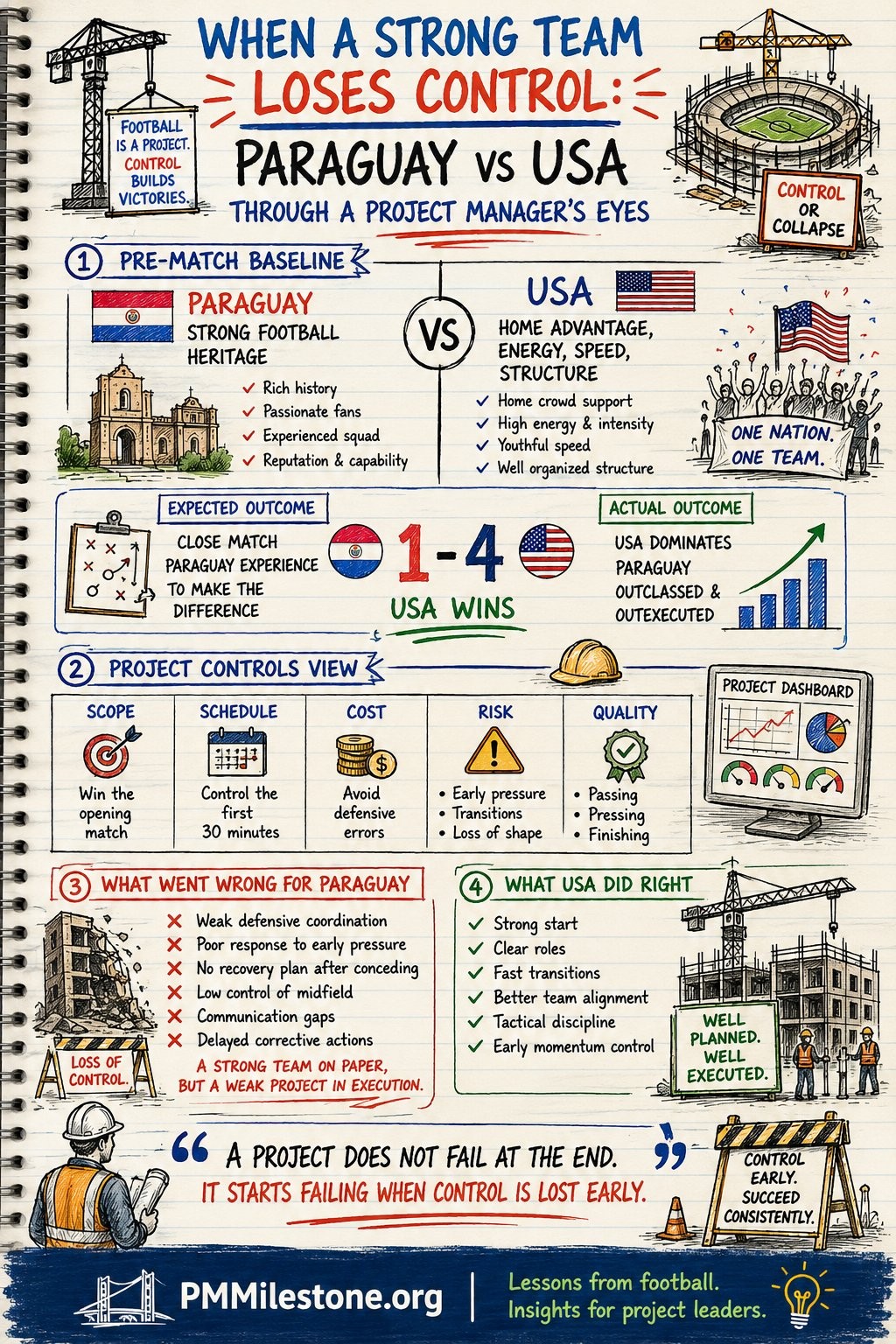
Abstract guides explain how techniques work in principle. Case studies show how they play out under pressure. A worked case study walks through a real or representative project, the controls posture it adopted, the surprises it hit, and the lessons that emerged. They are particularly valuable for practitioners who already know the theory and are looking for nuance.
Each case study on PMMilestone is structured around the same controls vocabulary used elsewhere in the Academy — WBS, EVM, float, risk, contingency — so the lessons are immediately portable to your own work.

Failure patterns are more useful than successes
It is tempting to focus on case studies of successful projects. In practice, failure case studies teach more. Successful projects tend to attribute success to the unique conditions of the project itself, while failures expose structural weaknesses that recur across many environments.
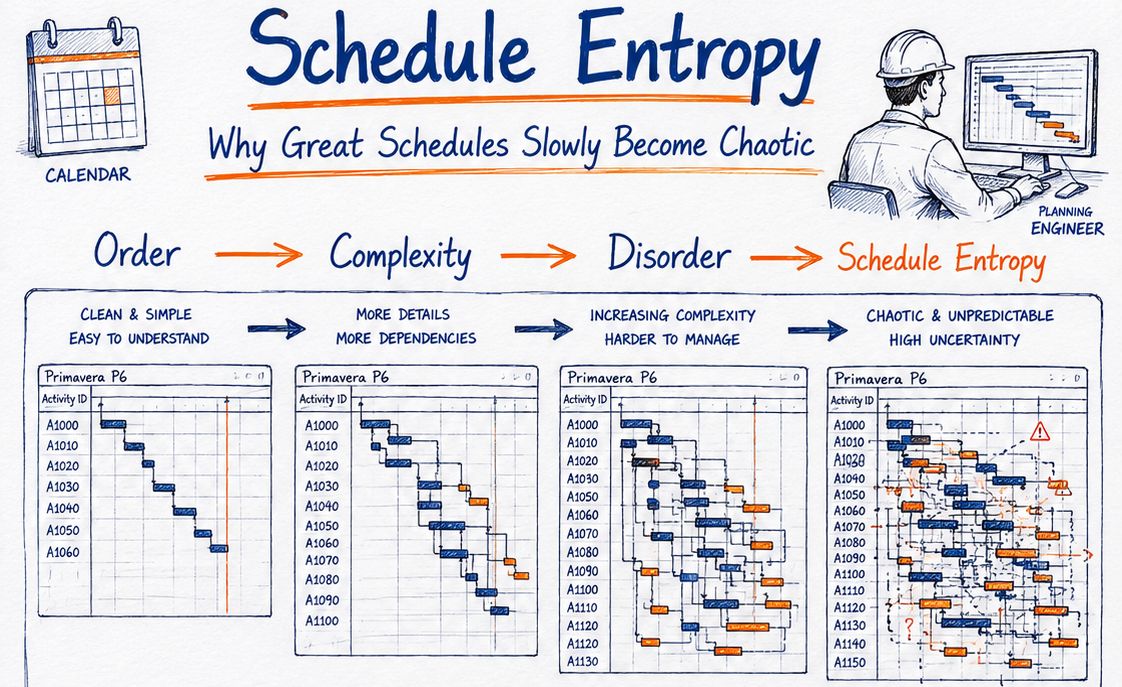
The Insights pillar deliberately highlights failure patterns — runaway variations, eroded float, hollow risk registers, overconfident reserves, broken interfaces — because recognising them early is one of the highest-leverage skills a project controls professional can develop.

Commentary and industry-watching
Beyond case studies, the Insights pillar carries commentary on the wider industry: shifts in how owners structure megaprojects, the spread of AI tools through PMO functions, changes in PMI and AACE practice standards, and emerging delivery models such as integrated project delivery.
This commentary is opinionated where it needs to be and labelled as such. The goal is to help practitioners form their own views, not to push a single perspective.
How to use the feed
A simple weekly cadence works well: spend fifteen minutes each week scanning the latest Insights and reading one full article. Over a year, that habit alone exposes you to fifty topical pieces of project controls intelligence and keeps your thinking fresh.
More intensive users treat the feed as research input for their own writing, training material or internal lessons-learned exercises. Every article links back to its full version on PMMilestone Intelligence Center for citation.
How the pillar connects to the rest
Insights articles link back to the relevant tracks for foundational background, to the relevant calculators for hands-on practice with the metrics discussed, and to the Q and A pillar for related exam-style questions. The four pillars together close the learning loop: theory, practice, recall and real-world context.
This integration is what turns the Academy from a content collection into a continuous-improvement environment for project controls practitioners.
A long-term professional development resource
Used over years, the Insights pillar becomes a kind of institutional memory. Practitioners who read it weekly accumulate exposure to hundreds of projects, dozens of failure patterns and a steady stream of commentary on industry direction. That exposure compounds in a way that no single textbook or certification can match.
Combined with the guides, calculators and Q and A, the Insights feed is one of the reasons PMMilestone is positioned not just as a tool site but as a long-term career resource for project controls, planning, EVM and PMO professionals.
Turning insights into internal lessons learned
The practical value of an insight article increases when a team turns it into a short internal lesson. After reading a case study, ask three questions: where does this pattern exist in our current portfolio, what leading indicator would reveal it early, and which control action would reduce the chance of repetition? That simple conversion turns external commentary into internal improvement.
Mature PMOs can use the Insights pillar as a standing agenda item in monthly controls forums. One article, one failure pattern, one local implication and one action. Over time, that rhythm creates a living lessons-learned process that is easier to sustain than a large database no one opens.
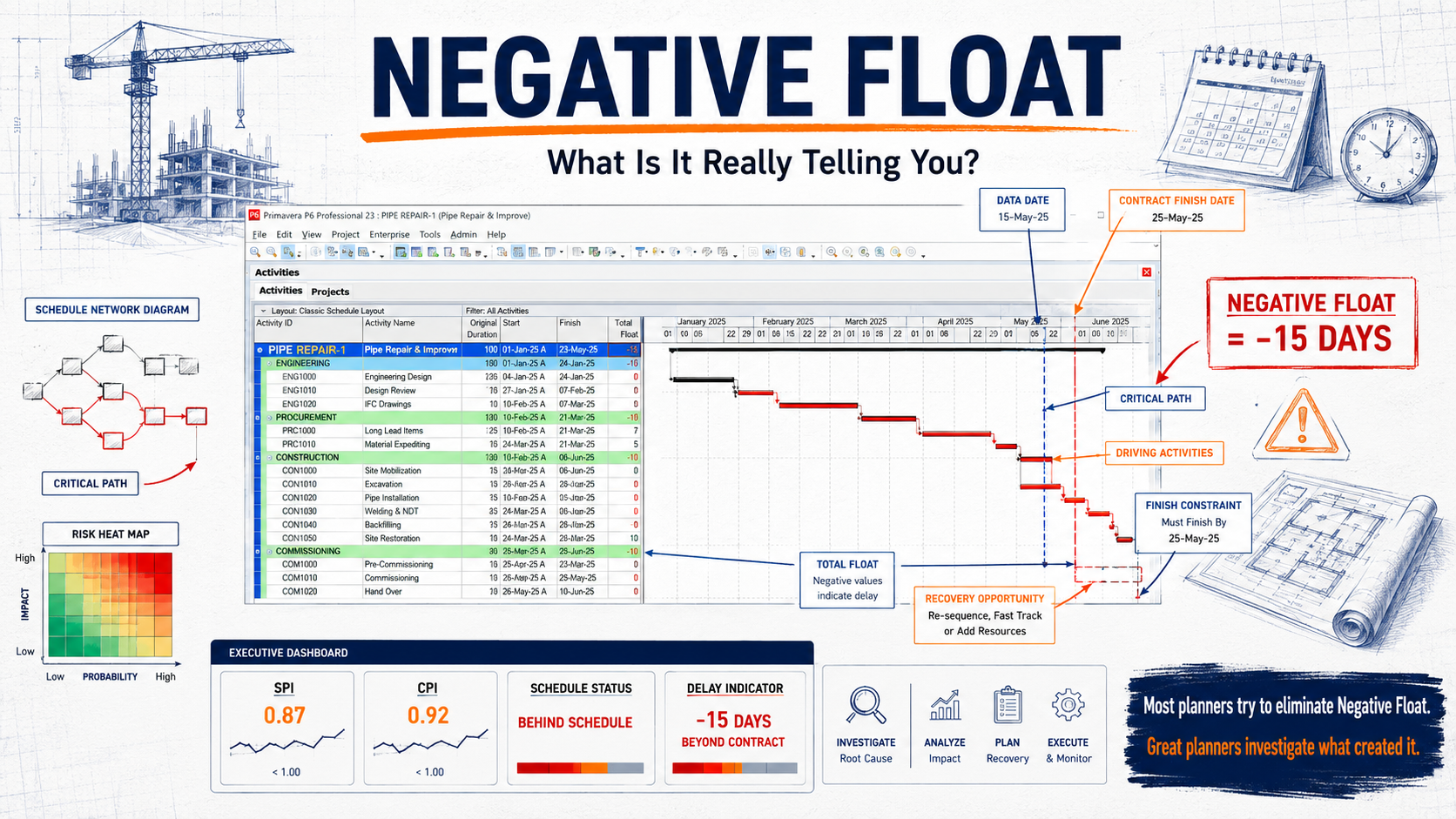
This is also where cross-linking matters. A case study about float erosion should lead back to the planning and scheduling track and the float calculator. A story about cost overrun should lead back to EVM and EAC. The reader moves from the story to the method, then to the tool, then back to their own project with a concrete action.
That movement is the point of the Academy. Insights are not published as isolated commentary; they are deliberately connected to the structured guides, definitions and calculators that help a practitioner turn observation into a repeatable control habit.
Next steps on PMMilestone
Use these pages to deepen the topic, verify terminology, compare real cases and move from theory into applied project controls practice.
Other knowledge pillars
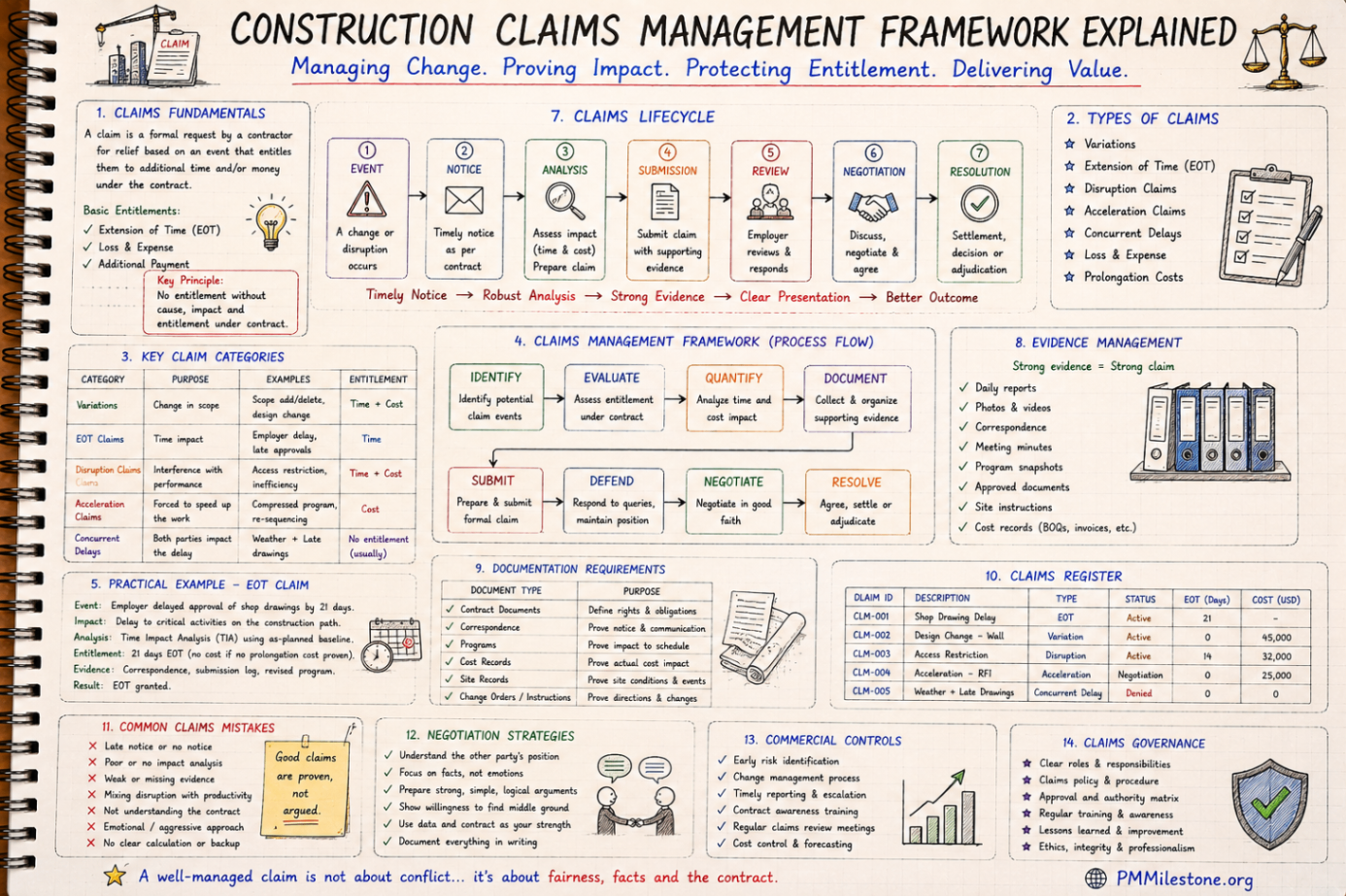
Construction Claims Management Framework Explained
A practical claims management framework for construction and infrastructure projects covering entitlement, records, analysis, negotiation and governance.
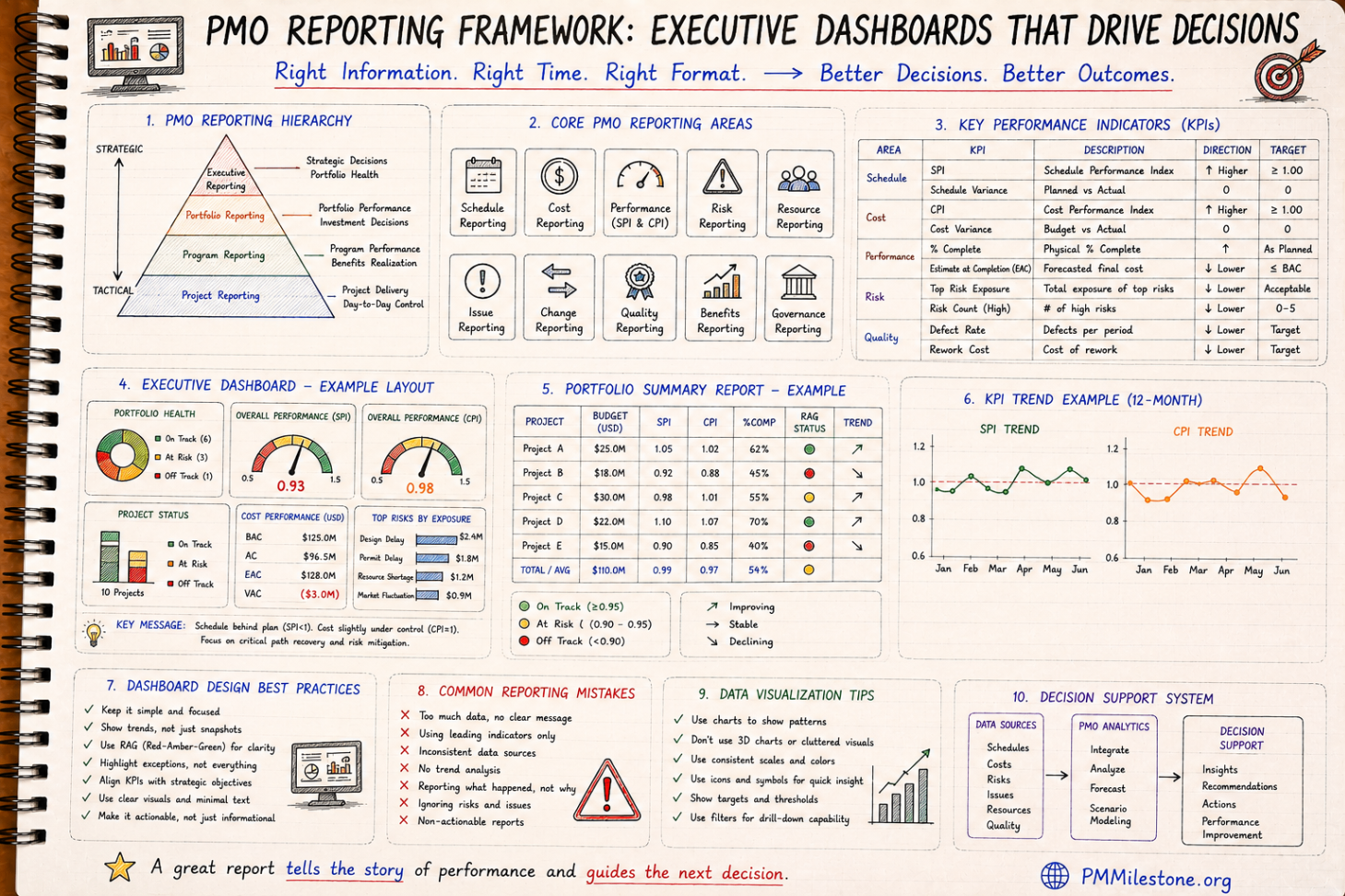
PMO Reporting Framework
A reference guide to executive PMO reporting covering dashboard structure, KPI choice, portfolio views, reporting cadence and common reporting mistakes.

Guides and Long-Form Articles
Practitioner-written explainers across EVM, planning, forecasting, risk and PMO design — read as a syllabus or as a refresher.