The Complete Construction Delay Analysis Guide

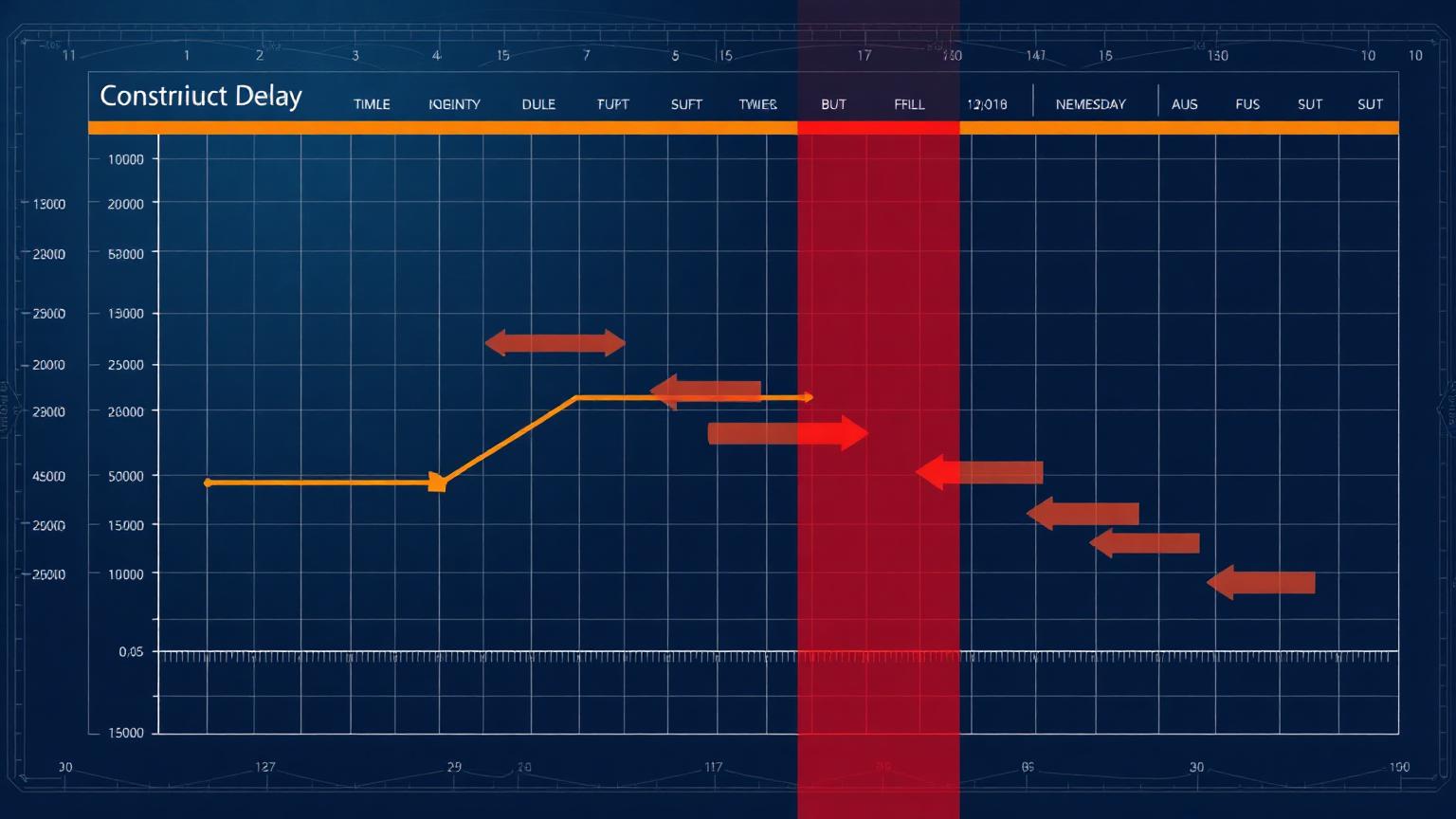
Why delay analysis matters more than ever
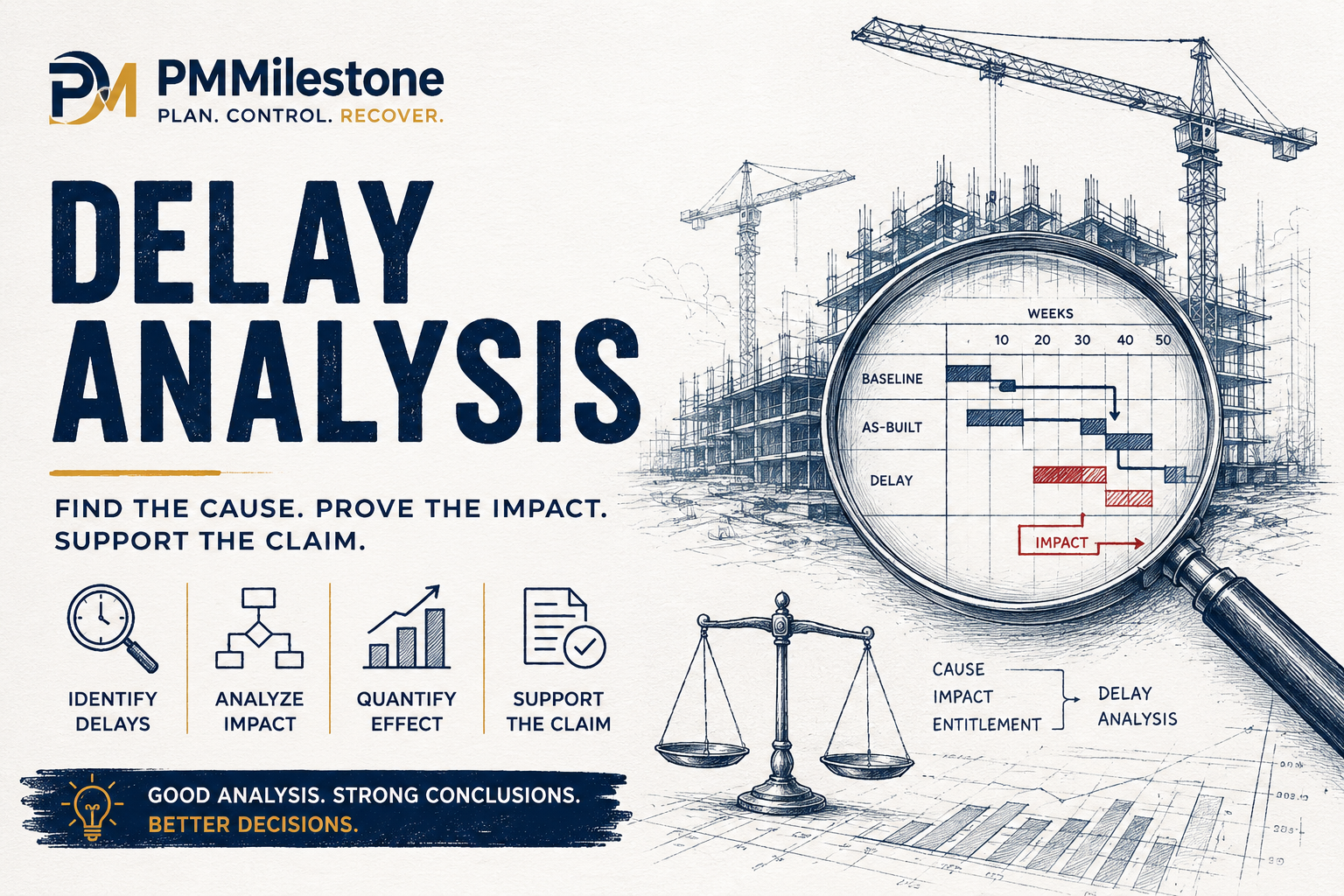
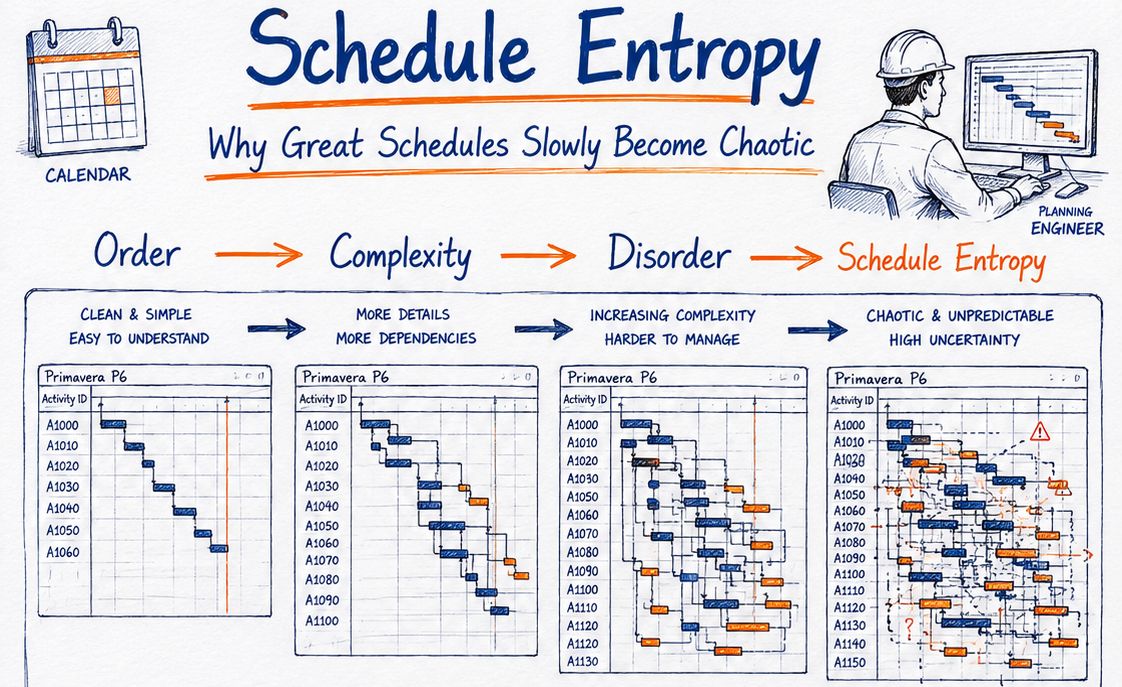
Construction projects rarely fail in a single dramatic moment. They drift. A late permit here, a missed shop drawing there, a productivity dip that nobody flags, and three months later the project board is asking why the milestone has moved twelve weeks to the right with no clear owner. Delay analysis is the discipline that reconstructs that drift in evidence terms — who caused what, when, and what it cost in time and money. Done well, it protects the project from unfair liability, supports legitimate extensions of time, and reveals the systemic weaknesses in planning, procurement and coordination that quietly produced the slip.
Modern construction is more exposed to delay risk than at any time in the past two decades. Supply chains are tighter, regulatory cycles are longer, design changes are more frequent, and the technical interfaces between disciplines have multiplied. At the same time, contracts are more sophisticated, owners more analytically literate, and contractors more willing to pursue claims. The combined effect is that even mid-sized projects now routinely require structured delay analysis, not just for litigation but for ordinary monthly reporting.
Treating delay analysis as a forensic exercise reserved for disputes is a mistake. The same techniques used in claims preparation — windowing, fragnets, baseline comparison, critical path tracing — are also the most powerful tools available for ongoing project intelligence. Teams that build them into their standard reporting cycle catch problems early, while teams that only reach for them when the lawyers arrive are usually too late.
Delay categories: excusable, non-excusable and concurrent
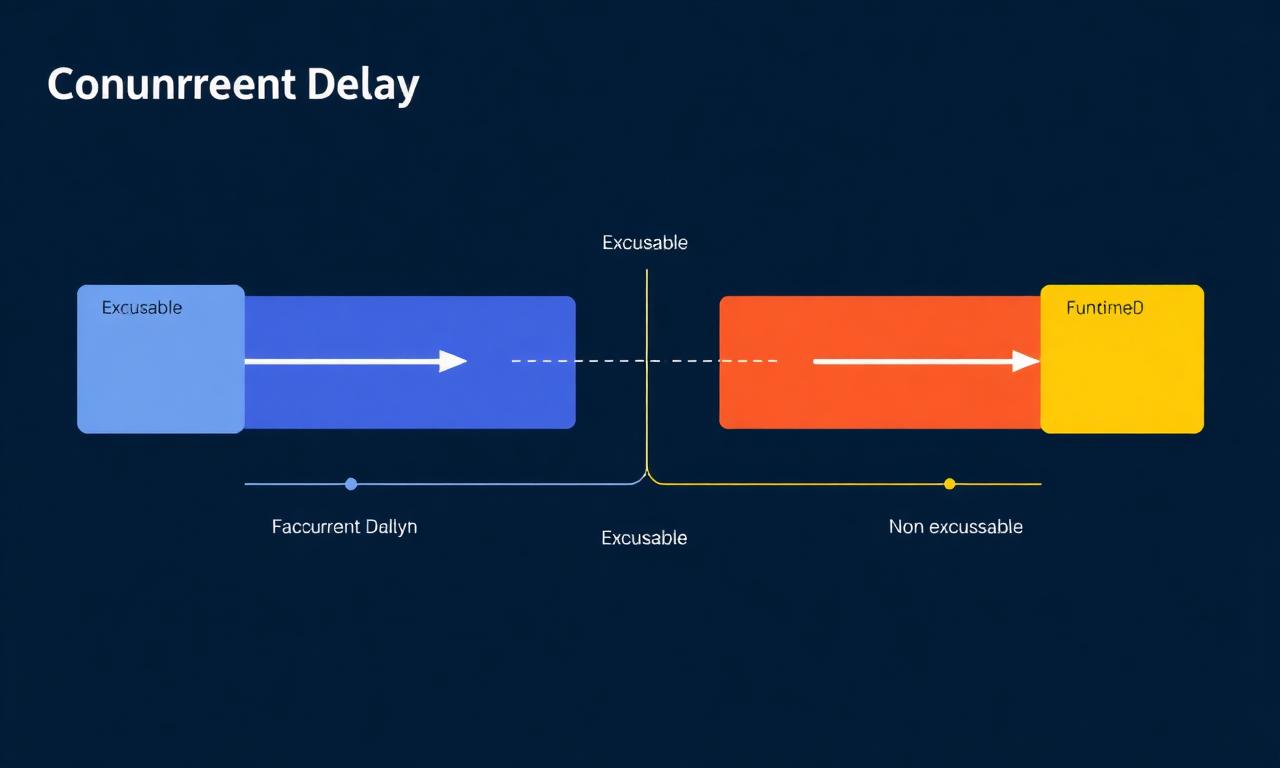
Every delay analysis starts with classifying the delay. The three categories in standard use across most international forms of contract are excusable compensable, excusable non-compensable, and non-excusable. An excusable compensable delay is one caused by the owner or by risks the owner has assumed under the contract — late access, late information, scope changes, owner-directed suspensions. The contractor is normally entitled to both time and money. An excusable non-compensable delay is one caused by neutral events such as exceptional weather, force majeure or epidemics. The contractor is normally entitled to time but not to additional cost. A non-excusable delay is one caused by the contractor or its supply chain. No time, no money, and potentially liquidated damages.
Concurrent delay is the category that turns most claims into long debates. A true concurrent delay occurs when two or more independent causes of delay, one excusable and one non-excusable, affect the critical path during the same period. The standard practitioner view, broadly aligned with the Society of Construction Law Delay and Disruption Protocol, is that the contractor is entitled to an extension of time but not to delay-related cost during the concurrent period. Sequential delays that merely overlap in time are not concurrent and should not be treated as such.
Getting the classification right is half the analytical work. Contracts vary, jurisdictions differ, and bespoke amendments often shift the default allocation. Before any analysis is performed, the analyst should read the time provisions of the contract carefully, identify the named risk events, and confirm how concurrency is addressed. Skipping that step produces analyses that are technically clean but contractually irrelevant.
The critical path is the only delay that matters
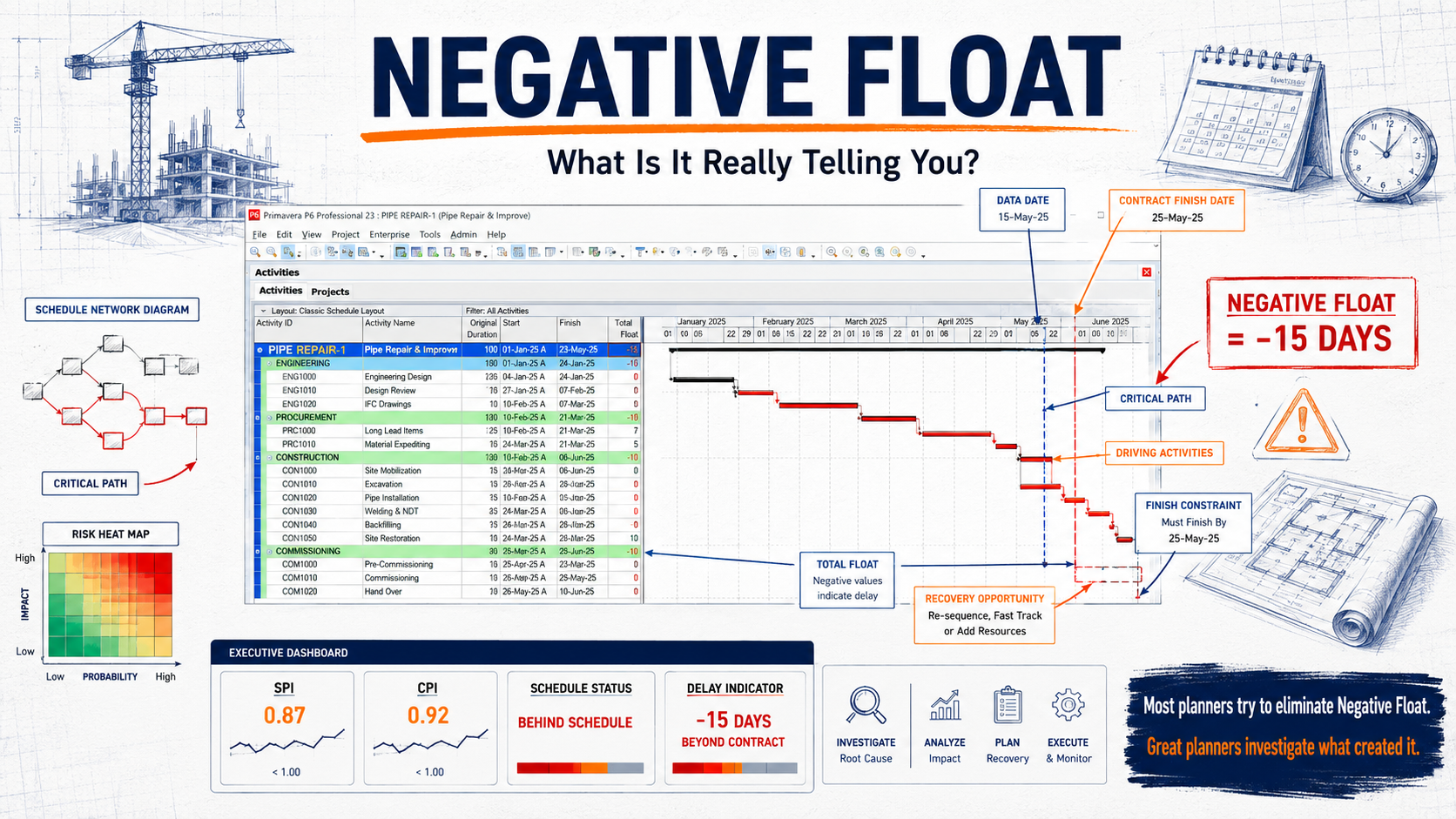
A delay that does not extend the critical path does not delay the project. That single sentence sits behind every credible delay analysis and is the reason critical path method scheduling is the backbone of the discipline. Activities on the critical path have zero or negative total float; any extension of their duration moves the project completion date. Activities off the critical path can usually absorb delay within their available float before they begin to push the completion.
In practice, the critical path moves. As progress is recorded and activities are completed, the longest chain through the remaining network changes shape. A path that was non-critical at the start of the project can become critical halfway through, and a delay that appeared trivial in the baseline can become the controlling event in a later window. Good delay analysis tracks the critical path at every analysis date, not just at baseline.
Float ownership is a related issue that causes more disputes than it should. The dominant industry view is that float is a project resource, available to whichever party needs it first, unless the contract explicitly allocates it. Contractors should not treat float as a private buffer, and owners should not assume they can consume float without consequence. Either position eventually invites a claim.
Methodology one: Time Impact Analysis
Time Impact Analysis (TIA) is a prospective method. The analyst takes the schedule that was in force immediately before a delay event, inserts a fragnet representing the event, and recalculates the network to see how the completion date moves. The difference between the pre-event and post-event finish dates is the impact attributed to the event.
TIA is the method most contracts and protocols recommend for evaluating extension of time entitlement during the project, because it preserves the schedule logic that was actually in use at the time of the event. It is forward-looking and avoids the hindsight bias of methods performed at the end of the project. It is also the method most aligned with contemporaneous project management — the same fragnet used for a TIA can drive the recovery plan and the change order narrative.
The weakness of TIA is its dependence on schedule quality. If the contemporaneous schedule is poorly logic-linked, full of constraints, or out of date, the fragnet insertion produces unreliable results. The discipline of keeping a clean, well-updated schedule is therefore not just good housekeeping; it is what makes a defensible TIA possible six or twelve months later.
Methodology two: Window Analysis
Window Analysis, sometimes called Time Slice Analysis, divides the project duration into successive windows — usually monthly — and analyses each window independently. At the start of each window the analyst examines the schedule, identifies which path is critical, and at the end of the window measures how the critical path has moved. Delay events occurring in that window are then mapped to the observed movement of the critical path.
Window Analysis is particularly powerful for long, complex projects with many overlapping causes of delay. By isolating each window, it prevents later events from masking earlier ones and exposes the dynamic nature of the critical path. It also closely mirrors how monthly project review meetings should already be working, which makes it the natural method for contractors who want their monthly reporting and their eventual claim preparation to be the same body of evidence.
The drawback of Window Analysis is effort. Done properly it requires a clean schedule update at the start and end of every window, with progress, logic and resource changes documented. Cutting corners — for example, retrofitting windows from the final schedule rather than from contemporaneous updates — produces results that are easy to challenge in dispute.
Methodology three: As-Planned versus As-Built
As-Planned versus As-Built (APvAB) compares the original baseline schedule to the schedule that actually happened, identifies the variances, and assigns causes to the differences. It is intuitive, visually clear and easy to communicate to non-technical audiences, which is why it remains popular in early-stage disputes and in executive reporting.
Its weakness is that it ignores the dynamic nature of the critical path. A delay on a path that was non-critical at baseline may appear important in APvAB even though it never affected completion, and a delay on a path that became critical mid-project may be understated. For that reason, APvAB is best used as a high-level orientation method, supported by TIA or Window Analysis for activities or events that actually drove the completion date.
A practical compromise many practitioners use is As-Planned versus As-Built with critical path overlay. The same comparison is performed, but the critical path is marked at each significant interval. This preserves the readability of APvAB while restoring some of the rigour of the dynamic-path methods.
Methodology four: Collapsed As-Built
Collapsed As-Built, sometimes called As-Built But-For, takes the final as-built schedule, removes the delay events caused by one party, and recalculates the network to estimate what the completion date would have been but for those events. The difference between the actual completion date and the collapsed completion date is the delay attributable to the removed events.
It is a retrospective method, useful at the end of a project when the as-built record is complete and contemporaneous schedules are unreliable. Its strength is that it works directly with what actually happened. Its weakness is that it depends heavily on the quality and impartiality of the as-built schedule, and on the analyst's judgement about which logic ties should remain in the collapsed scenario.
Collapsed As-Built is more often seen in formal disputes than in ongoing project reporting. When it is used, it should normally be triangulated against at least one prospective method. A claim that rests on a single methodology, no matter how well executed, is structurally weaker than one supported by two complementary techniques arriving at similar conclusions.
Building a defensible claim narrative
Methodology is not enough on its own. A delay claim is a narrative argument, supported by analysis, that must be coherent enough for a project board, an engineer's representative or a tribunal to follow without specialist software. The strongest claims open with a clear timeline of events, move into the contemporaneous record (progress reports, correspondence, RFIs, meeting minutes), and only then introduce the schedule analysis as evidence supporting an already-coherent story.
Every event in the narrative should be tied to three things: a contractual basis for entitlement, a contemporaneous record proving it occurred, and a schedule analysis showing the impact on the critical path. Gaps in any of the three weaken the claim. Analysts who present elegant schedule arithmetic without contractual or evidentiary support are routinely surprised when the claim is rejected.
Cost claims should be kept separate from time claims in their internal logic, even when they are presented together. Prolongation costs, disruption costs and acceleration costs are evaluated under different principles. Blending them in a single calculation invites argument over every line.
Mitigation: the cheapest delay is the one you prevent
Most claims arrive because mitigation was either absent or invisible. Owners are far more willing to grant time and money when the contractor has demonstrably tried to recover, redeployed resources, accelerated where reasonable, and kept the owner informed. The same mitigation that improves the claim also reduces the underlying delay, so the discipline pays back twice.
Strong mitigation routines have three ingredients: an early-warning system tied to the schedule (typically float erosion tracking and SPI trending), a standard change-control workflow that turns delay events into fragnets in real time, and a recovery planning protocol that produces resourced, logic-linked recovery schedules rather than wishful thinking. Where these three are in place, most delays are absorbed before they reach the critical path.
Mitigation is also where calculators on the platform become directly relevant. Float erosion analysis, critical path risk scoring, schedule compression evaluation and EVM trending all support the routines described above. Practitioners who want to operationalise the principles in this guide can move directly from reading it into running the numbers on their own projects.
Common delay scenarios in real construction
Late design information is still the most common single cause of delay on construction projects worldwide. The pattern is familiar: design packages issued late, RFIs accumulating, drawings revised mid-construction, and rework consuming the float that should have absorbed downstream risk. Strong document-control discipline, paired with an integrated design and construction schedule, prevents most of it.
Long-lead procurement is the second pattern. Specialist equipment, imported materials and bespoke components frequently arrive later than the procurement plan promised, and the construction sequence has been built around the optimistic dates. Procurement risk should be reflected in float allowances in the schedule and in the risk register, not assumed away.
Variations and scope creep generate a quieter but equally damaging pattern. Individually small instructions accumulate across many work packages, each absorbing small amounts of float, until the schedule has no resilience left. A discipline of evaluating every variation against the schedule before it is accepted is the single most effective control for this pattern.
Weather and force majeure are real but often overstated. A robust analysis distinguishes between weather days that exceeded the contractually allowed baseline and those that fell within it, and assesses critical path impact rather than aggregate working days lost. Many weather claims fail because the analyst conflated lost days with critical delay.
Frequently asked questions
Is float owned by the contractor or the owner? The dominant view in international practice is that float is a project resource and is consumed on a first-come, first-served basis unless the contract states otherwise. Bespoke amendments can change this, so the contract should always be read first.
Which methodology is best? There is no single best method. TIA is generally preferred for contemporaneous extension of time evaluation, Window Analysis for long disputed periods, APvAB for high-level orientation, and Collapsed As-Built for retrospective forensic work. Strong claims often use more than one.
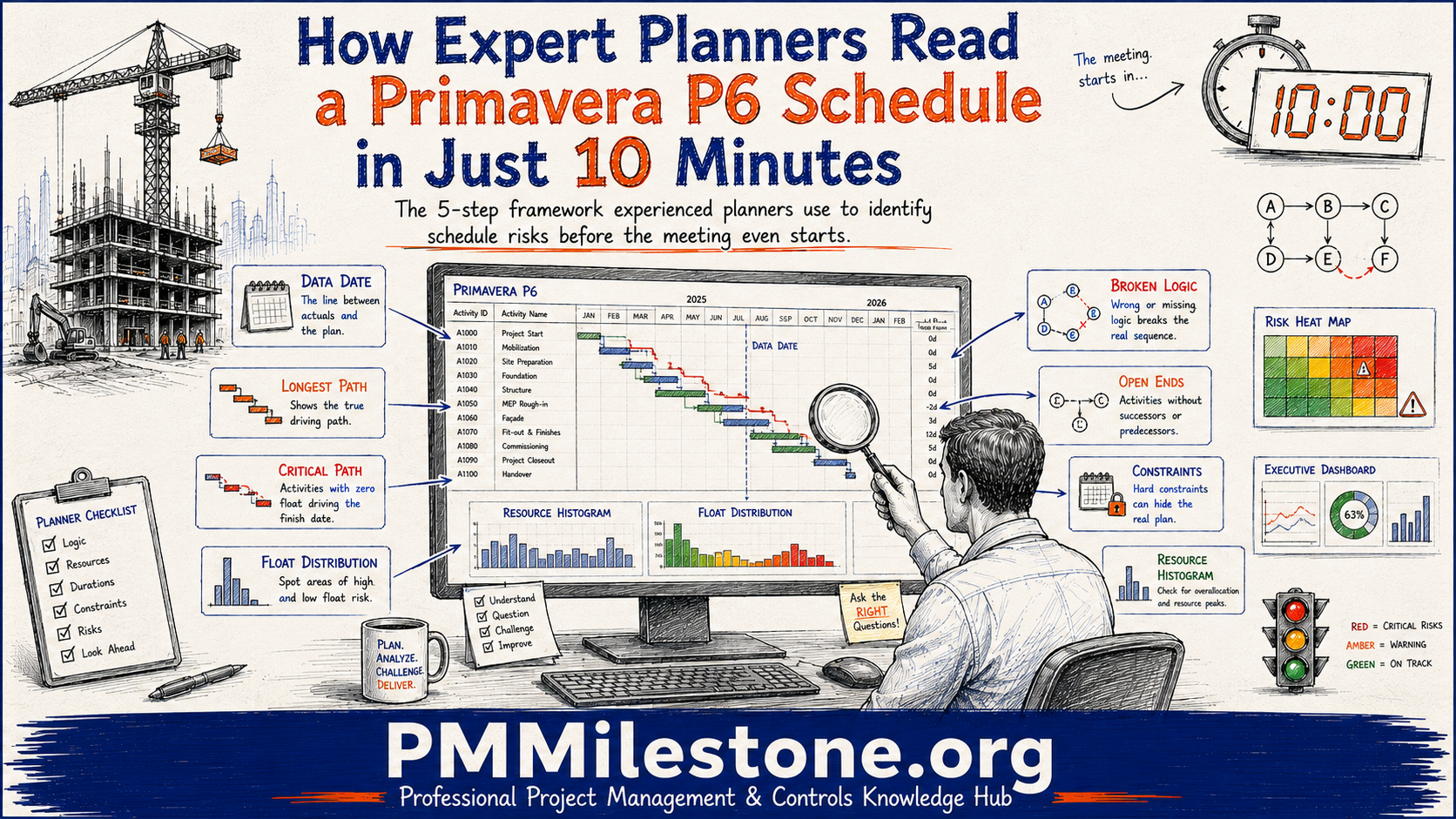
Do I need specialist software? Primavera P6 or equivalent is required for serious analysis on any sizeable project. The technique matters more than the brand, but the schedule must be logic-linked and updated to a professional standard or no method will produce defensible results.
Frequently asked questions
Who owns float on a construction project?
By default in international practice, float is a project resource consumed on a first-come, first-served basis unless the contract explicitly allocates it.
What is the difference between concurrent and sequential delay?
Concurrent delay involves two independent causes affecting the critical path at the same time. Sequential delays merely overlap in calendar time without both affecting the critical path.
Which delay analysis methodology should I use?
Time Impact Analysis for contemporaneous EOT evaluation, Window Analysis for long disputed periods, As-Planned vs As-Built for orientation, and Collapsed As-Built for retrospective forensic work.
Academy articles that build on this pillar
These newer Academy articles reference this Knowledge Pillar directly — continue with them to apply the concepts.
Next steps on PMMilestone
Use these pages to deepen the topic, verify terminology, compare real cases and move from theory into applied project controls practice.
Related calculators
Open the calculators referenced in this article and run them against your own project numbers.
Float Erosion Analyzer
Track total float consumed on critical paths.
Open ScheduleCritical Path Risk Score
Score the fragility of your critical path.
Open ScheduleDelay Impact Calculator
Estimate the financial impact of project delays.
Open ConstructionVariation Order Impact Calculator
Variation value as % of contract.
Open ScheduleSchedule Compression Calculator
Cost per day of crashing the schedule.
OpenOther knowledge pillars
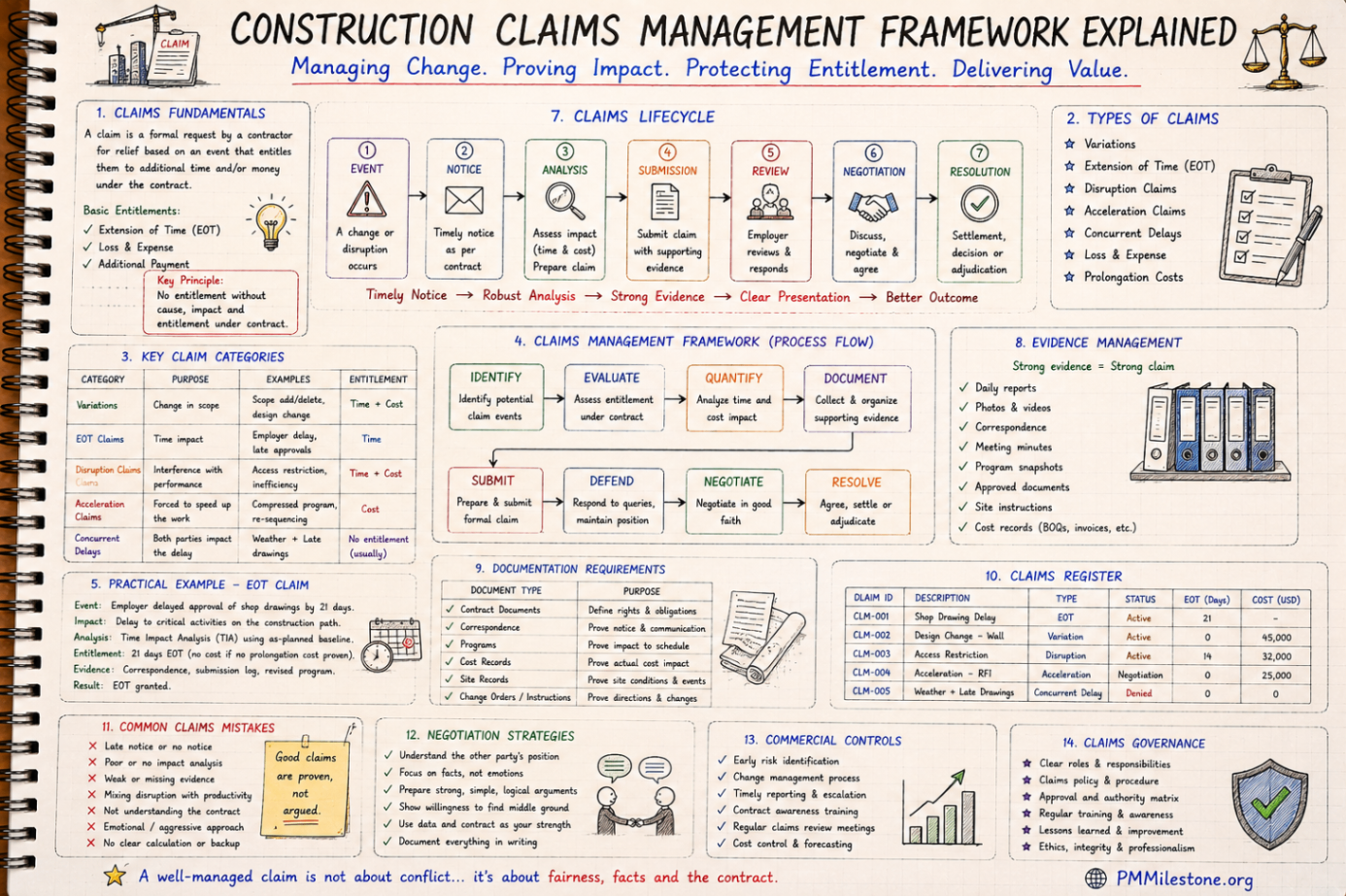
Construction Claims Management Framework Explained
A practical claims management framework for construction and infrastructure projects covering entitlement, records, analysis, negotiation and governance.
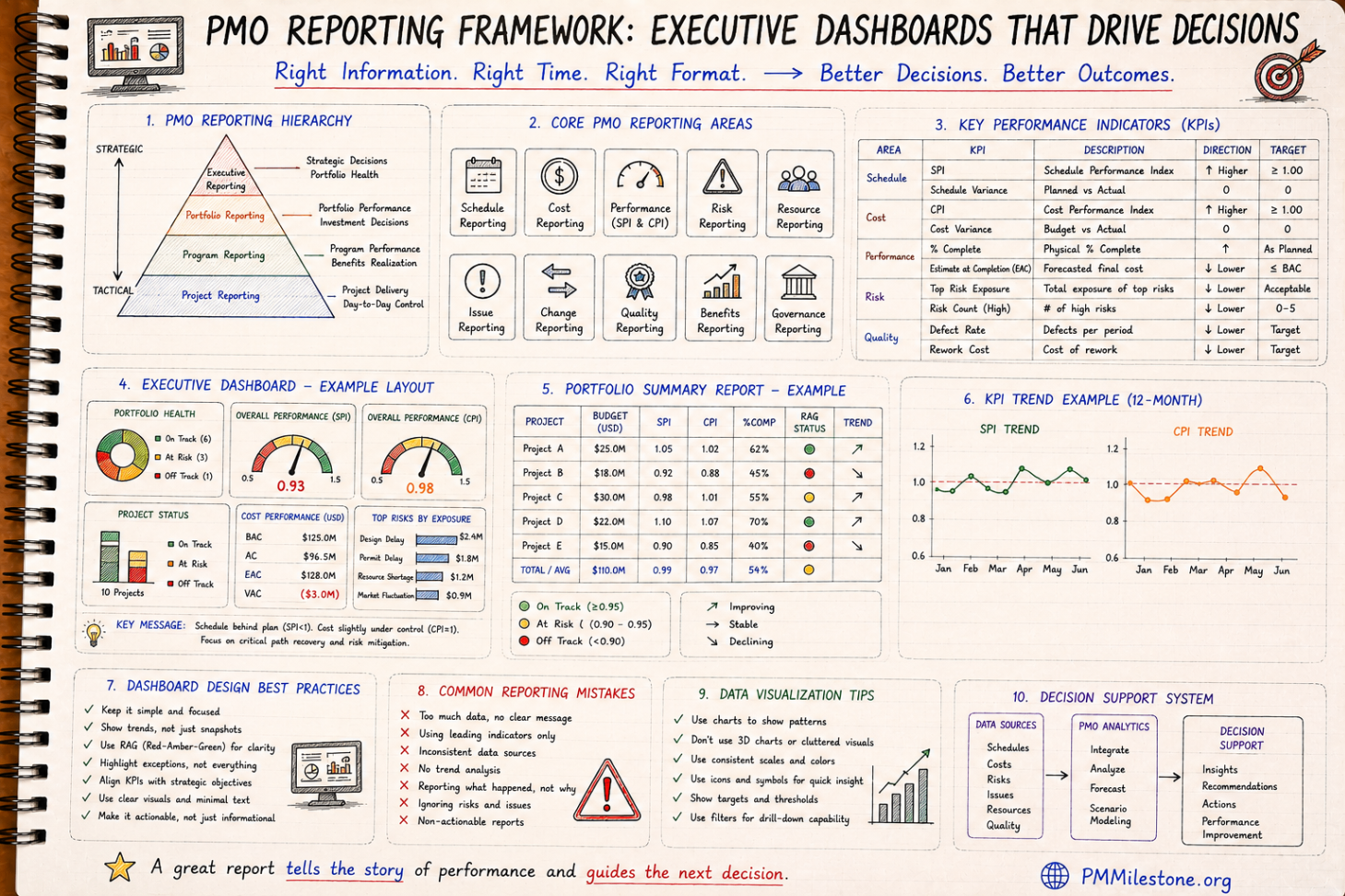
PMO Reporting Framework
A reference guide to executive PMO reporting covering dashboard structure, KPI choice, portfolio views, reporting cadence and common reporting mistakes.

Guides and Long-Form Articles
Practitioner-written explainers across EVM, planning, forecasting, risk and PMO design — read as a syllabus or as a refresher.