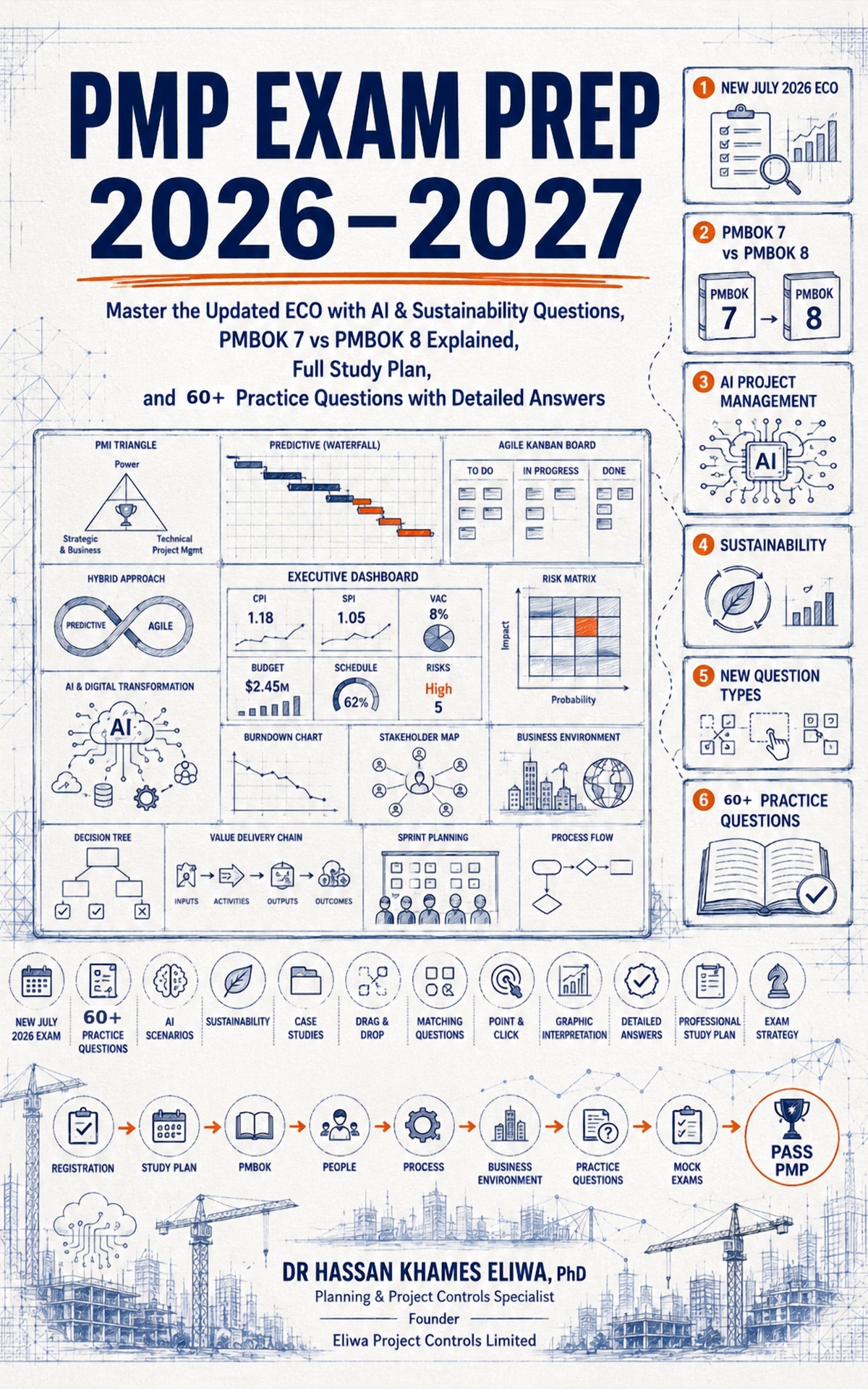
Q&A and Exam-Style Questions: Pattern Recognition for PMP, PMI and Real-World Decisions


Why questions teach faster than essays
Reading an article gives you knowledge. Answering a question forces you to retrieve that knowledge under constraint. Retrieval is what builds durable memory and decision-ready pattern recognition. That is why every serious certification, from PMP to PMI-SP to AACE, leans heavily on multiple-choice questions rather than open essays.
The Q and A pillar is built on this insight. The question bank is designed to be used in short, frequent sessions rather than in long marathons, so that retrieval happens often enough to compound.
How the question bank is structured
Questions are grouped by track to match the rest of the Academy: Fundamentals, EVM, Planning and Scheduling, Risk and Reserves, PMP and PMI Foundations and Construction Controls. Within each track, questions are tagged by difficulty so practitioners can climb the ladder rather than be ambushed.
Each question is paired with an explanation that does more than reveal the correct answer. It walks through why the other options are inferior, which is where most of the learning lives. The exam, after all, rewards candidates who can rank options on a continuum of quality, not just identify the single right answer.

Question styles you will encounter
Formula questions test direct application: given PV, EV and AC, compute SPI, CPI, EAC, ETC, VAC or TCPI. These reward fluency with the calculators and a sharp eye for misleading number combinations.
Situational questions present a scenario and ask which action a project manager should take. These reward immersion in the PMI worldview rather than calculation. Concept questions test definitions and ITTOs in disguise; they reward careful reading.
Using the bank for exam preparation
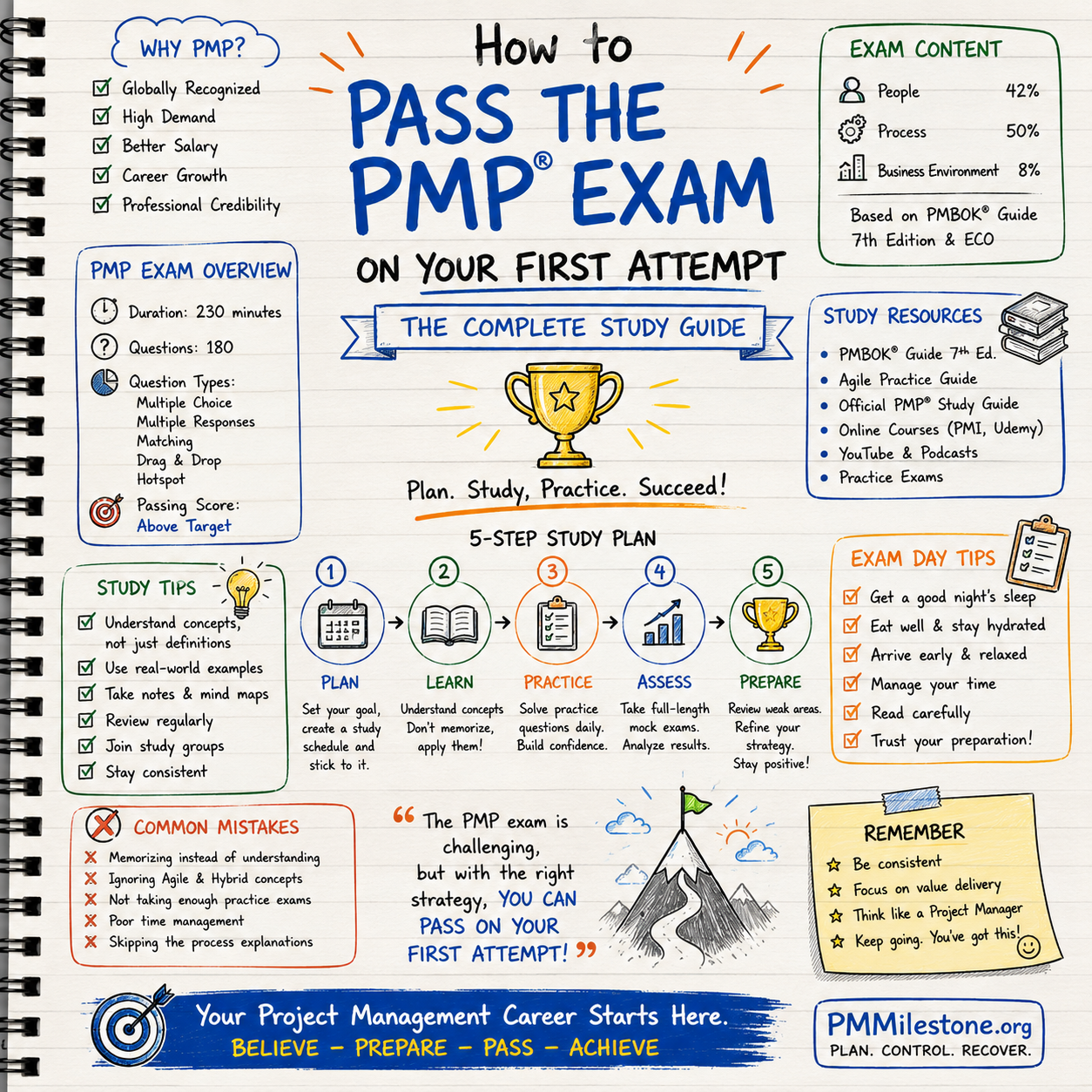
A reasonable PMP study cadence is fifty questions per day for the four to six weeks before the exam, with each session followed by a careful review of every answer — including the ones you got right. Track your accuracy over time. When you are consistently above 75% on full-length practice sets, the exam is within reach.
Do not memorise specific questions. Memorise the reasoning. The exam will not repeat questions; it will repeat patterns, and pattern recognition is what carries you through the harder items on exam day.

Using the bank for daily practice
Even if you are not preparing for an exam, the Q and A pillar is useful as a daily warm-up. Five or ten questions before a planning session sharpen your retrieval of EVM, schedule and risk concepts, and make you a more articulate participant in technical conversations.
Working planners often report that practising exam-style questions improves how they explain their own analysis to executives. The discipline of choosing between four options trains you to make trade-offs explicit, which is exactly what executives need from a controls professional.
From questions to real decisions
On real projects, decisions rarely come with four labelled options. They come as ambiguous situations. But the cognitive habit of mapping a situation onto a known pattern, weighing options, and choosing the one that best fits the principles is precisely the skill the question bank builds.
This is why the Q and A pillar earns its place alongside guides, calculators and case studies. It is not a study tool that happens to be hosted in the Academy; it is one of the four engines of the Academy itself.
How the Q and A pillar connects to the rest
Questions reference the relevant guides for deeper study, the relevant calculators for hands-on practice, and the relevant case studies for examples in the wild. Following these links turns each question into a small learning loop rather than a single point of trivia.
Used this way over months, the Q and A pillar builds the kind of expertise that survives well beyond any single exam.
What makes a professional question explanation
A weak explanation tells you which option is correct. A professional explanation teaches you how to think next time. It identifies the clue in the scenario, names the project management principle being tested, explains why the tempting distractors are wrong, and links the concept back to a tool or guide where the practitioner can practise further.
That standard matters because many real project decisions feel like exam distractors. The team may have four plausible actions and limited information. Training yourself to eliminate weak options, recognise the controlling principle and choose the action that best protects scope, time, cost and stakeholders is directly transferable from the question bank to the boardroom.
The most valuable review sessions are therefore slow. Do not race through a hundred questions and count only the score. Pause on each explanation, write down the pattern, and ask which project document would contain the evidence: schedule, risk register, stakeholder log, contract, cost report or lessons-learned file. That habit builds practical judgement, not just exam speed.
Over time, the explanations become a diagnostic library. You start to recognise when a scenario is really about stakeholder engagement, when it is about risk ownership, and when the apparent formula problem is actually testing whether you understand baseline integrity.
Next steps on PMMilestone
Use these pages to deepen the topic, verify terminology, compare real cases and move from theory into applied project controls practice.
Other knowledge pillars
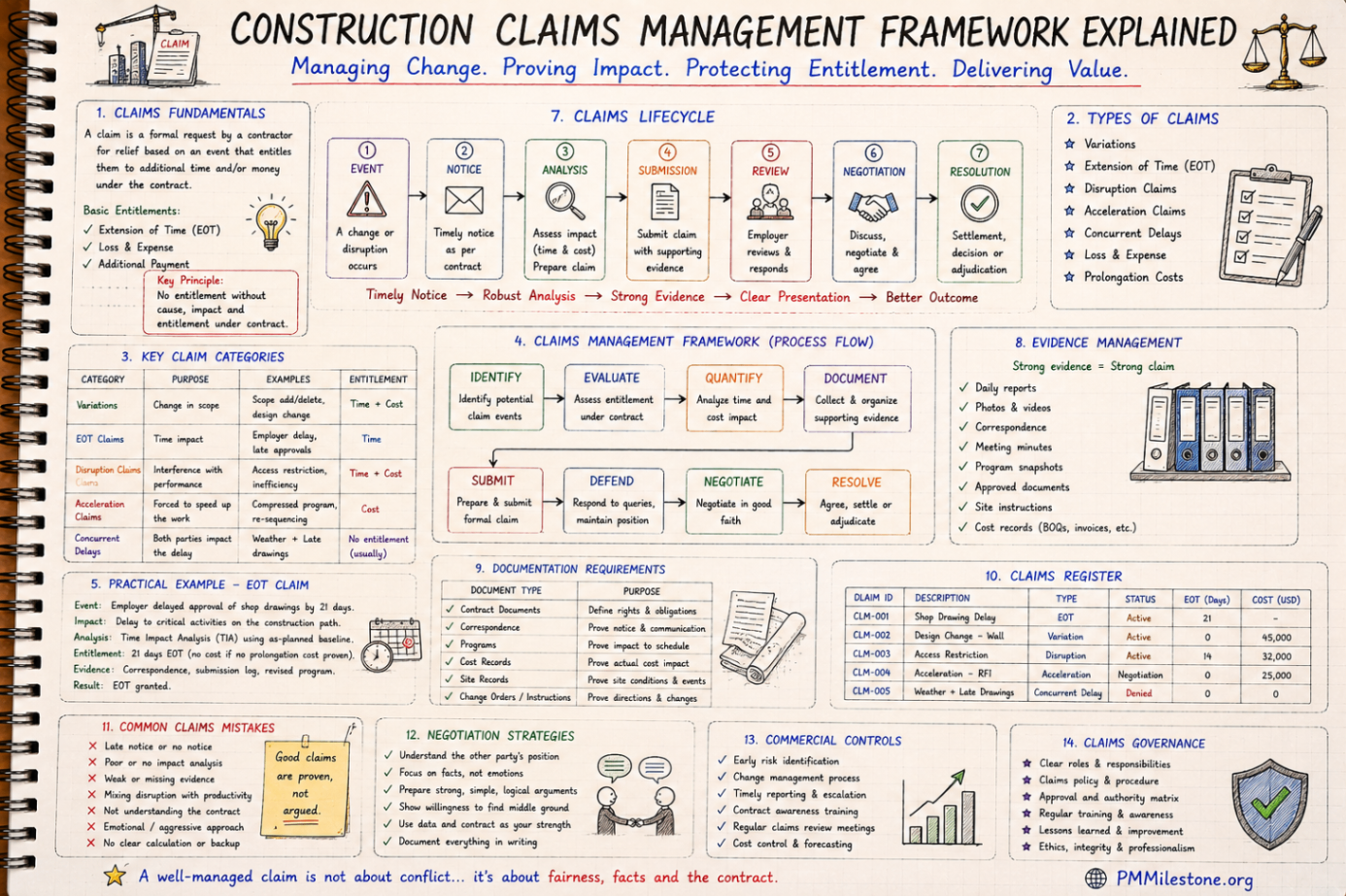
Construction Claims Management Framework Explained
A practical claims management framework for construction and infrastructure projects covering entitlement, records, analysis, negotiation and governance.
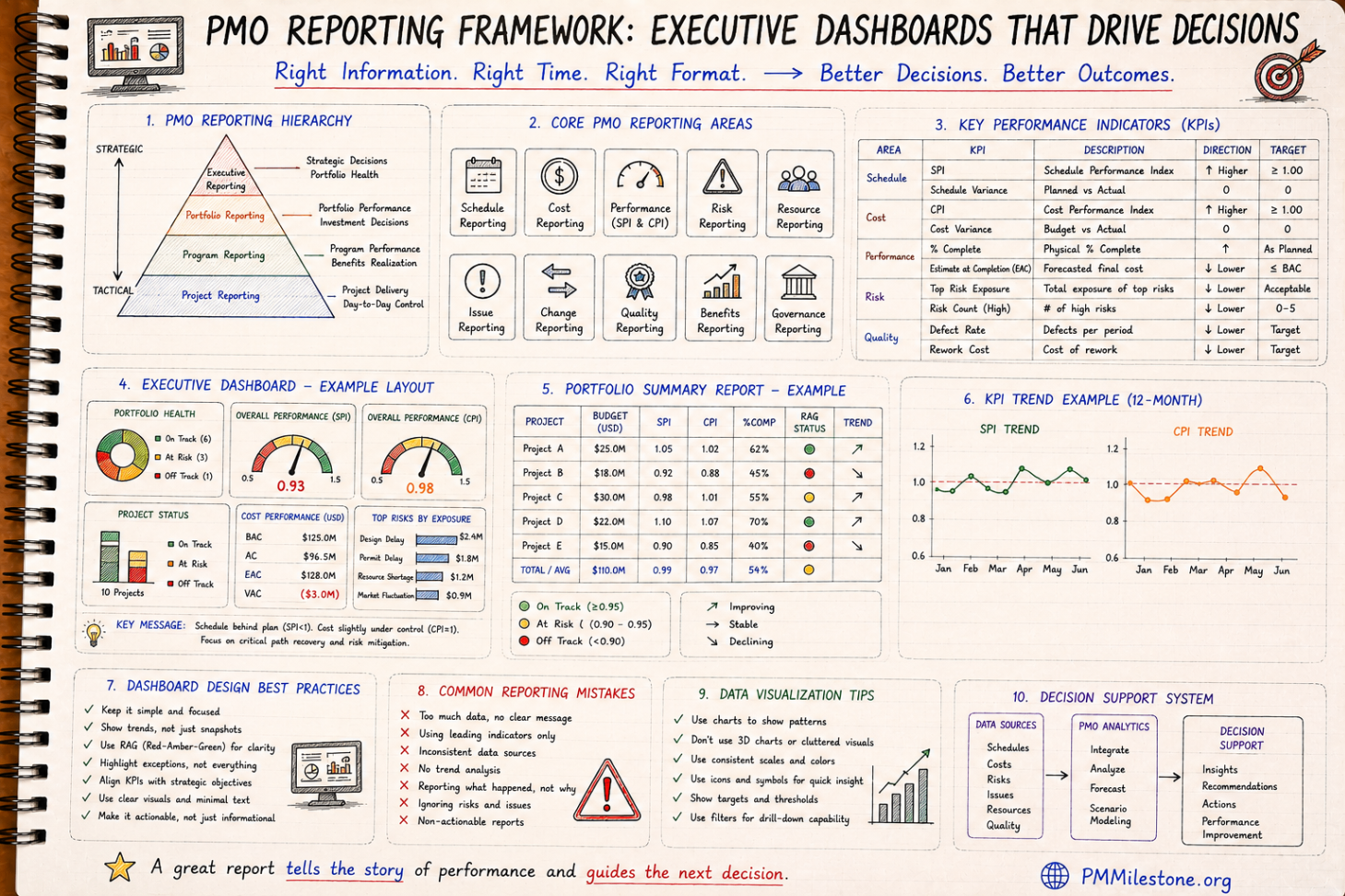
PMO Reporting Framework
A reference guide to executive PMO reporting covering dashboard structure, KPI choice, portfolio views, reporting cadence and common reporting mistakes.

Guides and Long-Form Articles
Practitioner-written explainers across EVM, planning, forecasting, risk and PMO design — read as a syllabus or as a refresher.