Construction Claims Career Path: From Site Engineer to Claims Consultant

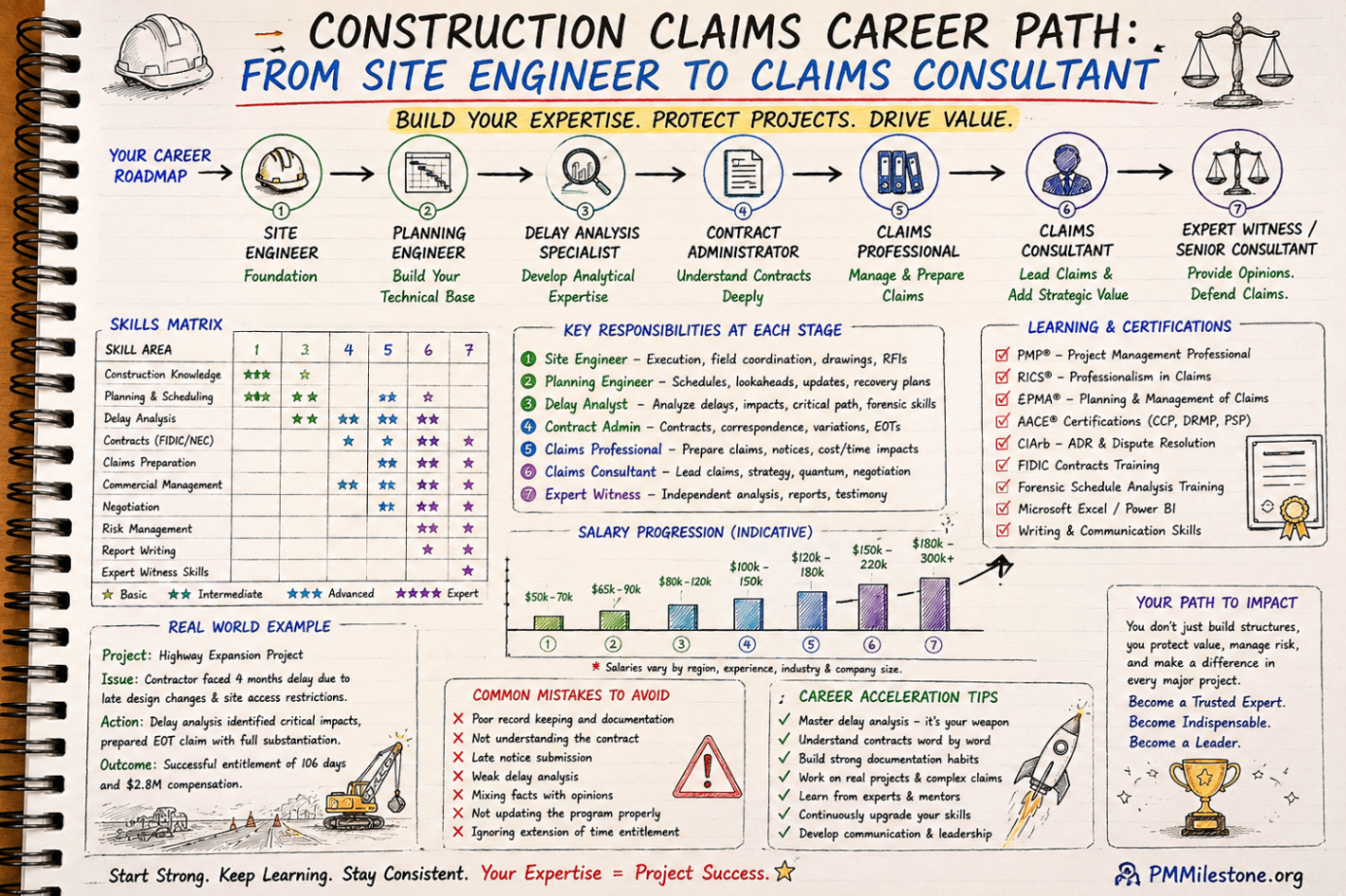
Why construction claims has become a serious career path
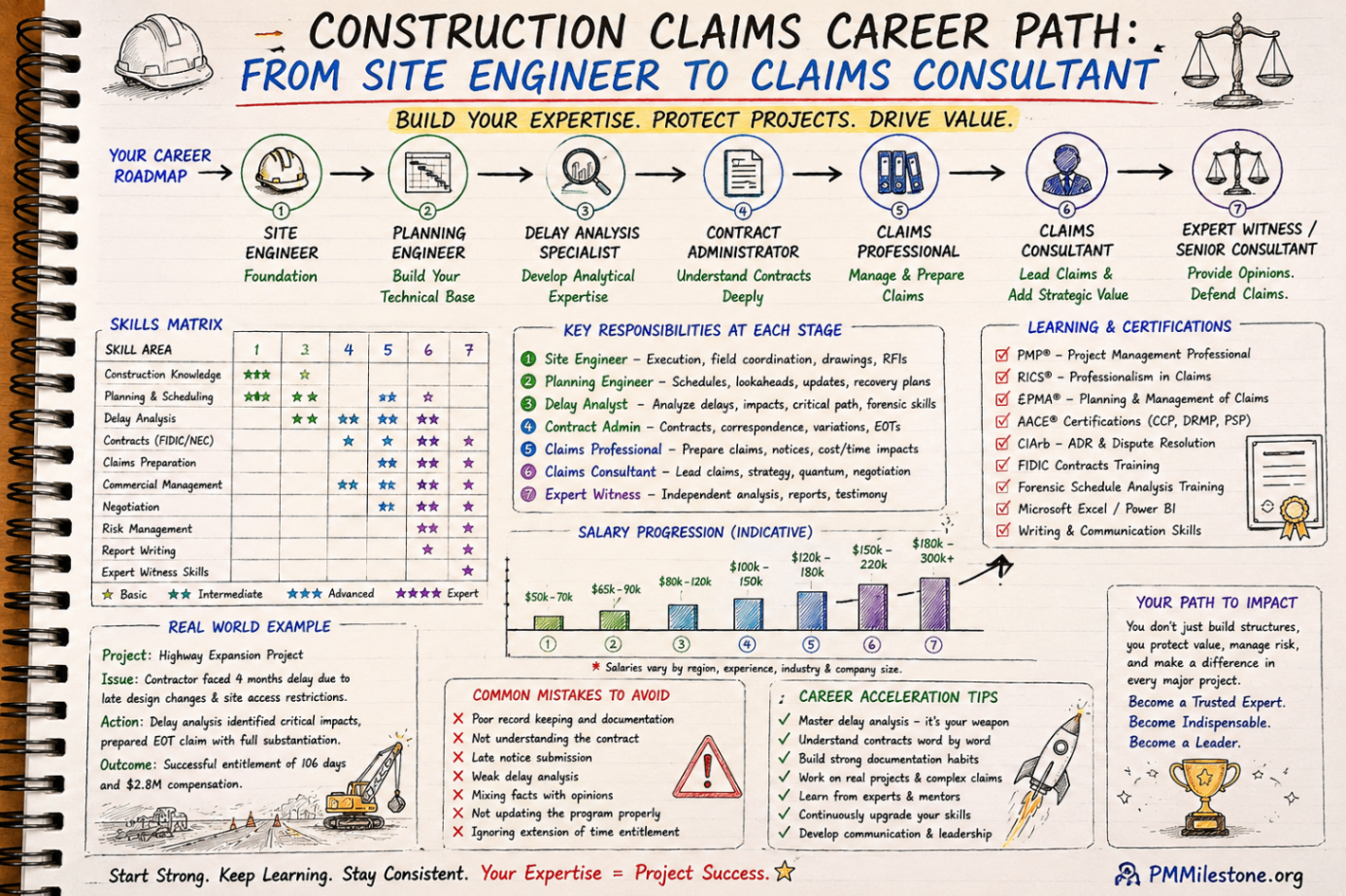
Construction claims used to be treated as a late-career niche: something an experienced planner, quantity surveyor or contract administrator drifted into after years on difficult jobs. That still happens, but the market has changed. Large infrastructure, energy and building projects now generate more interface risk, more formal notice obligations and more scrutiny of entitlement than ever before. Owners are more sophisticated, contractors are under tighter margin pressure, and disputes are increasingly won by the quality of the records rather than the volume of opinion. That has turned claims from an occasional specialist function into a repeatable career path with clear skill stages.
The important point is that good claims professionals are not created by dispute alone. They are created by understanding how projects are supposed to work before understanding how they fail. The strongest claims consultants can read a programme, challenge an extension-of-time narrative, spot weak contemporaneous records, interpret contract clauses in context and still speak credibly with site teams. In other words, the path into claims is built on project delivery fundamentals first, then on commercial and forensic depth.
That is why the most reliable route into this field still starts close to the work. Site engineers understand production realities. Planning engineers understand sequencing, float and critical path. Contract administrators understand notice, variation and compliance mechanics. When those layers are combined carefully, a professional becomes dangerous in the best possible sense: able to translate messy project history into a clear entitlement story.
Stage 1 — Site engineer foundations: learn how work is really built
A claims professional who has never seen how work is installed on site is permanently dependent on second-hand interpretation. That is a weak starting point. Site engineering experience teaches the physical logic behind production, access constraints, sequencing conflicts, rework, inspection points, procurement delays and subcontractor behaviour. Those realities matter later when you have to decide whether a delay event genuinely affected the critical path or whether a productivity argument is commercially credible.
Early-career professionals should use this stage to build disciplined habits rather than rush into commercial titles. Learn how daily reports are written. Understand drawings, RFIs, method statements, inspection requests and lookahead plans. Watch how incomplete information causes downstream cost and schedule consequences. Pay attention to which records are created automatically and which disappear unless someone deliberately preserves them. In claims work, that distinction is often the difference between entitlement and argument.
This is also the stage where communication habits are formed. Strong site engineers learn to describe events precisely: what happened, when it happened, which area was affected, who instructed it, and what immediate consequence followed. Later, that same precision becomes the backbone of delay notices, disruption narratives and expert reports.
Stage 2 — Planning engineer skills: move from activity lists to forensic logic
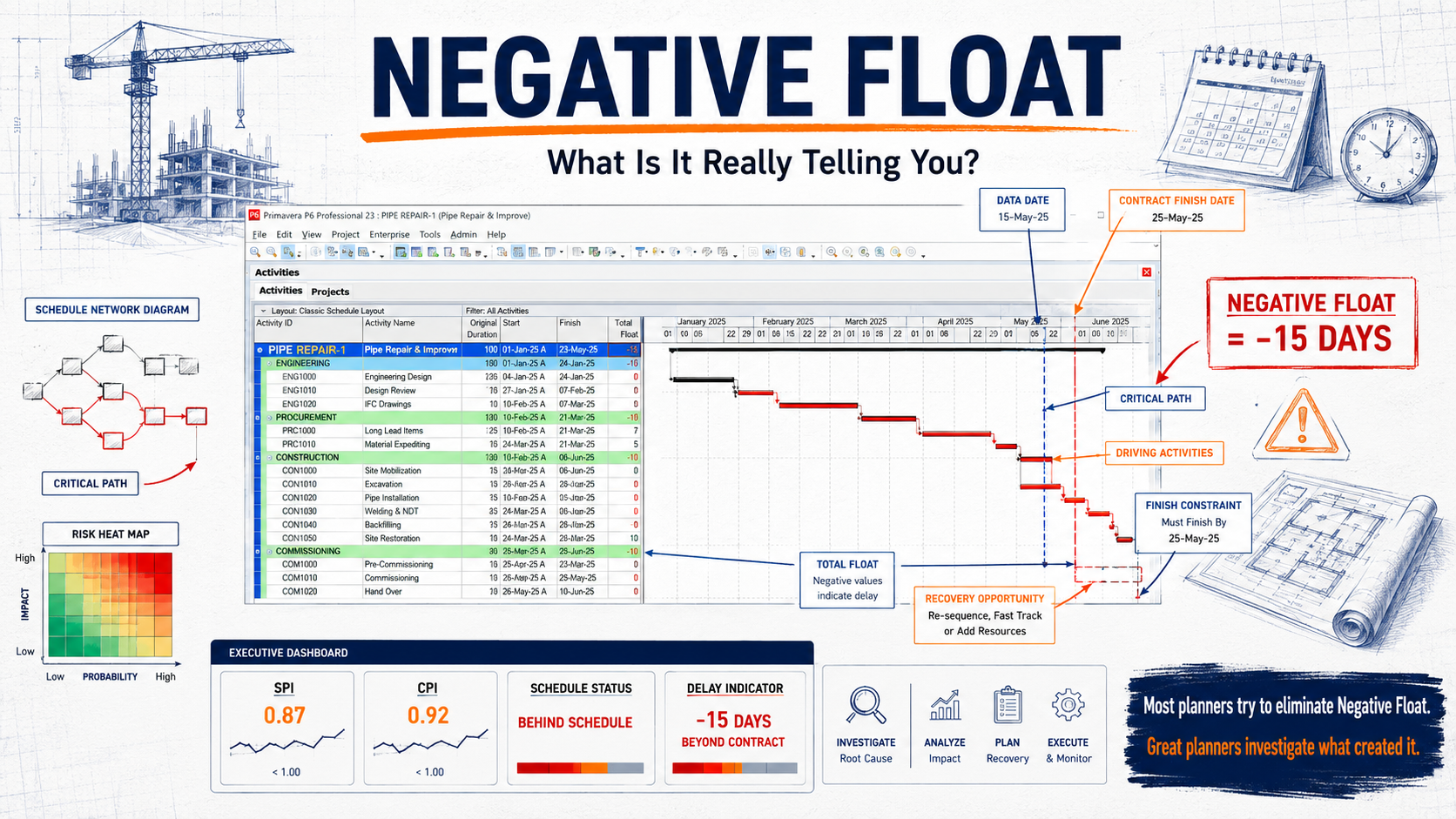
Planning is the natural bridge into claims because time entitlement lives inside logic, not inside opinion. A planner learns how baselines are built, how updates reveal float erosion, and how progress slippage moves through the critical path. More importantly, a good planner learns that not every late activity causes project delay. That single lesson eliminates a large amount of bad claims thinking.
To move from planning into claims, do not stop at software competence. Software is not the differentiator; judgment is. Learn how to defend assumptions in the baseline. Understand out-of-sequence progress, constraints, calendars, lag logic and procurement-driven criticality. Practise telling the schedule story to non-planners. If you cannot explain why a delay mattered to a commercial manager or project director, you do not yet understand it deeply enough for claims work.
This is also the right stage to become fluent with schedule-focused tools such as the SPI Calculator, the Earned Schedule Calculator and the critical-path risk tools on PMMilestone. They do not replace forensic analysis, but they sharpen intuition about what a schedule is saying before a dispute exists.
Core transition from planner to claims analyst
Define logic, sequence, calendars and constraints clearly.
Measure progress honestly and preserve schedule history.
Separate slippage from genuine critical-path delay.
Explain time impact in language commercial teams can act on.
Stage 3 — Delay analysis: where technical credibility is really tested
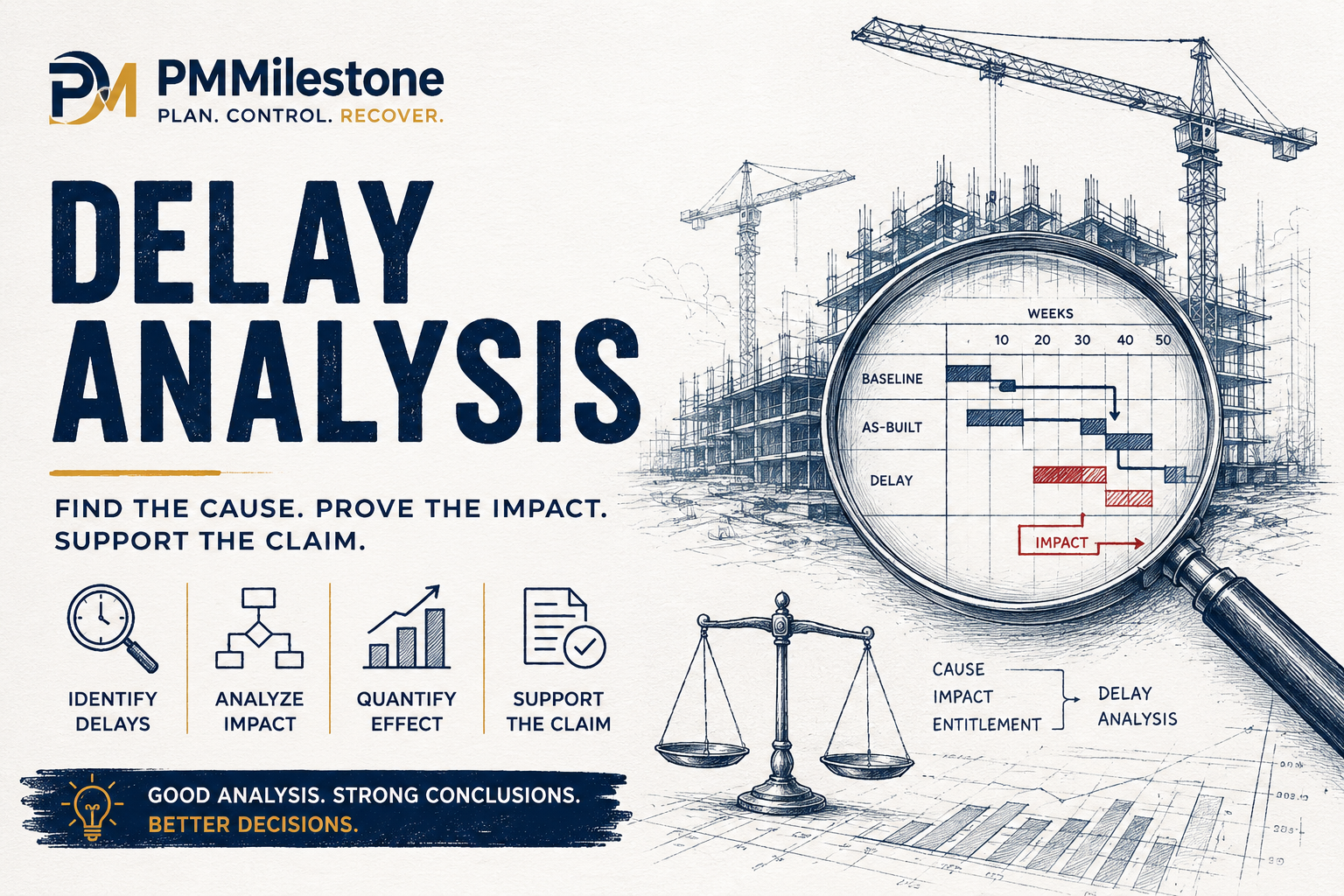
Delay analysis is usually the point where people realise claims is a profession in its own right rather than an extension of planning. The work becomes more disciplined. You are no longer just updating or recovering a schedule; you are reconstructing causation, testing concurrency, evaluating entitlement and often preparing material that may be challenged by another party, an adjudicator or a tribunal. That requires stronger standards of objectivity and documentation than many project teams are used to.
At this stage, the essential learning areas are method selection, data quality and neutrality. Understand the difference between Time Impact Analysis, windows analysis, as-planned versus as-built and collapsed as-built. Learn what records each method needs and when each method becomes weak. Just as importantly, develop the instinct to say 'the records do not support that conclusion' when they do not. The analyst who stretches evidence to fit a commercial position may win favour briefly, but loses long-term credibility.
A practical way to accelerate here is to shadow real disputes or claim preparations whenever possible. Study how notices were framed, how programme snapshots were preserved, how cause-and-effect was narrated and how weak counterarguments were exposed. Then compare those lessons with the PMMilestone Delay Claims Library and the case study pages so your judgment is built on repeated patterns rather than on one employer's habits.
Stage 4 — Contract administration and commercial awareness: the layer many analysts underestimate
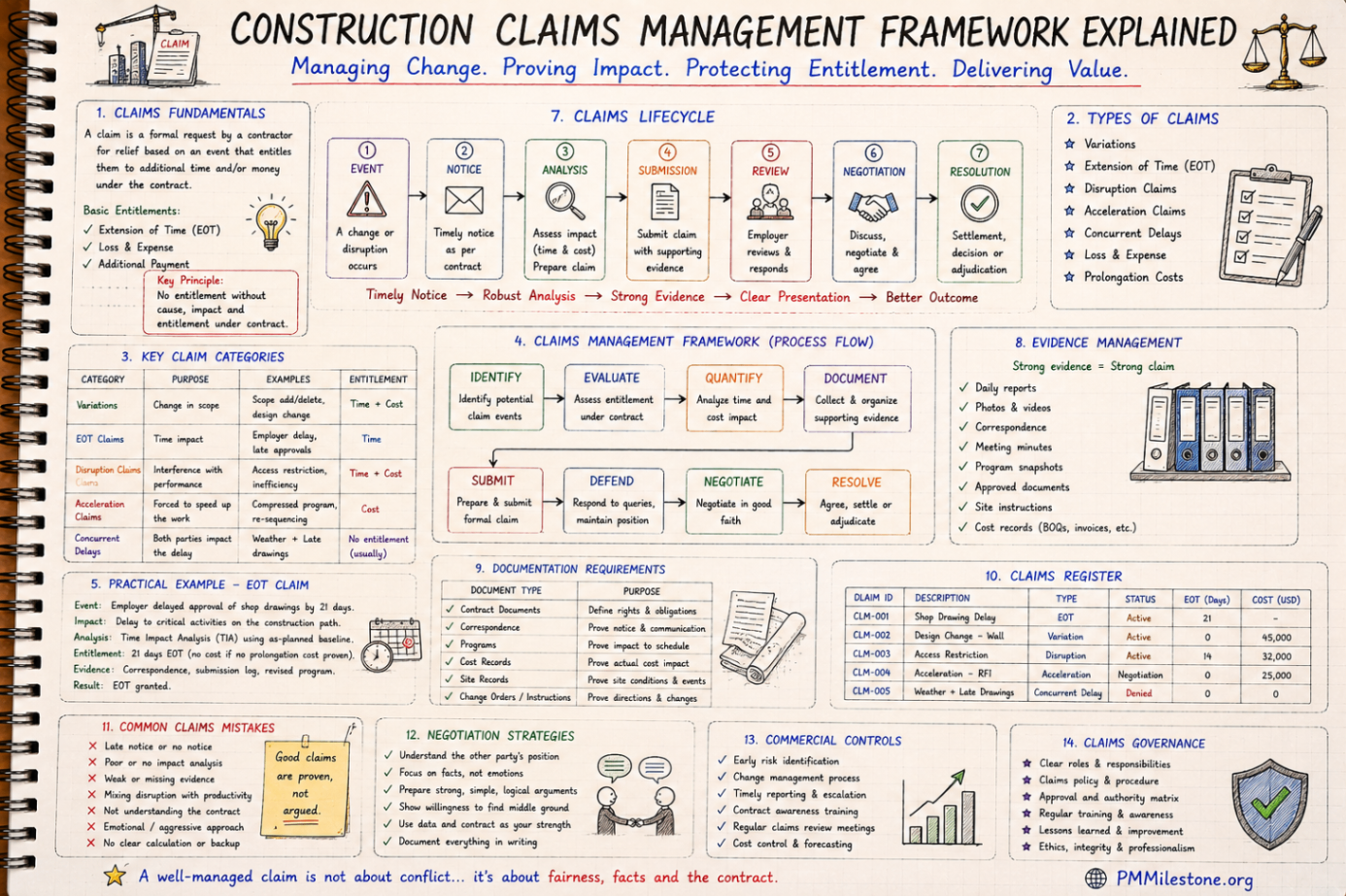
Claims do not exist in a vacuum. They are creatures of contract. A technically elegant delay analysis can still fail if the contract notice requirements were missed, if the relevant entitlement clause was misread, or if the event was handled operationally in a way that weakened the claim narrative. That is why contract administration is not a side topic on the claims path; it is one of the core pillars.
Professionals at this stage need to become comfortable reading clauses, not just summaries. Learn how extension-of-time clauses interact with compensation events, variations, disruption, acceleration and concurrent delay provisions. Understand the documentary chain: notice, instruction, response, update, mitigation record, valuation support. On real jobs, one of the biggest value-add moves a claims-aware professional can make is spotting weak contract compliance while the event is still live, not months later when the file is being assembled under pressure.
Commercial awareness also means understanding how the other side will see the issue. Owners worry about precedent, governance and affordability. Contractors worry about margin erosion, cash flow and programme liability. A strong claims consultant can speak to both perspectives while staying rooted in facts.
Variations, EOT, disruption and acceleration: four areas that separate juniors from seniors
Many professionals say they work in claims when what they really handle are variations. Variations matter, but senior claims work sits across a broader landscape. Variation claims are usually scope-based. Extension-of-time claims are schedule-and-entitlement based. Disruption claims are productivity-and-causation based. Acceleration claims are often a mixture of instruction, mitigation, cost and programme logic. Each requires a different evidential mindset.
The career advantage comes from learning how these categories overlap on real projects. A late design change may begin as a variation, become an EOT issue when procurement slips, and then create disruption when workfaces are resequenced. Junior professionals often treat these as separate files. Senior professionals understand them as one chain of cause and effect, and they structure the records that way from the beginning.
If you want to progress faster, build competency in one category first, then deliberately widen. For planners, EOT is the natural first specialism. For quantity surveyors, variations may come first. For contract administrators, notice compliance and clause interpretation may lead. The destination, though, is integrated commercial judgment.
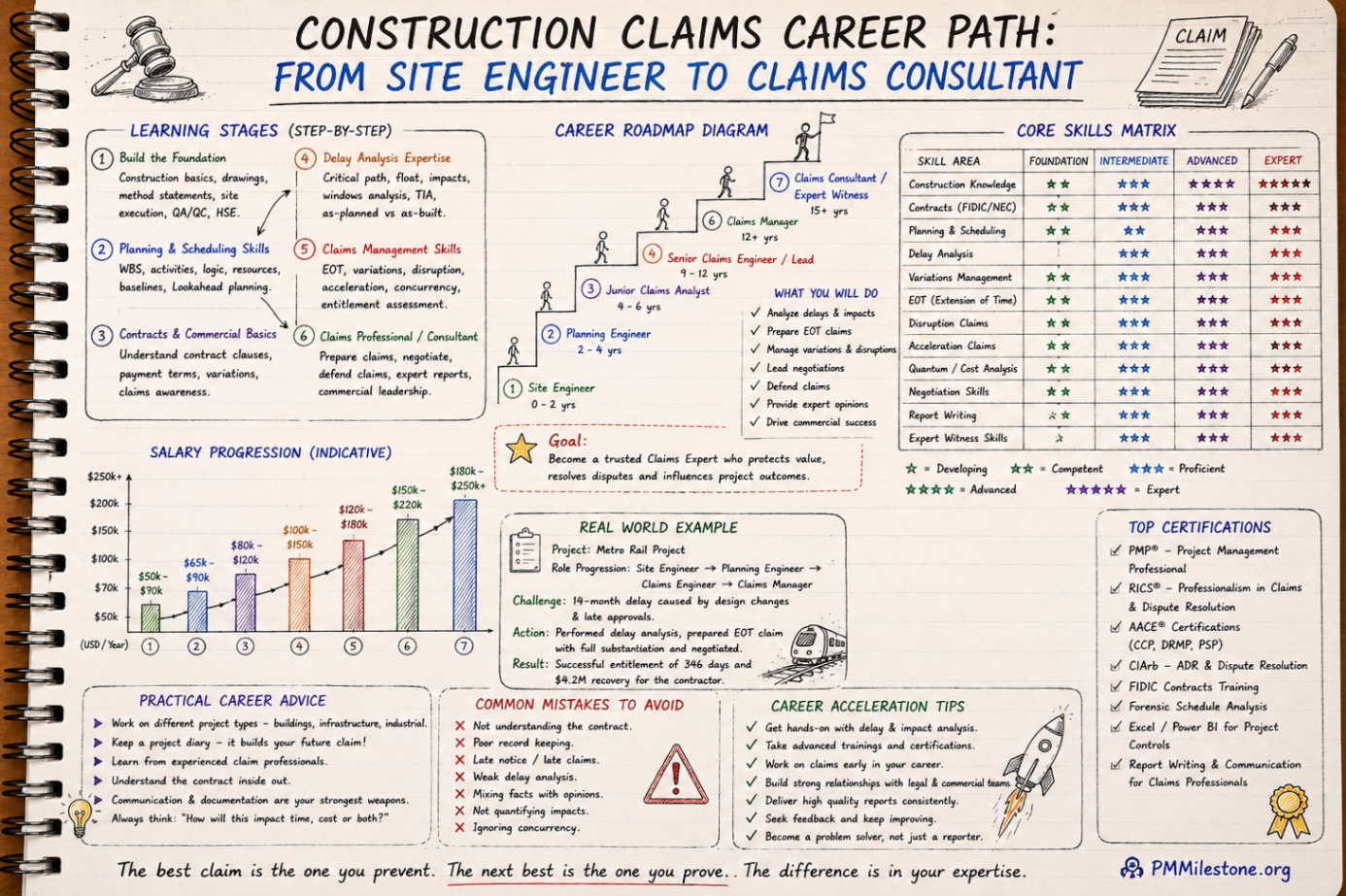
From claims professional to consultant and expert witness
Moving into consulting changes the nature of the work. Inside a contractor or owner organisation, you usually operate with local context and ongoing access to people. As a consultant, you are often brought in precisely because the context is messy, the records are incomplete, and the stakeholders disagree. That means your value depends on speed of diagnosis, independence of thought and the ability to structure a position others can understand quickly.
Senior consultants are expected to do more than analyse. They frame strategy. They decide where the strongest entitlement sits, which issues should be separated, which concessions protect credibility, and how a board or legal team should sequence its arguments. That is why communication and judgment become more important at senior levels than pure technical detail. The most respected consultants are rarely the loudest people in the room; they are the ones whose opinion survives scrutiny.
The expert witness path is even narrower. Expert work demands independence above advocacy. The expert's duty is to the tribunal, not to the appointing party. Professionals interested in that route should spend years building a reputation for balanced, defensible analysis before chasing the title. It is a destination earned through credibility, not branding.
Salary progression, certifications and what actually improves your market value
Salary progression in claims is driven by scarcity of judgment, not just years served. Early-career roles typically reward engineering or planning competence. Mid-level roles reward the ability to manage files, notices and first-pass analyses independently. Senior roles command higher value when a professional can lead claim strategy, quantify exposure, front clients and support dispute teams without close supervision. That is why the steepest salary jumps often happen when someone becomes commercially trusted, not just technically busy.
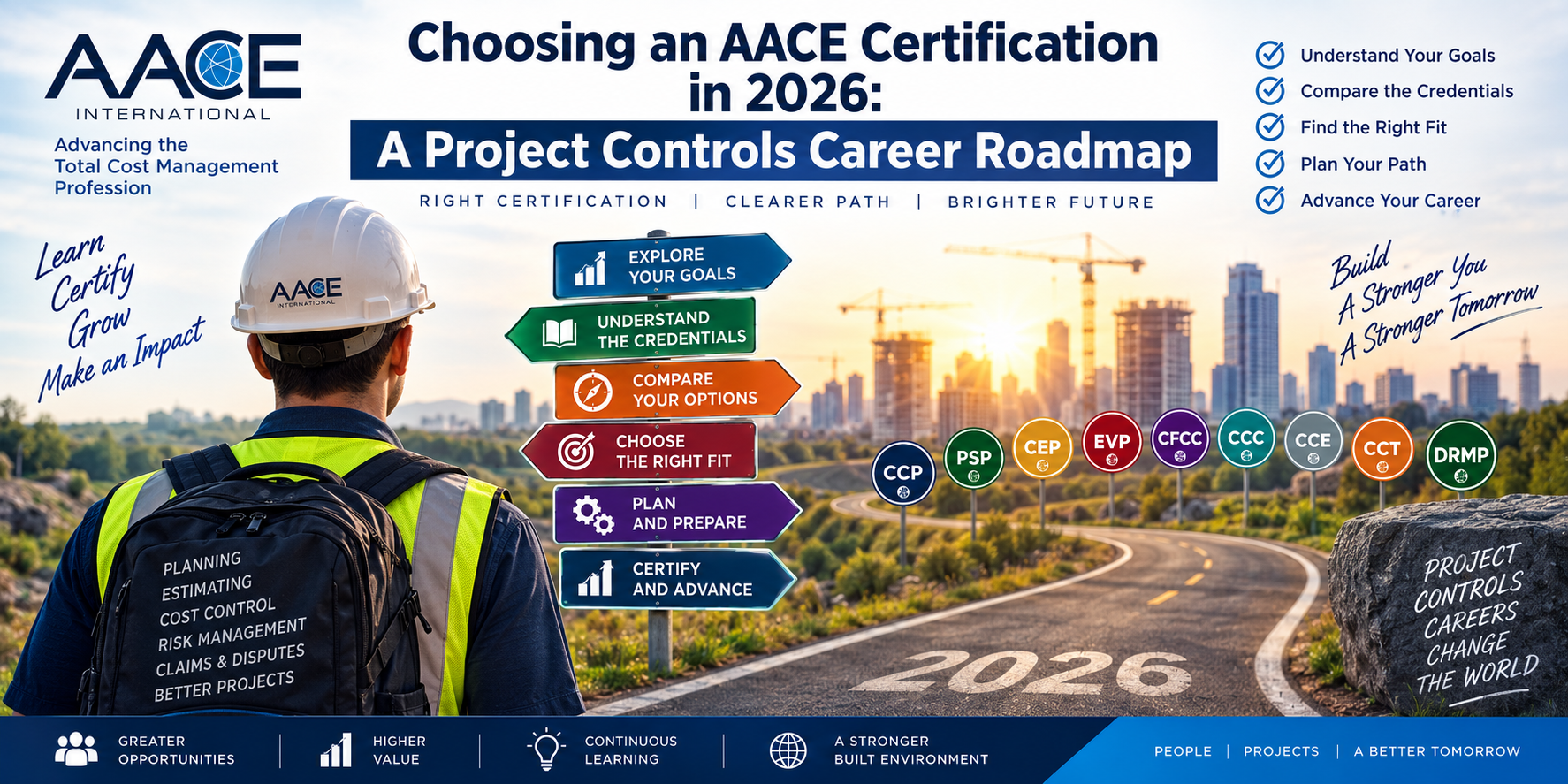
Certifications help, but only when they reinforce genuine practice. PMP can strengthen structured project thinking. Planning and scheduling credentials such as PSP or Primavera-related training help when time analysis is central. AACE certifications, delay analysis training, contract law short courses, FIDIC training and strong Power BI or Excel capability all add value. None of them substitute for live project exposure, but they can shorten the path if chosen deliberately.
A useful rule is to choose learning that improves one of four things: your ability to interpret time, your ability to interpret contract, your ability to quantify impact, or your ability to communicate a position. Anything outside those four may still be interesting, but it will do less for your claims career.
Salary progression by capability, not just title
| Career stage | Primary value | Typical focus | Market signal |
|---|---|---|---|
| Site / Planning Engineer | Records + logic | Programmes, reports, production understanding | Reliable delivery discipline |
| Claims Analyst | Time impact + evidence review | EOT, notices, windows, claim files | Independent analytical credibility |
| Claims Manager | Strategy + commercial control | Negotiation, valuation, client management | Trusted commercial judgment |
| Consultant / Expert | Defensible opinion | Dispute support, expert reports, tribunal-ready analysis | Reputation and independence |
Common mistakes and practical advice for accelerating the journey
The most common mistake is trying to become a claims specialist without first becoming good at one adjacent discipline. Professionals who skip the foundations often produce impressive terminology but weak analysis. The second mistake is over-focusing on templates. A beautiful claim template cannot rescue poor records. The third is treating claims as conflict rather than controlled problem-solving. The strongest people in this field are commercially tough but analytically calm.
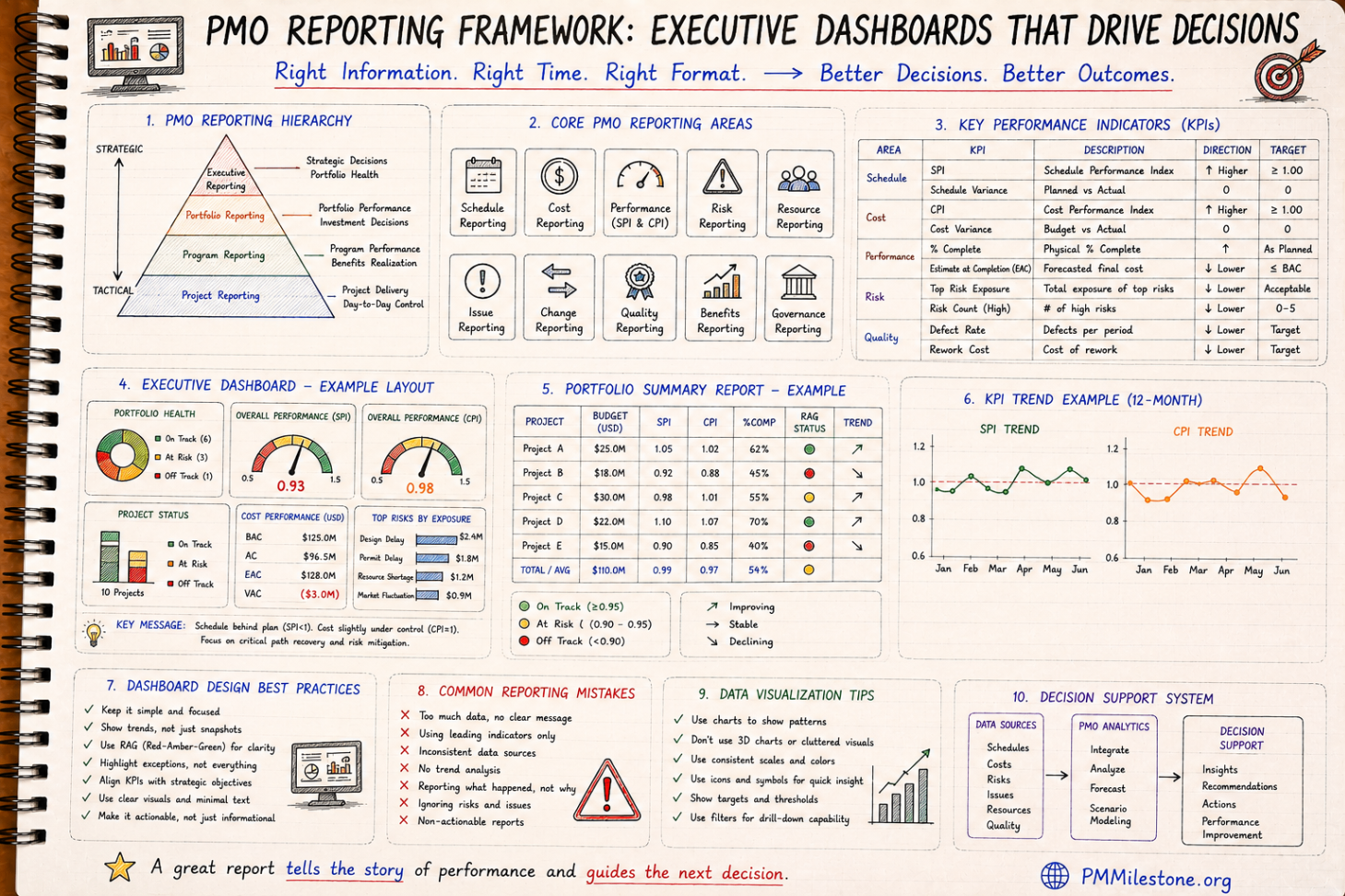
To accelerate well, keep a learning log on every live issue you touch. Ask: what was the event, what record proved it, what weakened the position, and what would we do earlier next time? Build your own mini-library of examples. Use resources such as the Project Failure Database, the Mega Project Case Studies pages and the PMO Dashboard Gallery to see how schedule, cost, risk and reporting intersect around commercial events. That broader view is what turns a competent analyst into a trusted advisor.
Finally, stay professional in tone. Claims work can reward confrontation in the short term, but respect is built by clarity, structure and integrity. In the long run, the market remembers professionals who can be relied on when the facts are difficult and the stakes are high.
Frequently asked questions
What is the best first role for someone targeting a construction claims career?
A site engineering or planning role is usually the strongest starting point because it builds firsthand understanding of production, records and schedule logic. Claims professionals who begin close to delivery tend to make better judgments later.
Can a planning engineer become a claims consultant without moving into quantity surveying?
Yes. Many claims specialists come from planning because time analysis is central to EOT and disruption work. The key is to add contract literacy, notice discipline and commercial awareness rather than relying on scheduling alone.
Which certifications matter most in construction claims?
That depends on the role focus, but common value comes from PMP, AACE-related training, delay analysis courses, FIDIC training, planning/scheduling credentials and strong Excel or Power BI capability. Live project experience still matters most.
Is expert witness work a realistic long-term path?
Yes, but it is a later-stage path. Expert witness work requires years of defensible analytical practice, strong written communication and a reputation for independence. It should be treated as a destination, not an entry role.
How do claims professionals improve their salary fastest without damaging credibility?
The fastest sustainable gains usually come from becoming trusted on integrated issues: time impact, contract interpretation, quantification and negotiation support. Chasing titles without strengthening judgment often backfires.
Related learning for this topic
Hand-picked Learning Tracks, Knowledge Pillars, publications and case data that extend this article.
Next steps on PMMilestone
Use these pages to deepen the topic, verify terminology, compare real cases and move from theory into applied project controls practice.
Related calculators
Open the calculators referenced in this article and run them against your own project numbers.
Delay Impact Calculator
Estimate the financial impact of project delays.
Open Earned ValueSPI Calculator
Schedule Performance Index — measure schedule efficiency.
Open ScheduleEarned Schedule Calculator
Time-based schedule performance (SPI(t)).
Open ConstructionVariation Order Impact Calculator
Variation value as % of contract.
Open CareerPM Salary Estimator
Estimate project manager compensation by experience.
OpenOther learning tracks
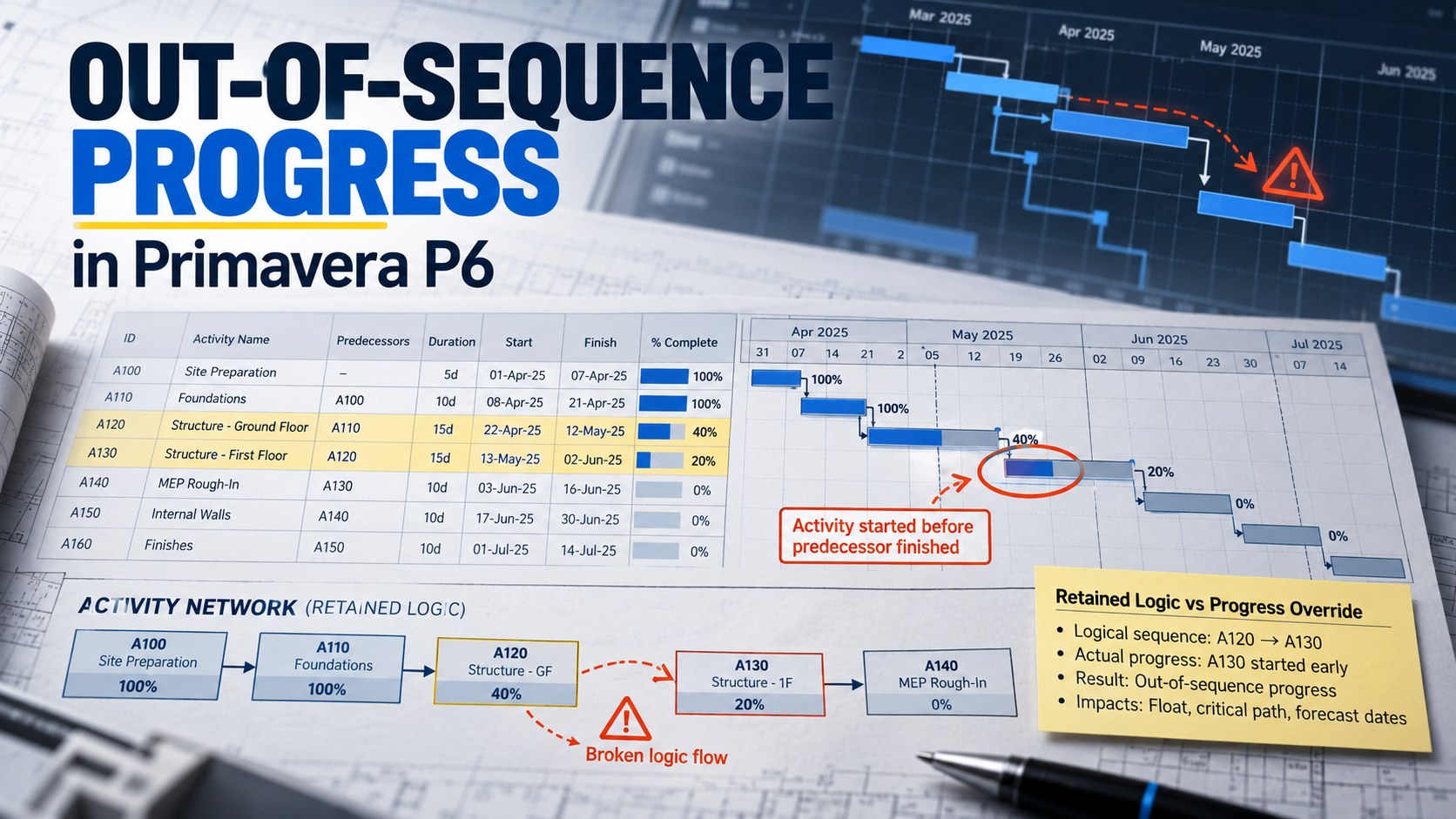
How to Fix Out-of-Sequence Activities in Primavera P6 Before They Distort Your Critical Path
Repair out-of-sequence progress with a five-step workflow, a DN600 pipeline example, scheduling-option comparisons and a monthly evidence checklist.
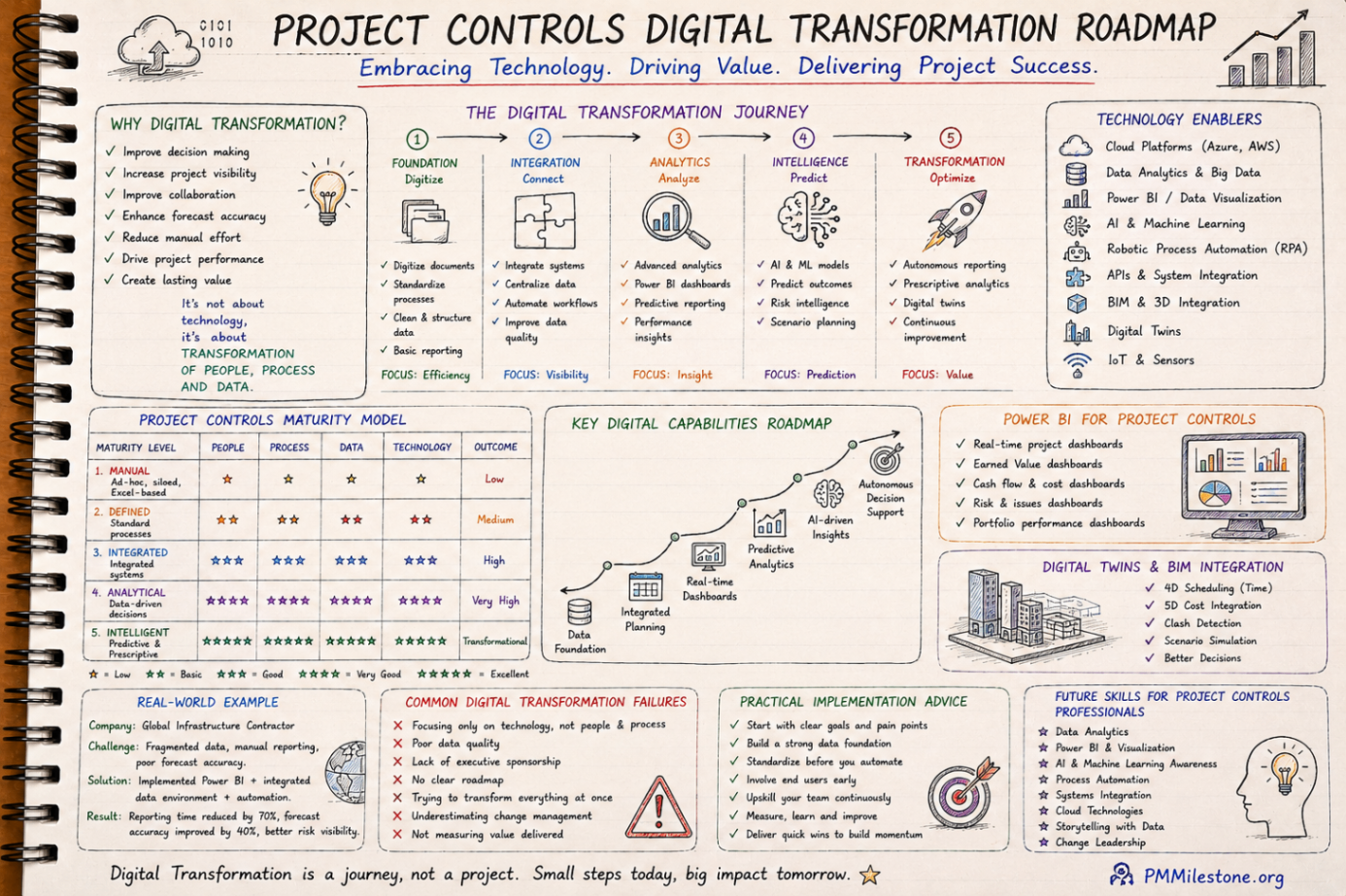
Project Controls Digital Transformation Roadmap
A future-focused guide to modern project controls through data integration, reporting automation, Power BI, AI, BIM and digital PMO capability building.
Project Controls Fundamentals
Scope, schedule, cost, risk, quality and reporting — the six disciplines that hold every successful capital project together, taught from first principles.