How to Pass the PMI-SP® Certification Exam: The Ultimate Scheduling Guide


What the PMI-SP actually validates
If you spend your working life inside a schedule — building the logic, defending the critical path, explaining float to people who would rather not hear about it — then the PMI Scheduling Professional credential is the certification that finally puts a recognised name to what you already do. The PMI-SP is not a generalist badge; it is a specialist mark that says you can build, maintain, analyse and communicate a project schedule that holds up under scrutiny.
Where the PMP says "I can lead a project," the PMI-SP says "I own the schedule — its strategy, its development, its control, and the way it is communicated to everyone who depends on it." On large infrastructure programmes that distinction is real money, because the schedule is the spine that cost, risk and delay claims all hang from.
The credential brings specialist recognition, stronger earning potential, better project outcomes and global portability. The career context sits alongside the broader Learning Tracks, the Knowledge Pillars, the About page and the Founder page on this site.
The exam at a glance — the real numbers
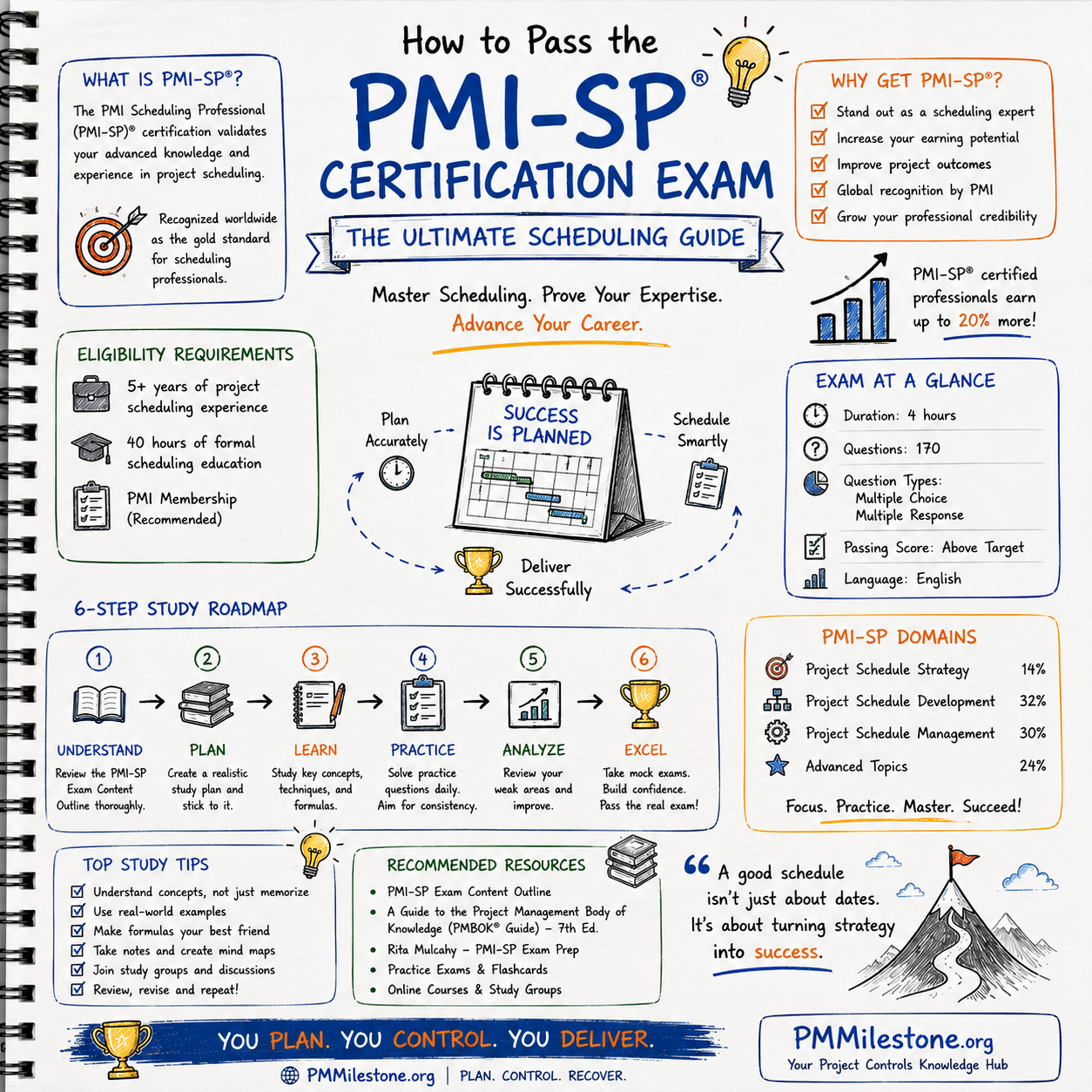
Careful candidates pull ahead by preparing against the official PMI Exam Content Outline rather than third-party summaries. The current PMI-SP exam looks like this.
| Element | Detail |
|---|---|
| Questions | 170 multiple-choice (150 scored, 20 unscored pretest items) |
| Time | 210 minutes (three and a half hours) |
| Language | English |
| Delivery | Pearson VUE test centre (or online proctored where offered) |
| Attempts | Up to three within a one-year eligibility period |
| Maintenance | 30 PDUs every three-year cycle |
You will see summaries quoting "170 questions, 4 hours" and a four-part domain split. The official ECO actually allots 210 minutes and breaks the content into five domains, shown below. Always prepare against the current ECO from PMI — it is the only blueprint the exam is written from.
The five domains — and where to spend your effort
The exam is weighted across five domains. Two of them — Schedule Monitoring & Controlling and Schedule Planning & Development — make up roughly two-thirds of the paper between them. That is exactly where your study hours should concentrate.
| Domain | Weight | What it covers |
|---|---|---|
| Schedule Strategy | 14% | Scheduling approach, methods, tools and resourcing decisions |
| Schedule Planning & Development | 31% | WBS, activity definition, sequencing, durations, network logic and baselining |
| Schedule Monitoring & Controlling | 35% | Progress updates, variance and trend analysis, forecasting and corrective action |
| Schedule Closeout | 6% | Final updates, lessons learned, archiving and handover of the schedule |
| Stakeholder Communications Management | 14% | Reporting, schedule narratives and tailoring information to each audience |
What the heavy domains look like in practice
Schedule Planning & Development (31%) is where a real planner's instincts pay off. On a water pipeline renewal, the difference between a schedule that survived contact with site and one that did not came down to network logic — honest finish-to-start relationships, sensible lags and a critical path that reflected how the work actually flowed, not how the bid wanted it to look. The exam tests whether you understand activity sequencing, duration estimation and baseline development at that level of rigour.
Schedule Monitoring & Controlling (35%) is the single heaviest domain, and rightly so — a baseline you never control is just a wish. This is the world of progress updates, schedule variance, trend analysis and forecasting. Earned value sits squarely here, and being able to read PV, EV and AC curves cold is precisely the competence the PMI-SP certifies. Reinforce the mechanics with the SPI Calculator, the CPI Calculator and the Earned Schedule Calculator.
Stakeholder Communications (14%) is bigger than candidates expect. Reporting, schedule narratives and audience-appropriate tailoring are tested directly — a schedule that no one trusts or understands controls nothing. Do not treat this domain as an afterthought.
Are you eligible? Check before you commit
PMI offers three eligibility paths. You only need to satisfy one of them, and the experience must be specifically in project scheduling, earned within the last five years. Formal training in Microsoft Project, Primavera P6 and other scheduling tools counts toward the scheduling education hours — those P6 courses you took years ago may already cover part of the requirement.
| Path | Education | Scheduling experience | Scheduling education |
|---|---|---|---|
| Set A | Secondary degree | 40 months (within last 5 yrs) | 40 contact hours |
| Set B | Four-year degree | 24 months (within last 5 yrs) | 30 contact hours |
| Set C | Degree from a GAC-accredited programme | 12 months (within last 5 yrs) | 30 contact hours |
A 10-week PMI-SP study schedule
It would be ironic for a scheduler to prepare without a baseline. The ten-week plan below is weighted toward the two heavy domains, with daily tool drills running in parallel and the final fortnight reserved for mocks and review.
- Setup — ECO & PMI Practice Standard for Scheduling
- Planning & Development learning
- Monitoring & Controlling learning
- Daily question drills & tool practice
- Mocks & weak-area review
The formulas worth knowing cold
A meaningful share of the exam is conceptual, but calculation questions still appear, and they are free marks for anyone who has the core formulas automatic. Brain-dump these onto your scratch sheet the moment the exam starts, before the clock pressure builds.
| Measure | Formula | What it tells you |
|---|---|---|
| Schedule Variance (SV) | EV − PV | Ahead (positive) or behind (negative) schedule in value terms |
| Schedule Performance Index (SPI) | EV ÷ PV | Schedule efficiency — below 1.0 means behind plan |
| Cost Variance (CV) | EV − AC | Under (positive) or over (negative) budget |
| Estimate at Completion (EAC) | BAC ÷ CPI (typical) | Forecast final cost based on current performance |
Many questions hand you the numbers but test whether you understand the meaning — for example, recognising that an SPI of 0.85 signals a schedule recovery decision, not just a figure to report. Knowing the formula is table stakes; knowing what to do with the answer is what earns the mark.
A lesson from the field
Early in my controls career I rebuilt a programme schedule that the client praised in the room and then quietly distrusted for months. The logic was clean, but I had never written a plain-language schedule narrative to go with it, so every steering group turned into me defending numbers nobody else could interpret. The schedule was right; the communication was missing. When I finally added a concise monthly narrative — what changed, why, and what it meant for the end date — the same numbers suddenly carried authority.
That is exactly why the PMI-SP weights Stakeholder Communications at 14%. A schedule that no one trusts or understands controls nothing. The credential certifies the whole loop — build it, control it, and communicate it so decisions actually get made. The same theme runs through entries in the Project Failure Database, the Mega Project Case Studies and the Delay Claims Library, and the vocabulary is reinforced on the Project Controls Glossary.
Key takeaways
The PMI-SP rewards exactly the discipline that good schedulers already practise — sound logic, controlled baselines, honest forecasts and clear communication. Prepare against the right blueprint, lean into the heavy domains, and the exam becomes a confirmation of what you already do well. Plan. Control. Recover.
Continue on the PMMilestone Academy with a related Learning Track or Knowledge Pillar, and explore the wider research on the Publications, About and Founder pages.
Frequently asked questions
How many questions are on the PMI-SP exam and how long is it?
The current exam has 170 multiple-choice questions (150 scored plus 20 unscored pretest items) and a time limit of 210 minutes, per PMI's Exam Content Outline.
What are the PMI-SP eligibility requirements?
You must meet one of three paths: a secondary degree with 40 months of scheduling experience and 40 contact hours of scheduling education; a four-year degree with 24 months and 30 contact hours; or a degree from a GAC-accredited programme with 12 months and 30 contact hours. Experience must be in project scheduling within the last five years.
Do I need the PMP before the PMI-SP?
No. The PMI-SP is a standalone specialist credential. Many schedulers hold both, but neither is a prerequisite for the other.
Which resources should I study from?
Start with the PMI-SP Exam Content Outline and PMI's Practice Standard for Scheduling, supported by the PMBOK® Guide and a quality scheduling-focused question bank. Hands-on practice in Primavera P6 or Microsoft Project reinforces the concepts.
How much scheduling maths is on the exam?
Expect calculation questions on critical path, float, schedule variance, SPI and forecasting, but a large share is conceptual — understanding why a schedule behaves as it does, not just running formulas.
How do I maintain the PMI-SP once I pass?
PMI-SP holders earn 30 professional development units (PDUs) every three-year cycle through learning, teaching, presenting, reading, volunteering or content creation.
Next steps on PMMilestone
Use these pages to deepen the topic, verify terminology, compare real cases and move from theory into applied project controls practice.
Related calculators
Open the calculators referenced in this article and run them against your own project numbers.
SPI Calculator
Schedule Performance Index — measure schedule efficiency.
Open Earned ValueCPI Calculator
Cost Performance Index — measure cost efficiency.
Open ScheduleEarned Schedule Calculator
Time-based schedule performance (SPI(t)).
Open ForecastingTCPI Calculator
To-Complete Performance Index — required efficiency to finish on budget.
OpenOther learning tracks
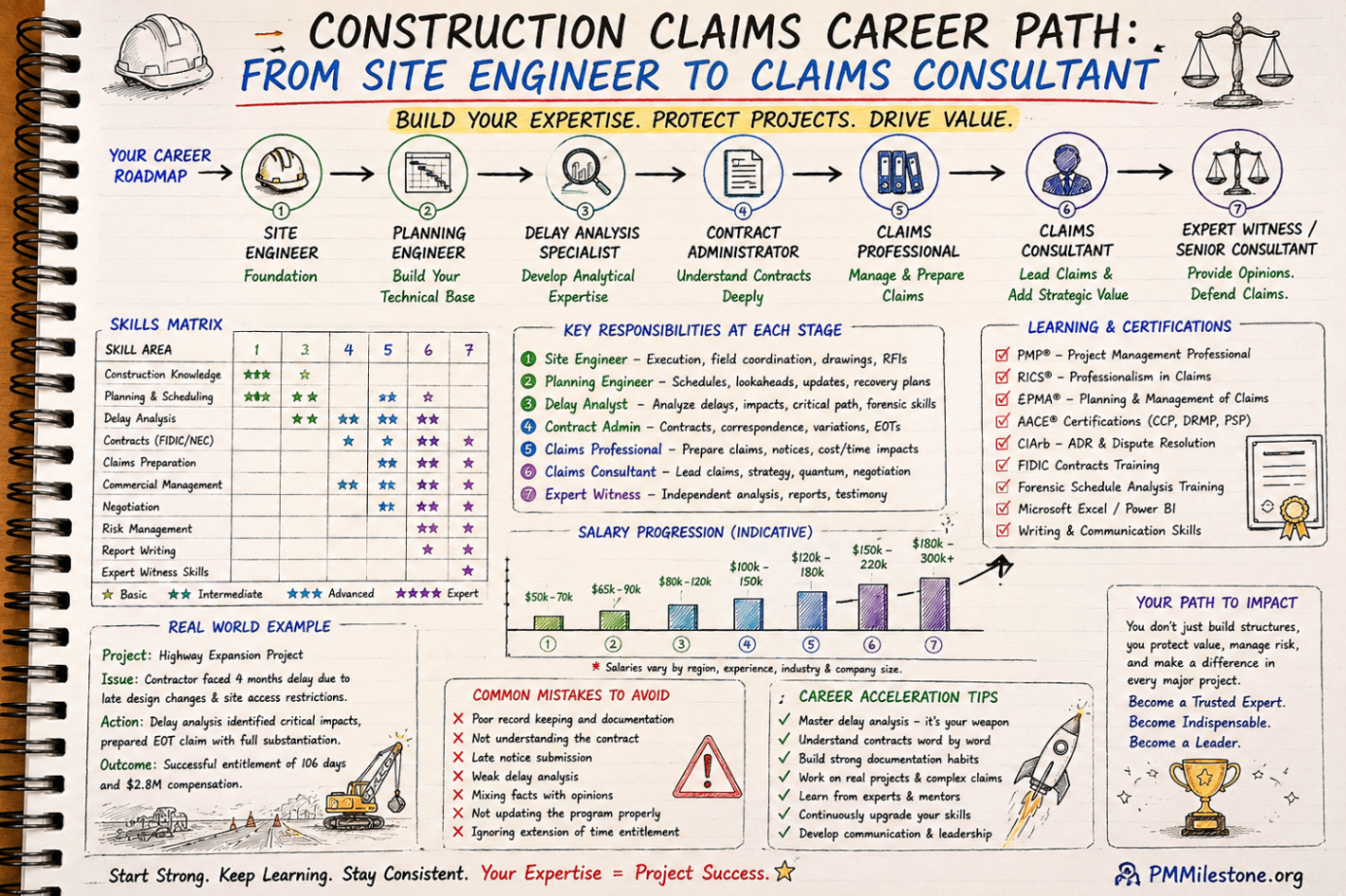
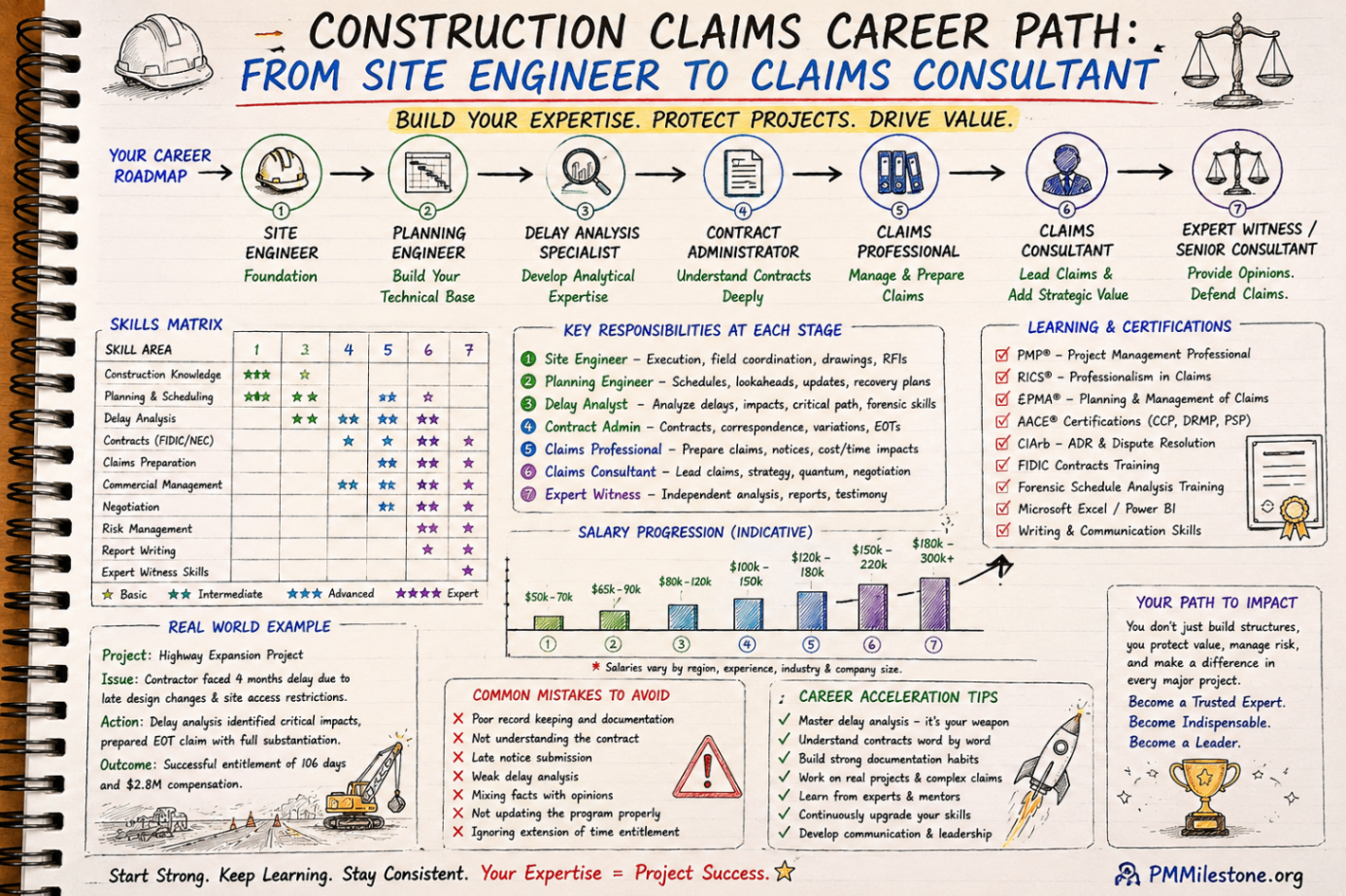
Construction Claims Career Path
A practical roadmap for engineers moving from site delivery into planning, delay analysis, claims, commercial controls and senior claims consulting.
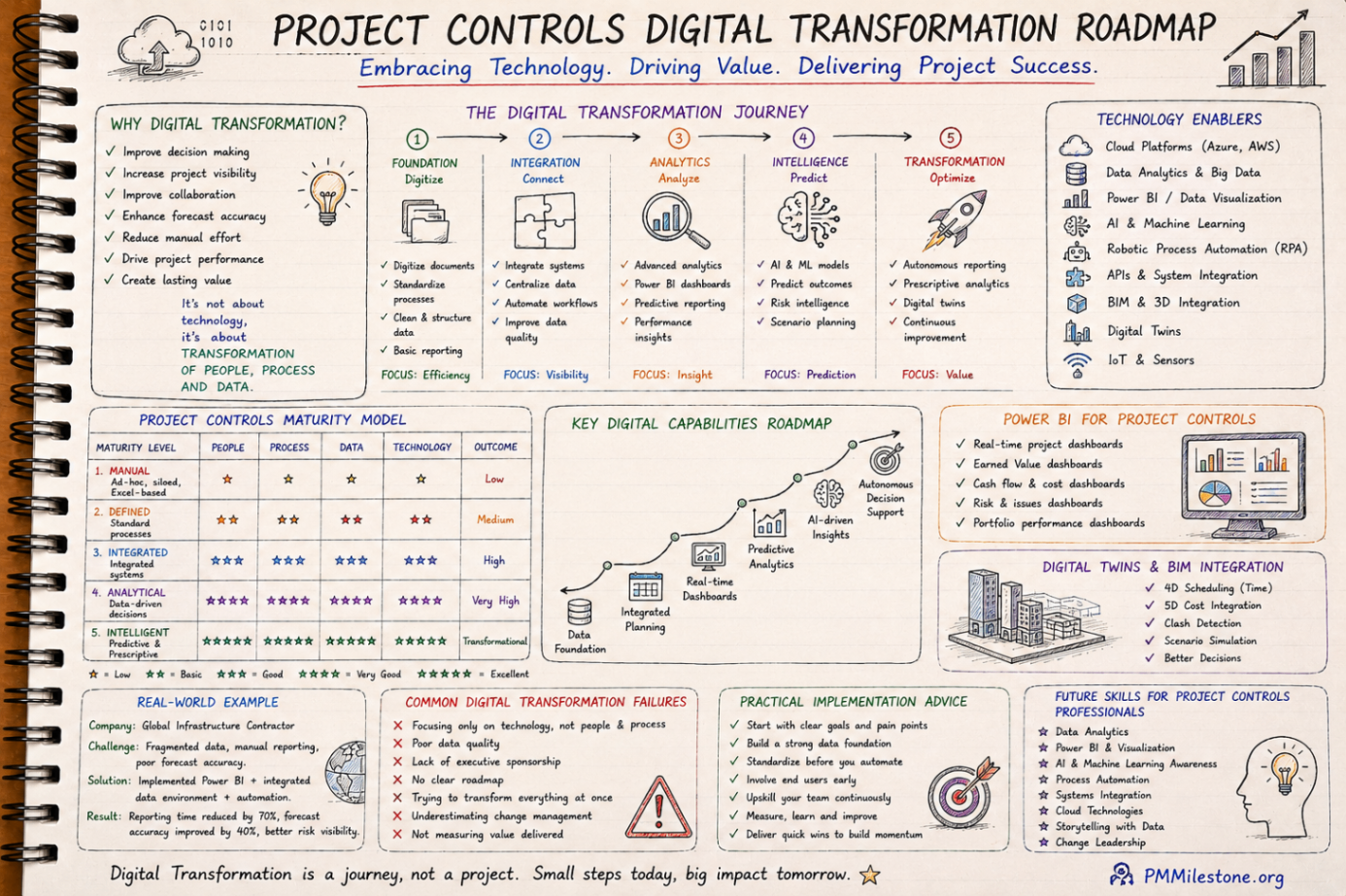
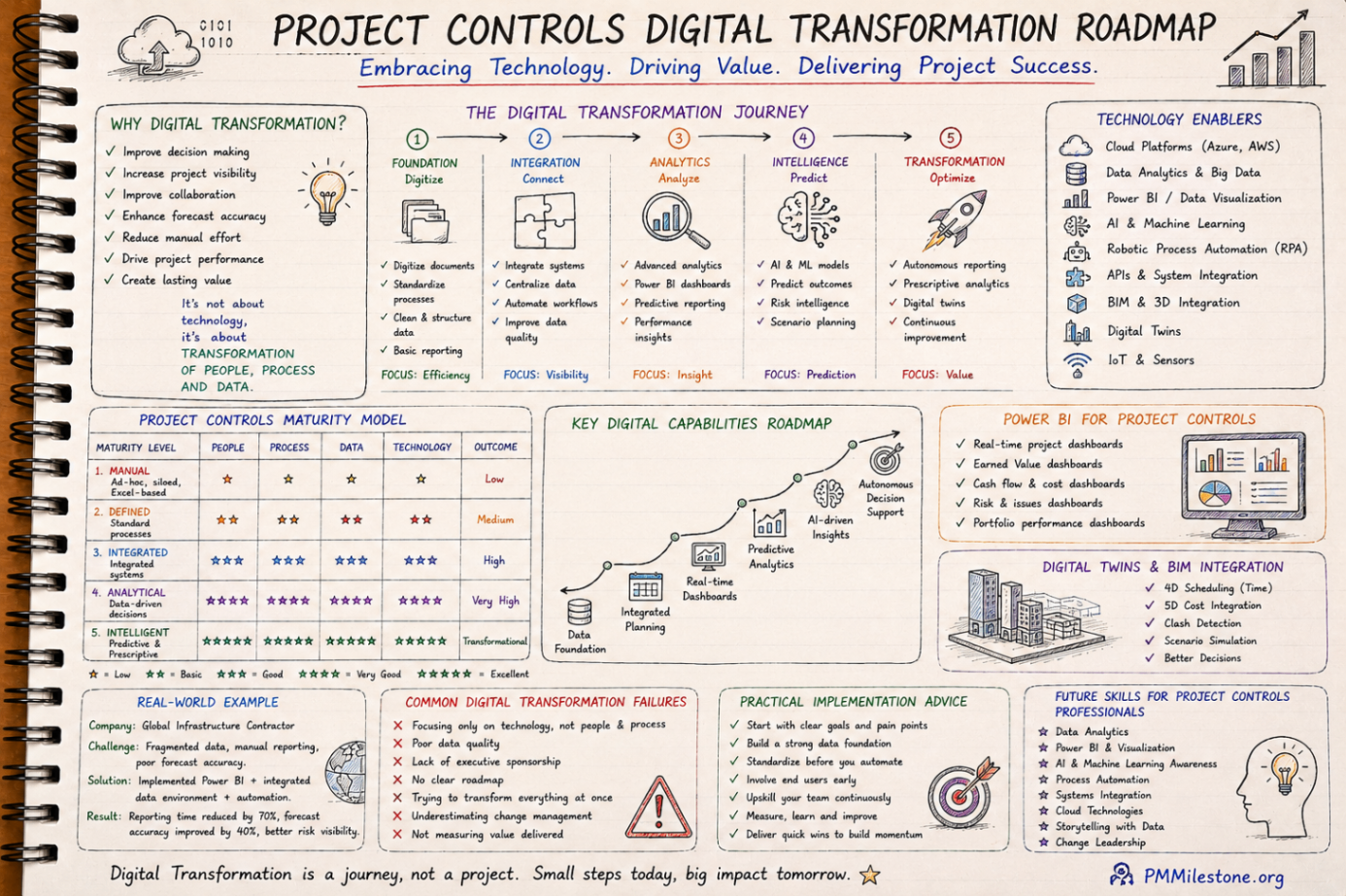
Project Controls Digital Transformation Roadmap
A future-focused guide to modern project controls through data integration, reporting automation, Power BI, AI, BIM and digital PMO capability building.
Project Controls Fundamentals
Scope, schedule, cost, risk, quality and reporting — the six disciplines that hold every successful capital project together, taught from first principles.