Project Controls Leadership Roadmap: From Engineer to Director

Why project controls produces a distinctive kind of leader
Project controls is the integrated discipline of measuring, forecasting and steering capital projects so that decisions rest on evidence rather than opinion. It spans planning and scheduling, cost engineering, earned value, risk, change control, reporting and the PMO systems that hold those threads together. Leaders who grow up inside this discipline carry an unusual combination of skills into senior roles: numerical honesty, schedule literacy, commercial awareness and the habit of writing things down before they are argued about.
That combination is exactly why the path from project controls engineer to director of project controls — and increasingly to project director and programme executive — is one of the strongest leadership routes in capital industries. But the path is not automatic. Technical excellence carries a professional to senior engineer; everything after that is earned through judgement, communication and the ability to build teams and systems that work without you in the room.
This roadmap maps the full progression across five levels, from first job to director. Pair it with the Project Controls Glossary for terminology, the Fundamentals pillar for the technical base, and the wider PMMilestone Academy for the tracks referenced at each level.
The five-level leadership ladder at a glance
Titles vary by company and region, but the underlying ladder is remarkably consistent across construction, infrastructure, oil and gas, and energy. The table below summarises the five levels this roadmap uses, the typical years of experience at each, and the core mandate that defines success at that level. Note that the years are indicative — professionals on large, complex programmes progress faster in capability (though sometimes slower in title) than peers on small projects.
| Level | Typical title | Years | Core mandate |
|---|---|---|---|
| 1 | Project Controls Engineer | 0–3 | Produce accurate schedules, cost data and records |
| 2 | Senior Project Controls Engineer | 3–6 | Own the analysis: EVM, forecasts, risk and change |
| 3 | Project Controls Lead / Manager | 6–10 | Lead the controls function on a project; build the team |
| 4 | Programme Controls Manager | 10–15 | Govern controls across multiple projects and contractors |
| 5 | Director of Project Controls | 15+ | Set strategy, standards and capability for the portfolio |
Level 1 — Project Controls Engineer: master the craft
The first three years are about technical credibility and proximity to the work. Spend serious time on site or close to delivery teams: walk the work fronts, attend coordination meetings, read daily reports. Every schedule and cost judgement you make for the rest of your career is anchored in this physical context — engineers who skip it become spreadsheet operators rather than controls professionals.
Technically, master the foundations: Work Breakdown Structures, activity logic, calendars, constraints and float; budget, commitment, actual and forecast cost; honest progress measurement through physical percent complete and installed quantities. Learn Primavera P6 properly through the Primavera P6 Learning Path, and build earned value intuition with the SPI Calculator and CPI Calculator on live project data rather than textbook examples.
The leadership seed at this level is writing. Contemporaneous, precise, dated records — daily reports, minutes, notices — build a reputation for reliability faster than any software fluency. Leaders are trusted with judgement because they were first trusted with facts.
Level 2 — Senior Engineer: own the analysis, not just the data
Between years three and six, the role shifts from producing data to defending analysis. A senior project controls engineer owns the monthly forecast and can argue it under pressure: which Estimate at Completion method applies, what the assumptions are, and what would change the number. Practise multiple EAC methods side by side with the EAC Calculator and test recovery feasibility with the TCPI Calculator — the gap between current CPI and required TCPI is often the most honest sentence in a monthly report.
Risk and change become core at this level. Learn qualitative and quantitative risk analysis, understand how contingency is sized from the risk register rather than negotiated, and treat change control as the discipline that protects the baseline. The Risk Management on Mega Projects pillar covers the full lifecycle.
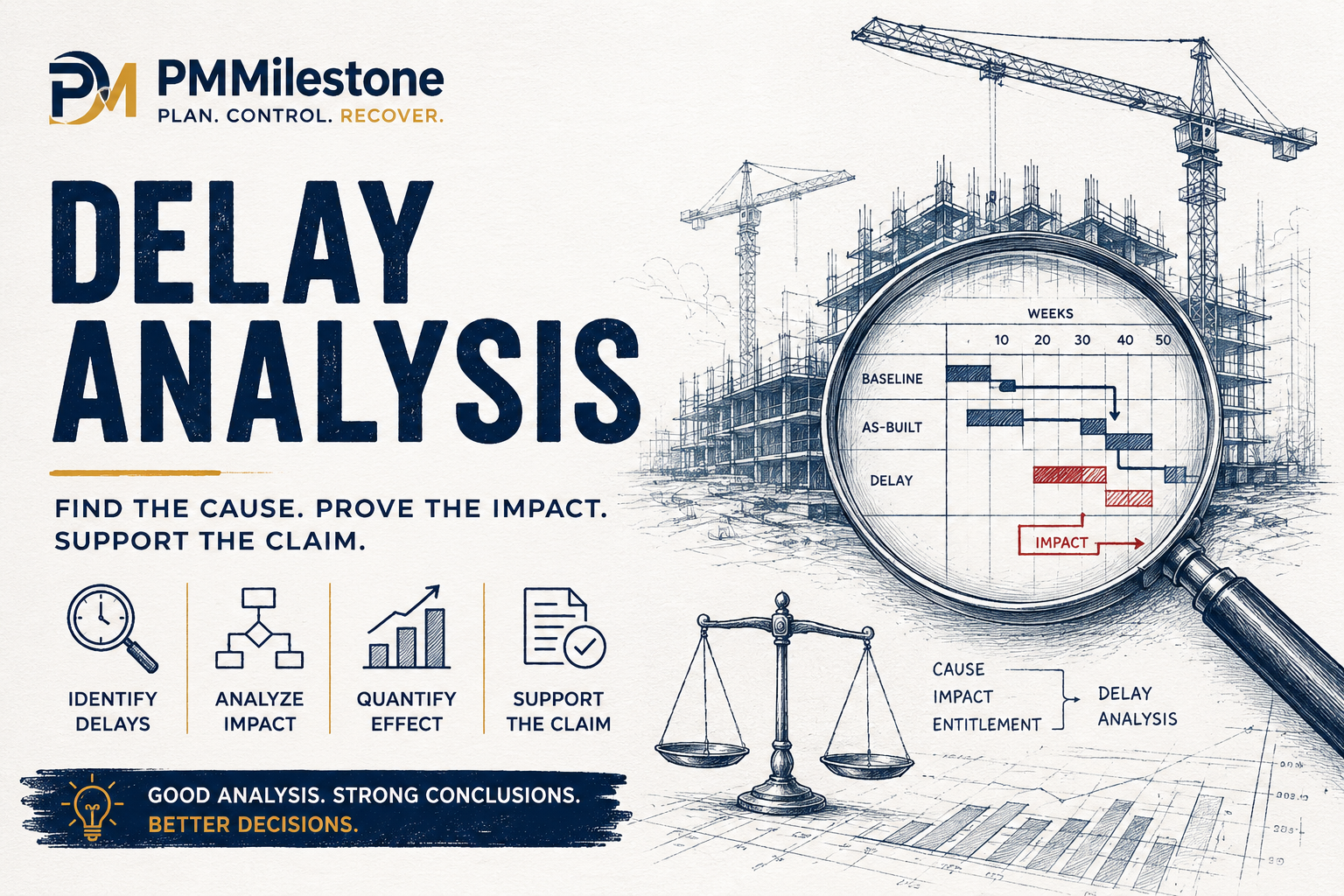
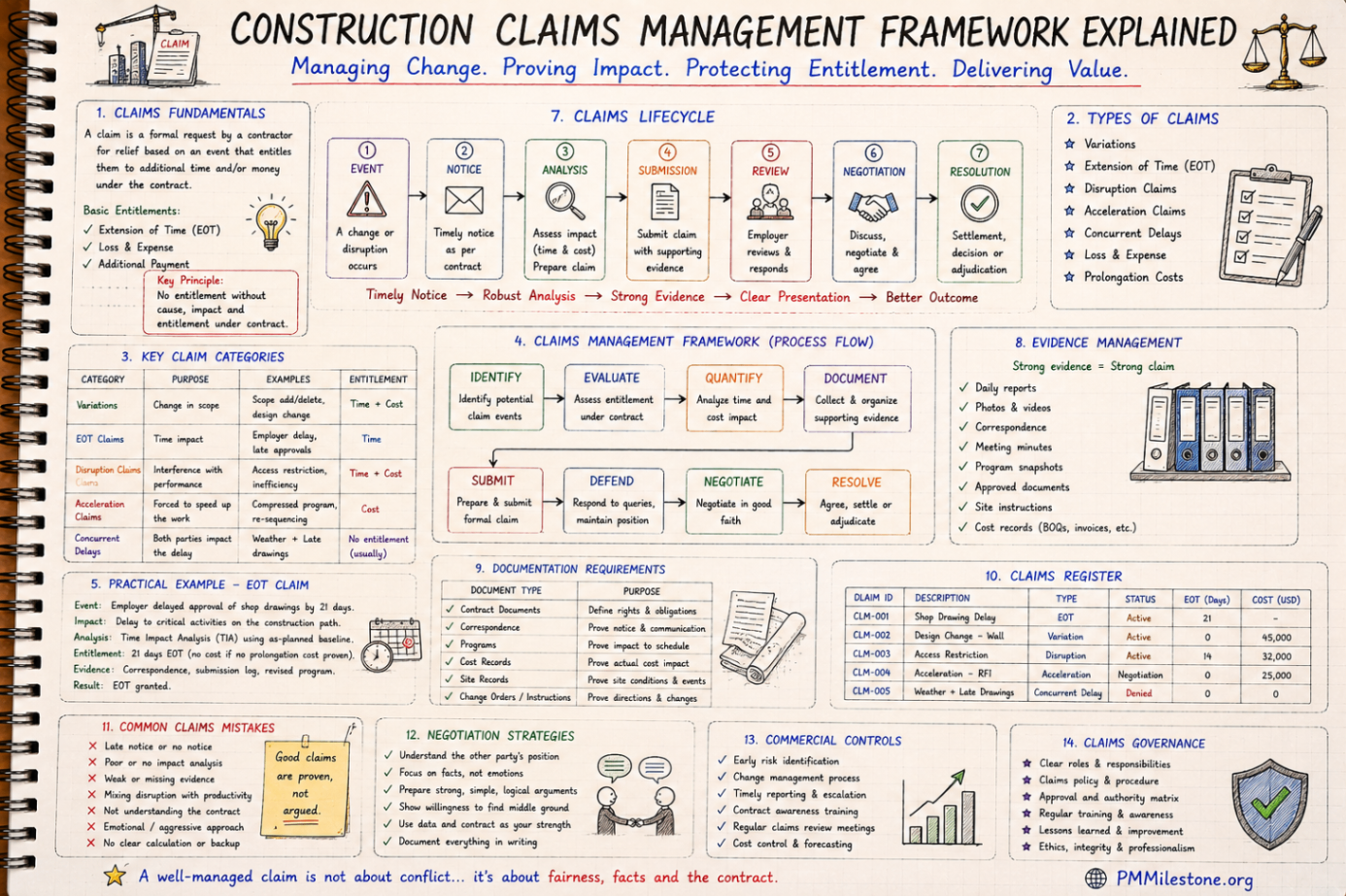
Claims awareness starts here too. Study the Delay Claims Library and the Delay Analysis Learning Track to understand which records survive into disputes. Senior engineers who understand entitlement keep better records on every project afterwards — and become disproportionately valuable to their employers.
Level 3 — Project Controls Lead / Manager: lead the function
The move from senior engineer to project controls manager is the hardest transition on the ladder, because the skills that earned the promotion are not the skills the new role requires. A controls manager is measured by the performance of a team and the credibility of a reporting system, not by personal analytical output. The first leadership disciplines to build are delegation with quality control, structured review of other people's work, and the design of a reporting cadence the project can rely on.
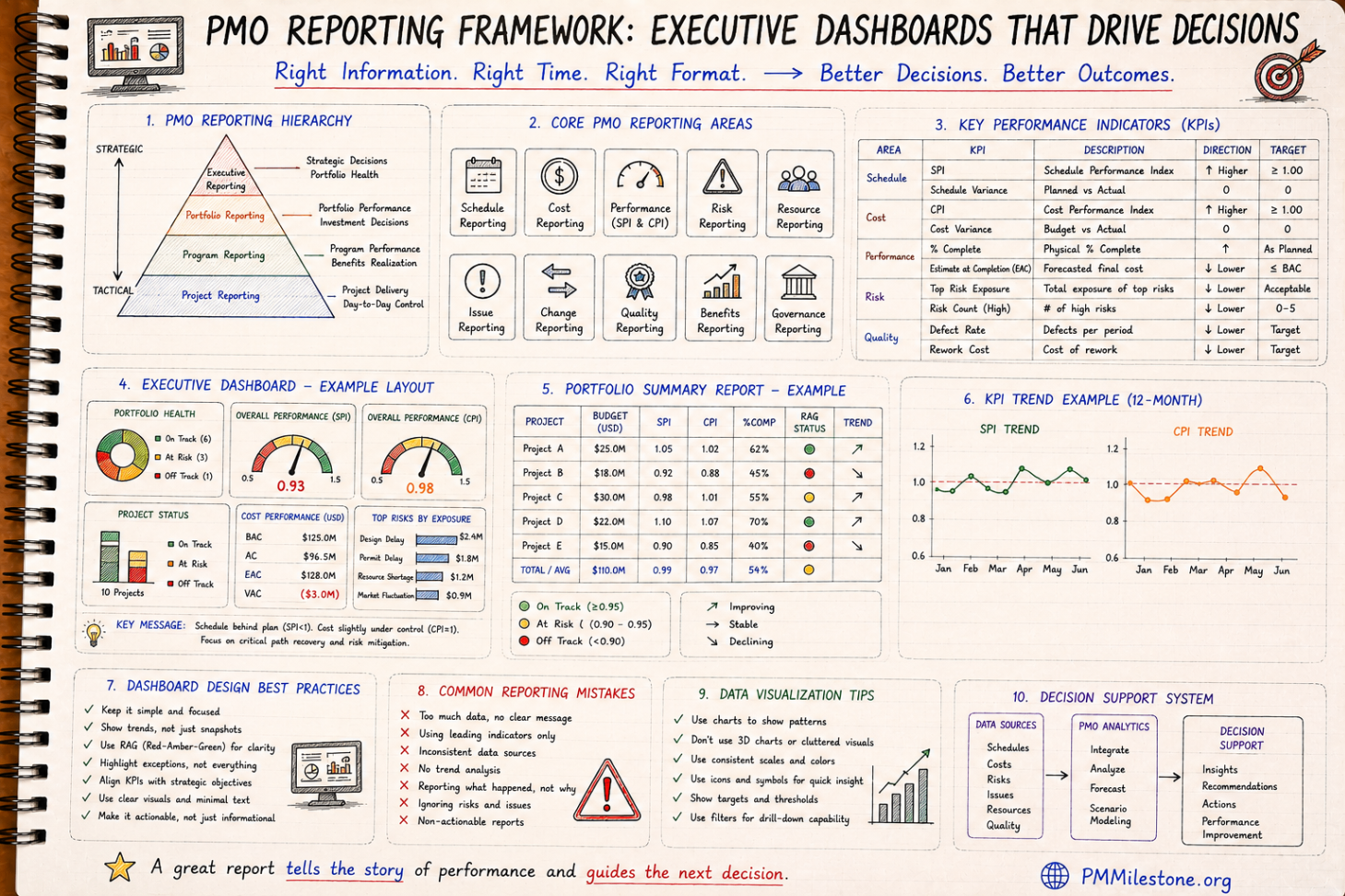
Reporting craft becomes strategic at this level. Study the PMO Reporting & Executive Dashboards pillar and the Dashboard Design Masterclass, and benchmark your function with the PM Maturity Assessment. A controls manager whose monthly report is trusted, consistent and read is already operating at the next level.
This is also the level at which you should deliberately round out gaps using the structured Learning Tracks — most managers arrive strong in either planning or cost and must build genuine fluency in the other within their first two years in the role.
Level 4 — Programme Controls Manager: govern at scale
Programme controls managers operate across multiple projects, contractors and reporting lines. The job changes from running a controls team to designing the control system itself: common WBS and coding standards, consistent progress measurement rules, integrated master schedules, portfolio risk escalation and a single source of truth for executive reporting. Where a level-3 manager fixes a bad report, a level-4 manager fixes the system that produced it.
Governance literacy is the defining skill. Stage gates, baseline change boards, escalation thresholds and decision rights determine whether a programme can correct course early or discovers problems late. Study how governance fails in practice through the Mega Project Case Studies and the Project Failure Database — the same patterns of gates passed without evidence and baselines changed without discipline appear on programmes of every size.
Stakeholder range expands sharply here: owners, lenders, joint-venture partners, auditors and regulators all consume controls outputs. The professionals who thrive at this level write and present with precision, because their numbers move funding decisions.
Level 5 — Director of Project Controls: shape the portfolio
A director of project controls owns capability, standards and truth-telling across an entire portfolio. The work is strategic: hiring and developing the controls leadership bench, selecting and governing the systems stack, setting the KPI hierarchy executives steer by, and protecting the independence of reporting so that bad news travels fast and intact. Directors spend more time on people, standards and governance than on any individual schedule or forecast — and that is the point.
Directors also carry the external face of the function: benchmarking against industry data, contributing to standards bodies, and grounding internal practice in research. The Publications library collects the peer-reviewed research behind the PMMilestone framework, and the Knowledge Pillars index is the fastest route into the deep technical material a director is expected to command without notes.
The best directors remain technically dangerous. They no longer build the schedule, but they can still find the broken logic in one — and their teams know it. That credibility is what separates a director of project controls from a general manager with a controls title.
Technical and leadership skills by level
The balance between technical and leadership competence shifts predictably across the ladder. The mistake most professionals make is waiting for a title before building the next level's skills; the promotion almost always follows the behaviour, not the other way around.
| Level | Technical priorities | Leadership priorities |
|---|---|---|
| Engineer | P6, Excel, WBS, progress measurement, EVM basics | Reliability, written records, asking good questions |
| Senior Engineer | EAC methods, risk analysis, change control, claims records | Defending analysis, mentoring juniors, owning a deliverable |
| Lead / Manager | Reporting systems, dashboard design, schedule quality review | Delegation, team building, cadence design, executive writing |
| Programme Manager | Integrated master schedules, portfolio risk, data standards | Governance design, multi-party stakeholder management |
| Director | Systems strategy, KPI hierarchy, benchmarking, assurance | Capability building, succession, independence of reporting |
Salary progression from engineer to director
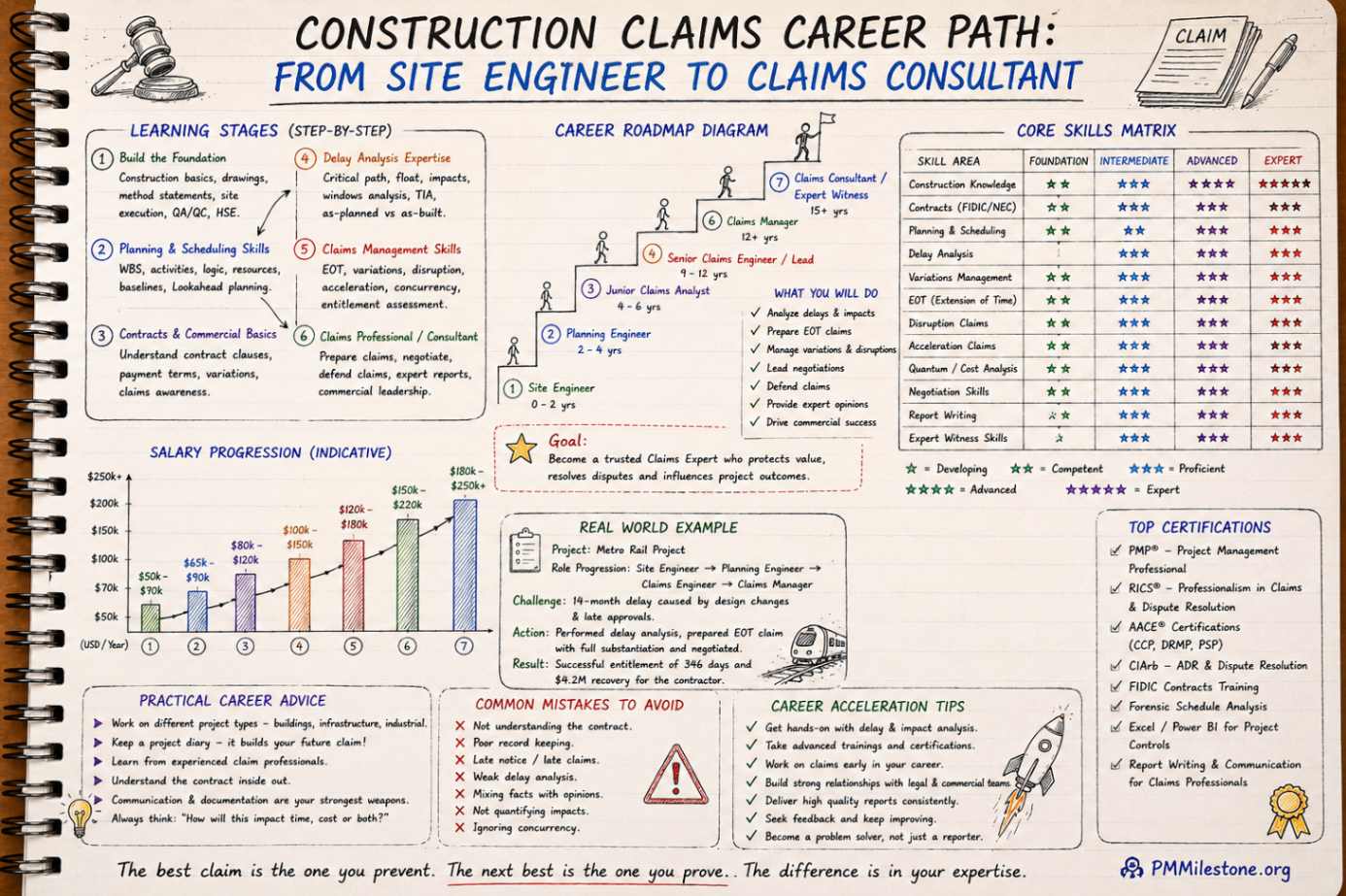
Compensation varies widely by region, sector and project scale, but the shape of the curve is consistent across construction, infrastructure and energy. The ranges below are indicative annual figures in USD equivalent for mid-to-high cost markets; adjust downward for emerging markets and upward for high-cost hubs such as the Gulf, North Sea or major North American programmes. Owner-side roles typically pay 10–20% above contractor-side equivalents at levels 4 and 5.
| Level | Typical title | Indicative range (USD/yr) |
|---|---|---|
| 1 | Project Controls Engineer | $45k – $85k |
| 2 | Senior Project Controls Engineer | $80k – $130k |
| 3 | Project Controls Lead / Manager | $110k – $175k |
| 4 | Programme Controls Manager | $150k – $230k |
| 5 | Director of Project Controls | $190k – $300k+ |
Certifications that carry weight at each level
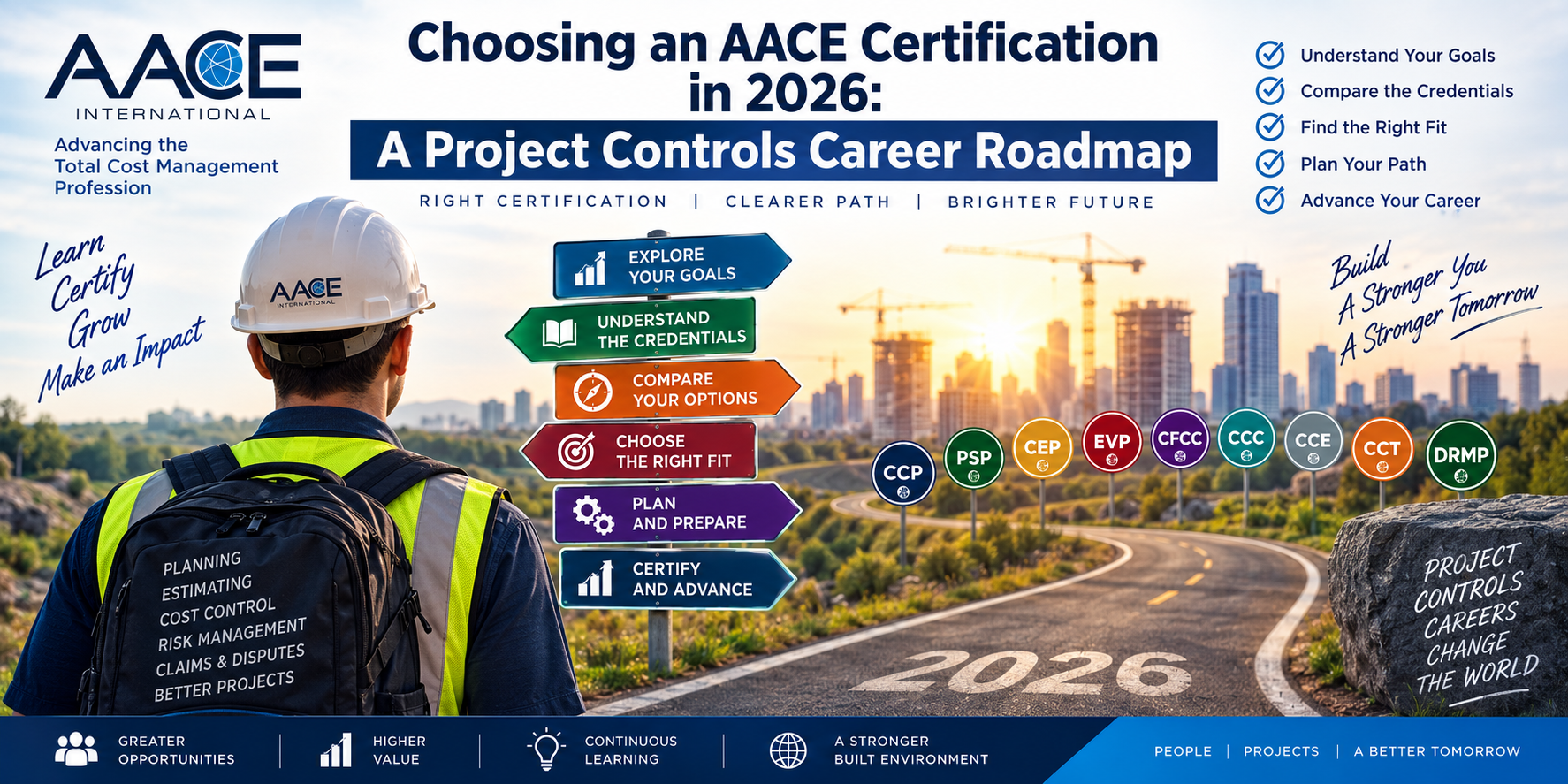
Certifications open doors but never replace project evidence. At levels 1–2, AACE's PSP (scheduling) or CCP (cost) and an Oracle Primavera P6 credential signal technical seriousness. PMI's PMP becomes valuable at level 3 as the role widens beyond controls into general delivery literacy, and PMI-RMP or AACE DRMP suit risk-heavy paths. At levels 4–5, certifications matter less than a track record on complex programmes — though chartered status, an MSc in construction or engineering management, and published or conference work meaningfully strengthen director-level candidacy. Interviewers at every level discount certificate collectors quickly; stack credentials behind delivered projects, not in front of them.
Why careers stall between senior engineer and manager
The most common stall point on this ladder sits between levels 2 and 3, and the cause is almost always the same: the professional keeps optimising the skills that made them excellent at level 2. They produce faster analysis, deeper spreadsheets and better personal output — while the promotion criteria have quietly changed to team leadership, communication and system design. The remedy is deliberate: ask for review responsibility over others' work, take ownership of one full reporting cycle end to end, present to steering committees whenever the chance appears, and write the kind of one-page executive summaries that directors actually read.
The second stall cause is narrowness. Planners who never learned cost, and cost engineers who never learned scheduling, hit a ceiling at level 3 because the function they would lead spans both. Use the Learning Tracks to close the weaker side early — it is far cheaper at year four than at year nine.
Common mistakes on the way up
Four mistakes quietly cap project controls careers. First, chasing software fluency before discipline fluency — being the fastest P6 user in the room is not a career strategy. Second, accepting an inflated title on a small project; reputations are built on scope, scale and complexity, and experienced hiring managers read through titles in minutes. Third, neglecting written communication, which becomes the dominant skill from level 3 onward. Fourth, avoiding troubled projects. Recovery programmes, disputes and difficult audits are where judgement compounds fastest — the leaders who reach director almost all carry scars from projects that went wrong and were steered back.
Frequently asked questions
How long does it realistically take to go from engineer to director of project controls?
Fifteen to twenty years is typical on serious capital programmes. Exceptional professionals on large, complex projects sometimes reach director in twelve to fourteen, but the constraint is rarely talent — it is accumulated judgement across full project lifecycles, including at least one troubled project steered to recovery.
Do I need an engineering degree to reach director level?
No, but you need deep technical credibility. Quantity surveyors, construction managers and finance professionals reach director roles regularly. What matters at senior levels is the ability to interrogate schedules, forecasts and risk models personally — however that capability was built.
Is the planning route or the cost route better for reaching leadership?
Neither dominates. What is consistent is that professionals who reach level 3 and above are fluent in both. Start in whichever discipline hires you, then deliberately build the other within your first five years.
Should I move to the owner side or stay with contractors?
Both produce directors. Contractor-side roles build speed, commercial sharpness and claims awareness; owner-side roles build governance, assurance and portfolio perspective. The strongest director CVs usually include both, with the owner side more common for the final director seat.
Do I need an MBA to become a director of project controls?
No. An MBA helps some candidates broaden commercial and organisational vocabulary, but an MSc in construction or engineering management, chartered status, or published work carries at least as much weight — and a track record on complex programmes outweighs all of them.
Where this article connects
Curated cross-links: related Academy articles, the Knowledge Pillars this topic draws on, and the calculators referenced in the FAQs above.
Related Academy articles
Relevant Knowledge Pillars
Calculators referenced in the FAQs
Related learning for this topic
Hand-picked Learning Tracks, Knowledge Pillars, publications and case data that extend this article.
Next steps on PMMilestone
Use these pages to deepen the topic, verify terminology, compare real cases and move from theory into applied project controls practice.
Related calculators
Open the calculators referenced in this article and run them against your own project numbers.
SPI Calculator
Schedule Performance Index — measure schedule efficiency.
Open Earned ValueCPI Calculator
Cost Performance Index — measure cost efficiency.
Open ForecastingEAC Forecast Calculator
Estimate at Completion — forecast final project cost.
Open ForecastingTCPI Calculator
To-Complete Performance Index — required efficiency to finish on budget.
Open PMOPM Maturity Assessment
Score PM maturity across 5 dimensions.
Open CareerPM Salary Estimator
Estimate project manager compensation by experience.
OpenOther learning tracks
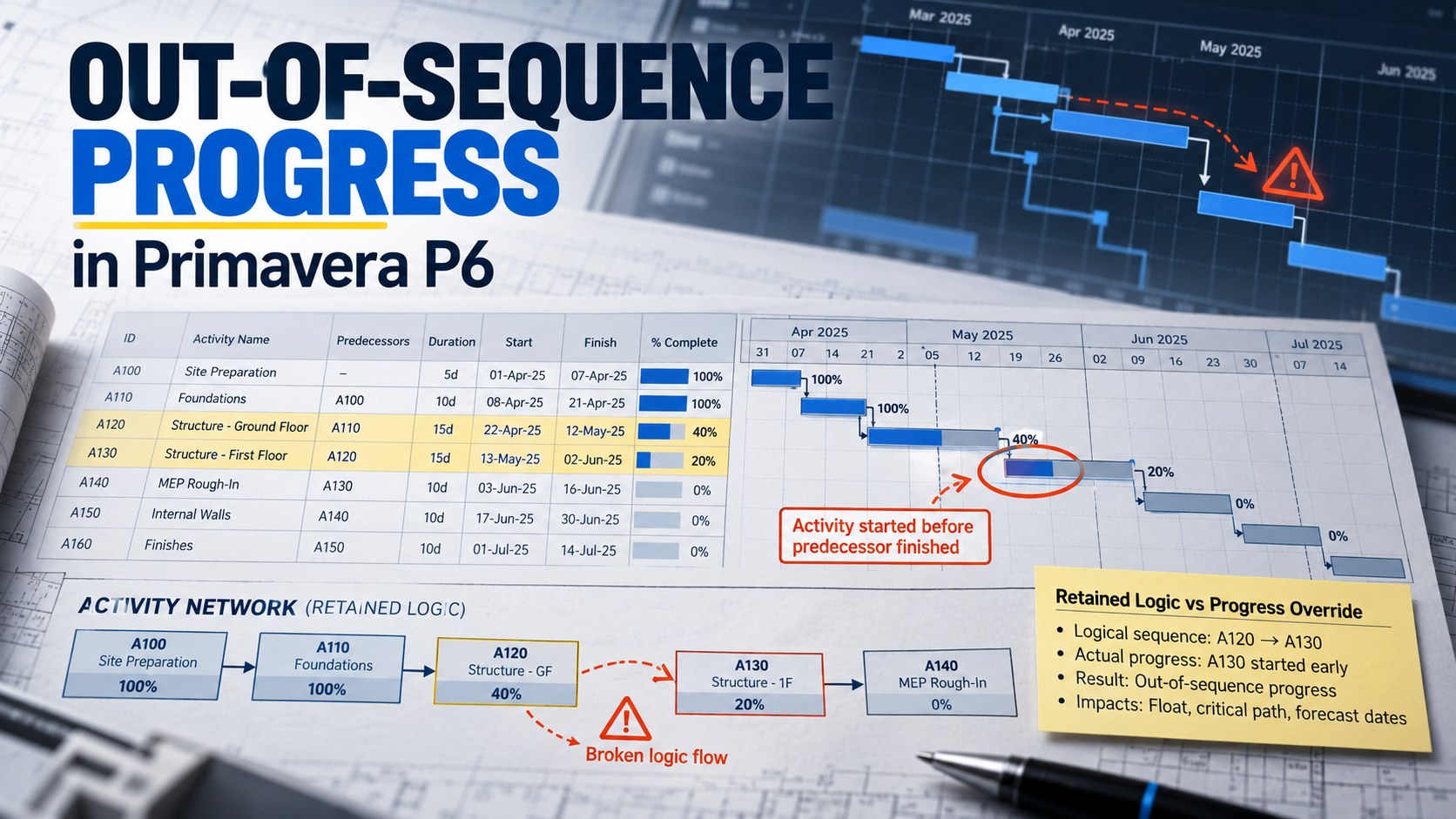
How to Fix Out-of-Sequence Activities in Primavera P6 Before They Distort Your Critical Path
Repair out-of-sequence progress with a five-step workflow, a DN600 pipeline example, scheduling-option comparisons and a monthly evidence checklist.
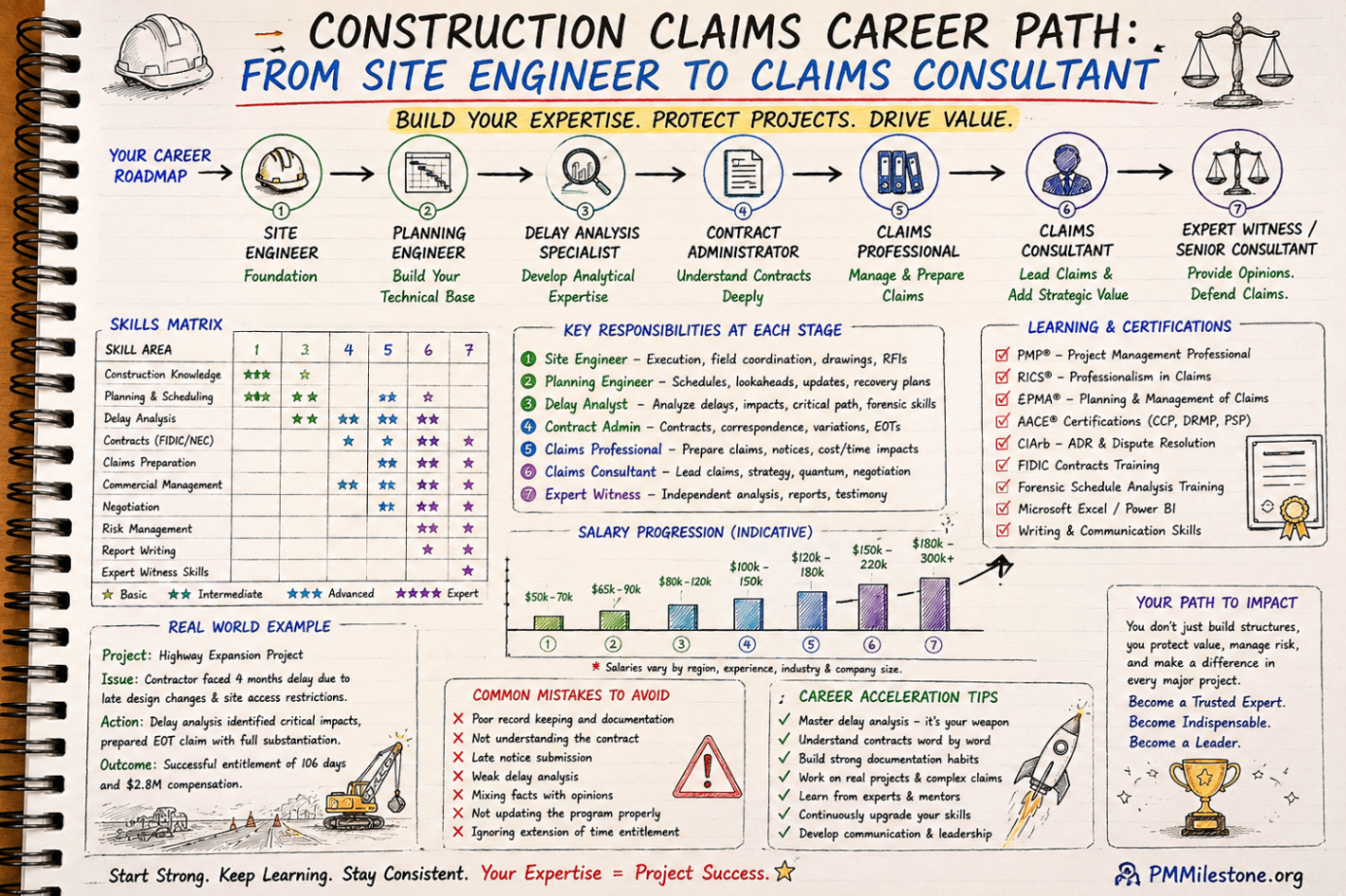
Construction Claims Career Path
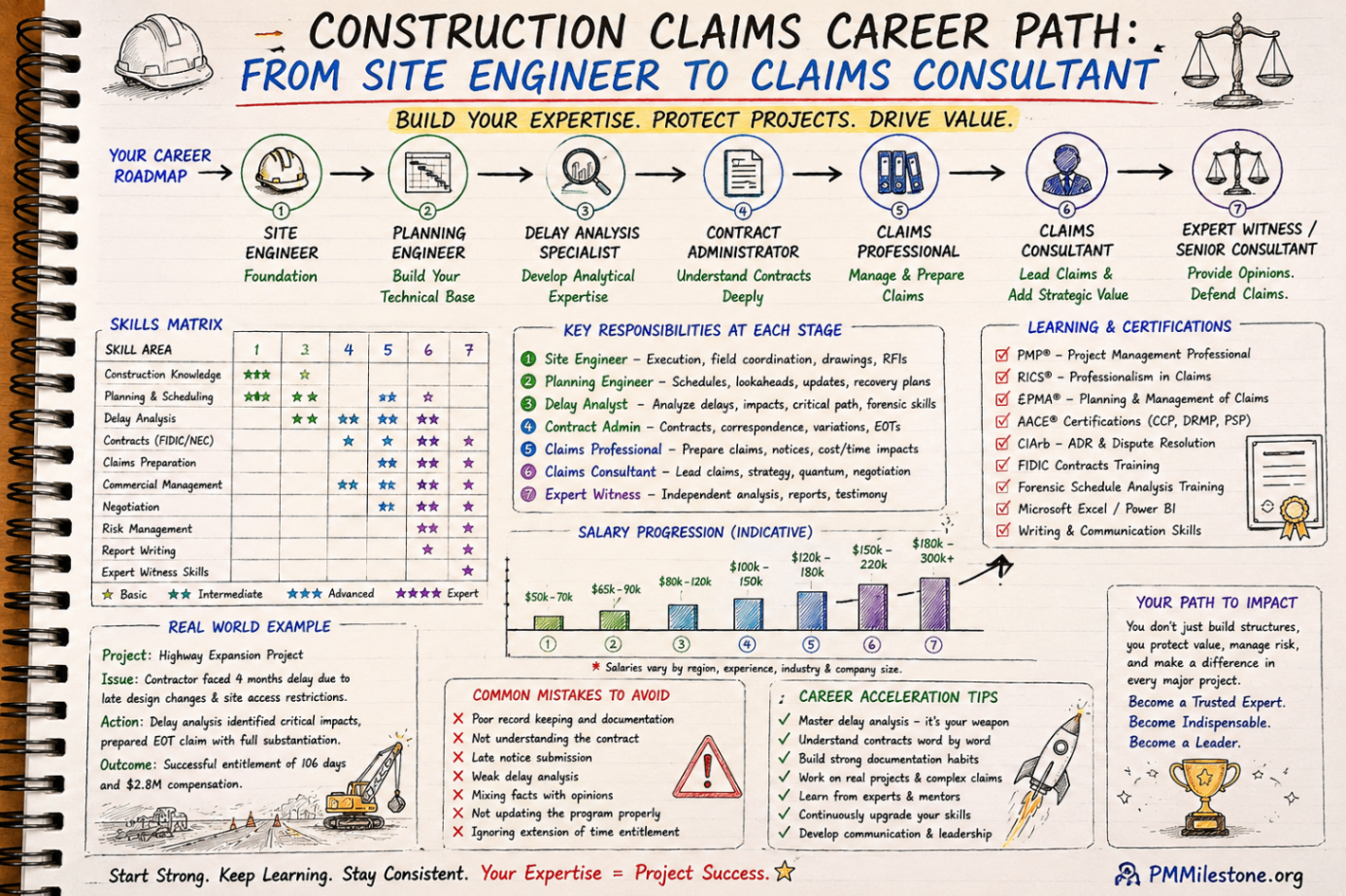
A practical roadmap for engineers moving from site delivery into planning, delay analysis, claims, commercial controls and senior claims consulting.
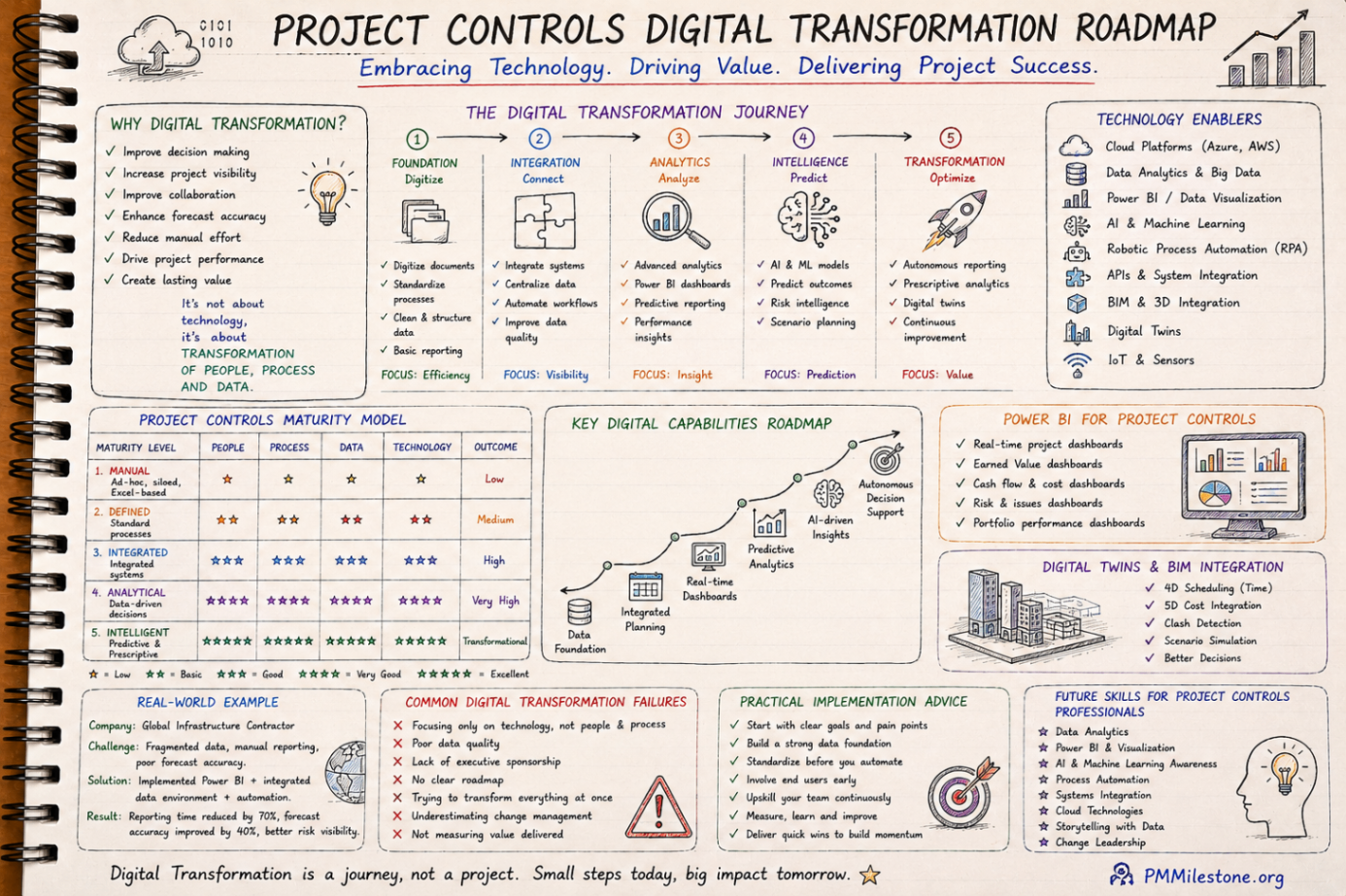
Project Controls Digital Transformation Roadmap
A future-focused guide to modern project controls through data integration, reporting automation, Power BI, AI, BIM and digital PMO capability building.