Earned Value Management Learning Track: From PV and EV to Probabilistic EAC


Step 1: The three curves — PV, EV, AC
Every EVM system rests on three time-phased curves. Planned value (PV) is the budgeted cost of the work scheduled to be done by the data date — the baseline. Earned value (EV) is the budgeted cost of the work actually accomplished by the data date — physical progress translated into dollars at baseline rates. Actual cost (AC) is what has actually been spent.
The relationship between the three tells you almost everything about project performance. EV above PV means ahead of schedule in cost terms; EV below PV means behind. EV above AC means under budget; EV below AC means over. If you only ever drew three curves on a project, these would be the three to draw. Everything else in EVM is derived from them.
Step 2: The performance indices — SPI and CPI
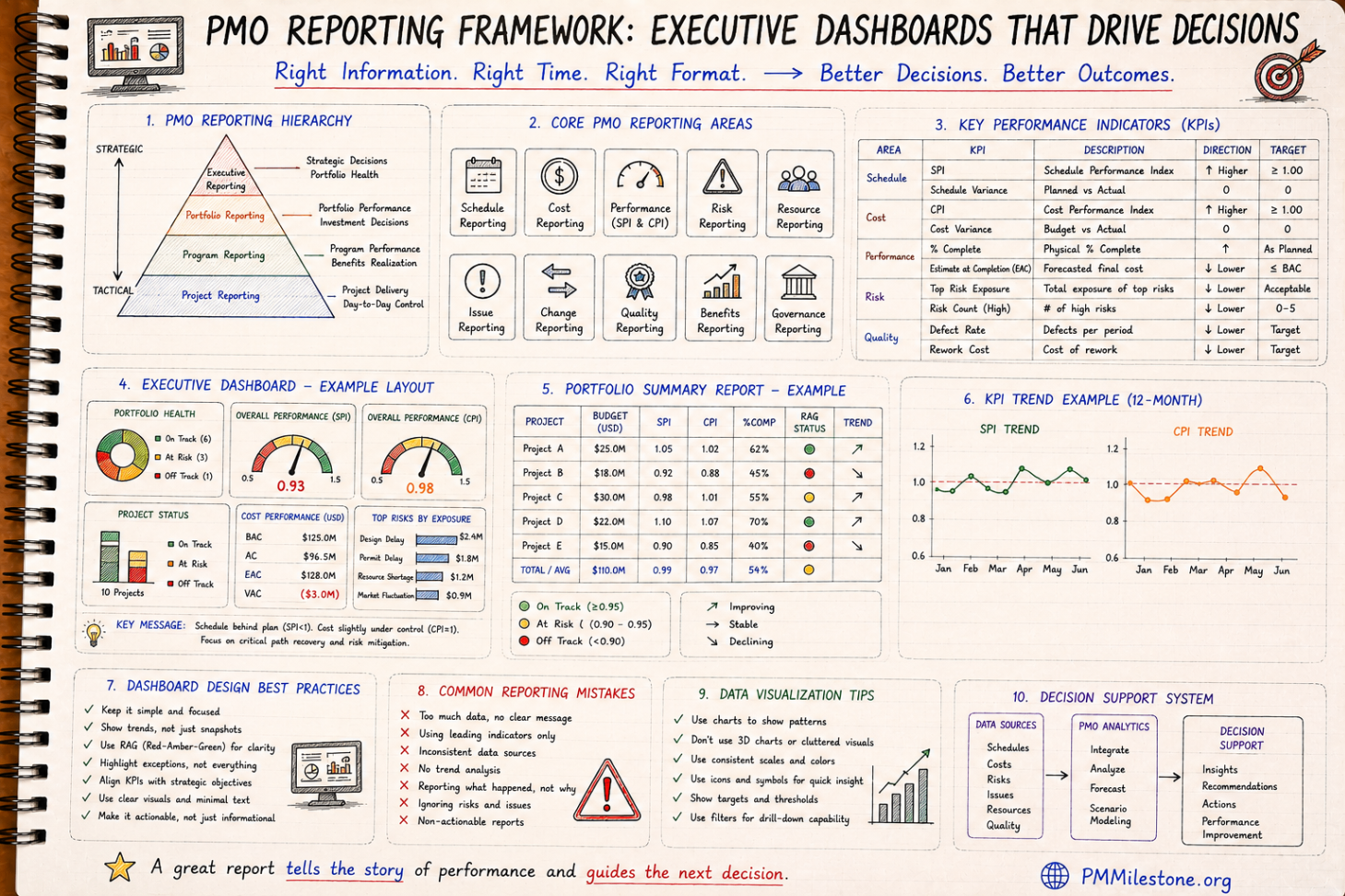
Schedule performance index (SPI) is EV divided by PV. A value of 1.0 means on schedule; below 1.0 means behind; above 1.0 means ahead. Cost performance index (CPI) is EV divided by AC. A value of 1.0 means on budget; below 1.0 means over; above 1.0 means under. Both are dimensionless ratios, which is what makes them useful for comparing projects of different sizes.
The most important property of CPI is its stability. On most projects, once CPI has stabilised at around 20% complete, it tends to stay within a narrow band for the rest of the project. That makes CPI the most reliable single predictor of final cost, which is why almost every EVM-based forecast uses it as the multiplier. The SPI Calculator and CPI Calculator in the tools library let you run these numbers against your own project data.
Step 3: The variance metrics — SV and CV
Where the indices are ratios, the variances are dollar amounts. Schedule variance (SV) is EV minus PV — the dollar value of work behind or ahead of schedule. Cost variance (CV) is EV minus AC — the dollar value over or under budget. Variances are useful when the audience needs absolute numbers (boards, sponsors, finance) and indices are useful when the audience needs trend (project managers, controls teams).
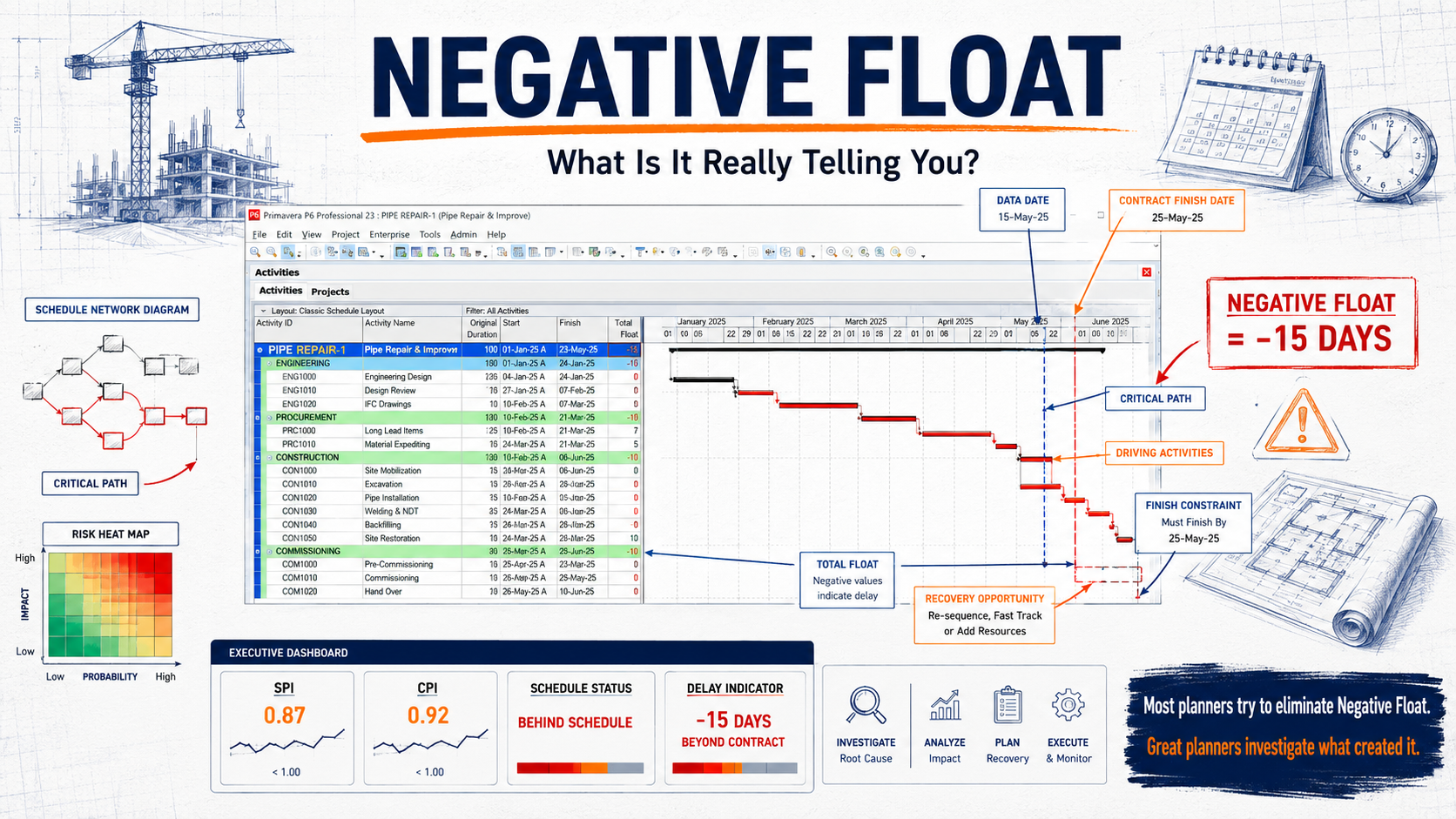
Negative SV does not mean the project will finish late by the SV amount. It means the project has earned less value than planned by the data date. The conversion from SV to forecast date slip requires earned schedule (covered in Step 7) or a fully recalculated CPM forecast. This is the single biggest interpretation error in EVM reporting.
Step 4: TCPI — the index that tells you the future
To-complete performance index (TCPI) is the CPI you need to achieve from now until completion to finish at a given target. It is calculated as (BAC − EV) divided by (BAC − AC) when the target is the original budget, or (BAC − EV) divided by (EAC − AC) when the target is the current forecast.
TCPI is the metric that exposes denial. If your CPI to date is 0.85 and the TCPI required to finish at budget is 1.25, the project is signalling that it must perform 47% better for the rest of its life than it has so far. That almost never happens. TCPI's job is to make the math of catching up visible so that the project board can make the call between cost increase, scope cut or schedule extension.
Step 5: EAC and ETC — the forecast
Estimate at completion (EAC) is the forecast of what the project will actually cost. Estimate to complete (ETC) is what it will cost from now to finish. EAC = AC + ETC. The interesting question is how to calculate ETC.
There are four standard formulas. EAC1 = BAC / CPI assumes future performance equals past cost performance — the most reliable when CPI has stabilised. EAC2 = AC + (BAC − EV) assumes future performance returns to plan — usually optimistic. EAC3 = AC + (BAC − EV) / (CPI × SPI) blends cost and schedule performance — useful when both are constrained. EAC4 = AC + bottom-up re-estimate — the most accurate but the most effort.
The right answer is to use EAC1 as the baseline forecast, EAC3 as the worst-case forecast, and EAC4 once a quarter as a sanity check. Reporting a single EAC number is misleading; reporting a range with confidence bands is honest.
Step 6: Reading the four-square diagnostic
Plot SPI on the horizontal axis and CPI on the vertical axis. The plane divides into four quadrants. Top right (SPI > 1, CPI > 1) is the healthy quadrant — ahead and under. Top left (SPI < 1, CPI > 1) is the resource-constrained quadrant — behind but under, usually a sign of under-resourcing. Bottom right (SPI > 1, CPI < 1) is the overheating quadrant — ahead but over, usually a sign of throwing money at the schedule. Bottom left (SPI < 1, CPI < 1) is the crisis quadrant — behind and over.
Projects drift between quadrants over time. Tracking the trajectory is more informative than the spot value. A project moving from top-right to bottom-right is overheating; one moving from top-left to bottom-left is collapsing. The EAC and TCPI calculators help quantify the implication of the trajectory.
Step 7: Earned schedule — fixing EVM's time problem
Classic EVM has a known weakness: SPI converges to 1.0 at the end of the project regardless of how late it actually finishes, because EV always reaches BAC eventually. Earned schedule (ES) solves this by translating earned value into time units rather than dollars.
ES is the time at which the current EV was originally planned. Schedule variance in time (SV-t) is ES minus actual time. Schedule performance index in time (SPI-t) is ES divided by actual time. Unlike classic SPI, SPI-t does not collapse to 1.0 at the end; it continues to reflect the real schedule slip. The Earned Schedule Calculator computes both.
Step 8: Probabilistic EAC
The final step is to combine EVM with Monte Carlo. Instead of reporting EAC as a single number, model the inputs — remaining work, CPI uncertainty, risk events — as distributions and simulate. The output is a probability distribution of final cost, from which you can read P50, P80 and P90 forecasts.
Probabilistic EAC is what mature owners and contractors report at portfolio level. It is also the bridge between EVM and contingency reserve sizing — the gap between P50 and P80 is a reasonable starting point for contingency. The Risk and Reserves track explains how to size and draw down reserves over time.
Putting EVM into practice
EVM only works when three conditions are met. First, the scope is defined well enough to allocate budget to work packages and earned value to physical progress. Second, the progress measurement method is consistent — 50/50, percent complete, milestone weights or units complete, but the same method for the same type of work. Third, the cadence is disciplined: monthly is the minimum, biweekly is better for fast-moving construction.
Done well, EVM becomes the single trusted source of truth for project performance. Done badly, it becomes a compliance exercise that nobody believes. The difference is almost always in the integrity of the inputs, not the sophistication of the formulas.
Frequently asked questions
Is EVM only for large projects?
No. The disciplines scale down well to projects above roughly $500k; below that, the overhead can outweigh the benefit.
When does CPI become reliable?
Typically once the project is around 20% complete; before that, CPI is too volatile to forecast with.
Why does SPI go back to 1.0 at the end of a late project?
Because classic SPI is EV / PV and EV always reaches BAC eventually. Earned schedule fixes this by working in time units.
Can EVM be combined with agile delivery?
Yes — earned value is calculated against accepted story points or feature credits instead of physical progress, with the same SPI / CPI logic.
Next steps on PMMilestone
Use these pages to deepen the topic, verify terminology, compare real cases and move from theory into applied project controls practice.
Related calculators
Open the calculators referenced in this article and run them against your own project numbers.
SPI Calculator
Schedule Performance Index — measure schedule efficiency.
Open Earned ValueCPI Calculator
Cost Performance Index — measure cost efficiency.
Open Earned ValueSchedule Variance (SV) Calculator
Measure schedule variance in dollars.
Open Earned ValueCost Variance (CV) Calculator
Measure cost variance in dollars.
Open ForecastingEAC Forecast Calculator
Estimate at Completion — forecast final project cost.
Open ForecastingETC Calculator
Estimate to Complete the remaining work.
Open ForecastingTCPI Calculator
To-Complete Performance Index — required efficiency to finish on budget.
Open ForecastingVAC Calculator
Variance at Completion forecast.
Open ScheduleEarned Schedule Calculator
Time-based schedule performance (SPI(t)).
OpenOther learning tracks
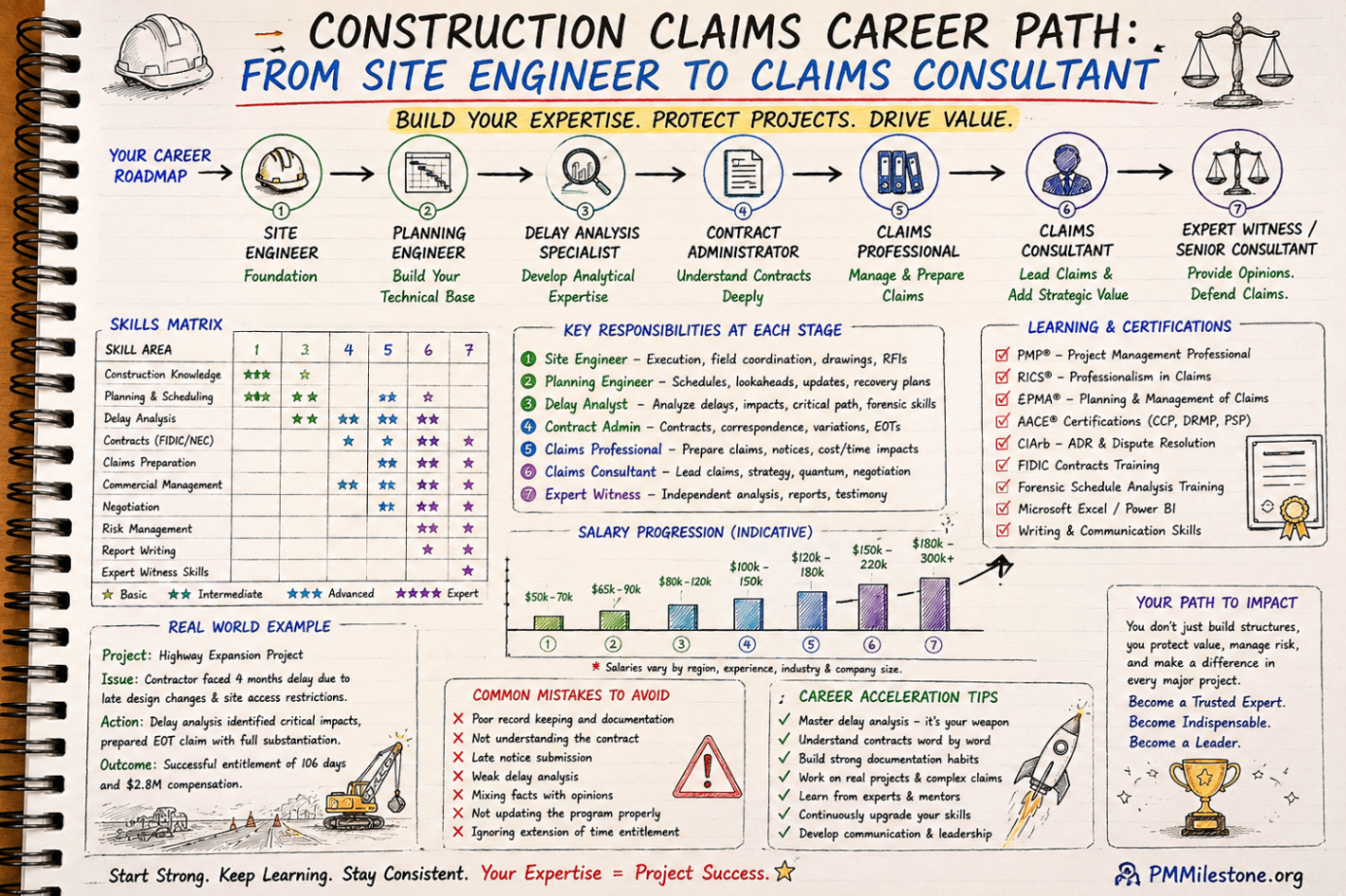
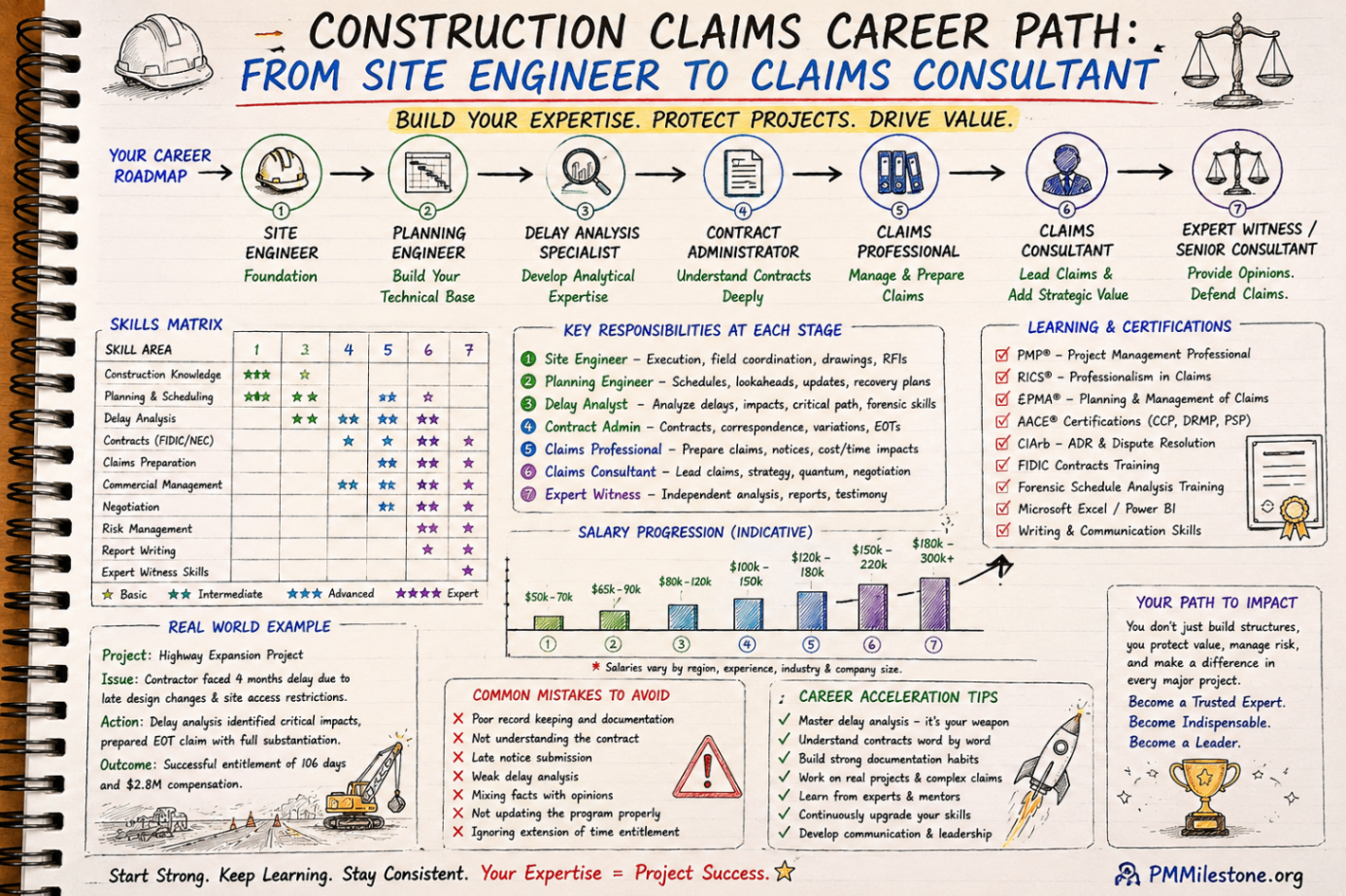
Construction Claims Career Path
A practical roadmap for engineers moving from site delivery into planning, delay analysis, claims, commercial controls and senior claims consulting.
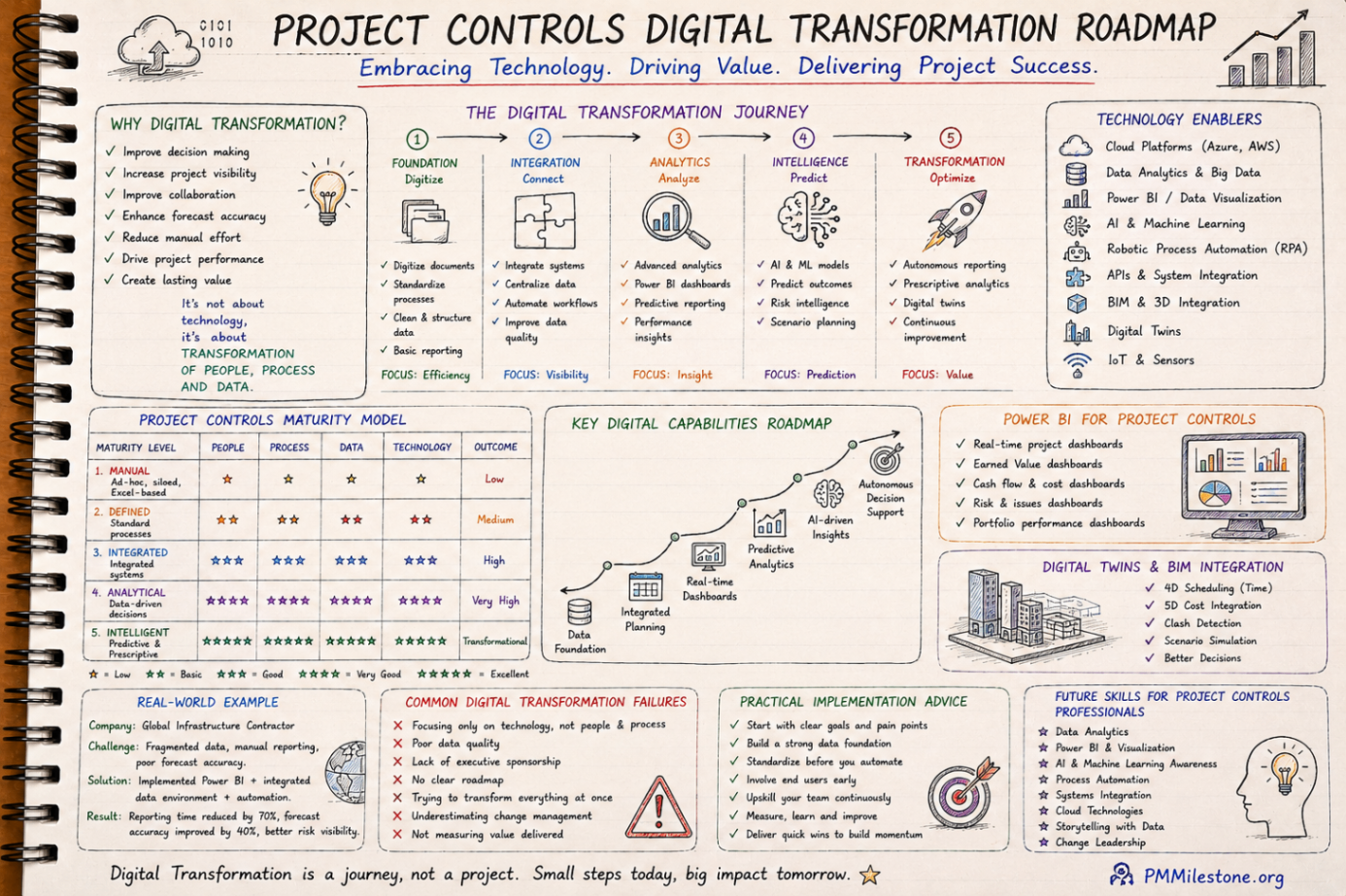
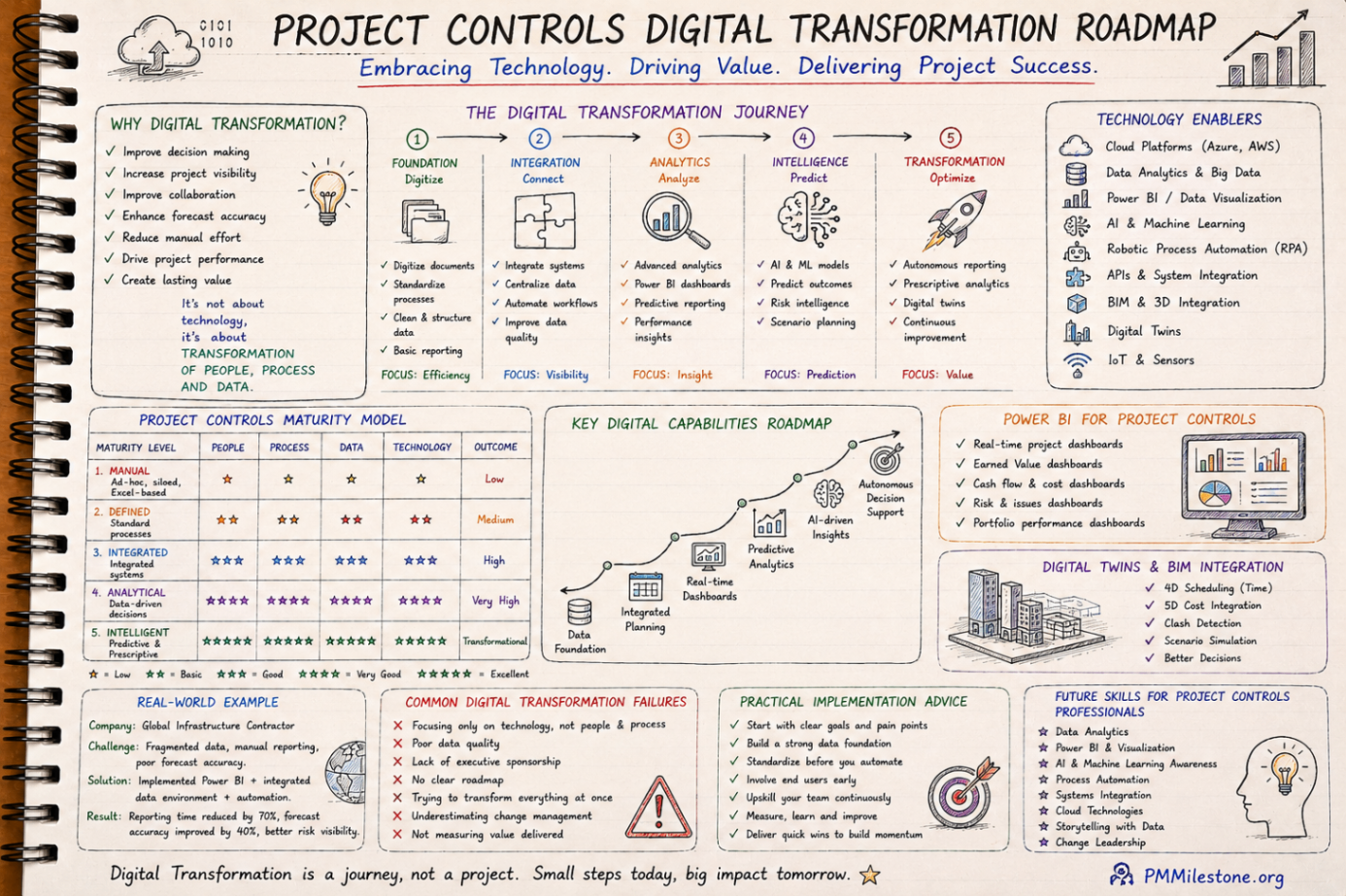
Project Controls Digital Transformation Roadmap
A future-focused guide to modern project controls through data integration, reporting automation, Power BI, AI, BIM and digital PMO capability building.
Project Controls Fundamentals
Scope, schedule, cost, risk, quality and reporting — the six disciplines that hold every successful capital project together, taught from first principles.