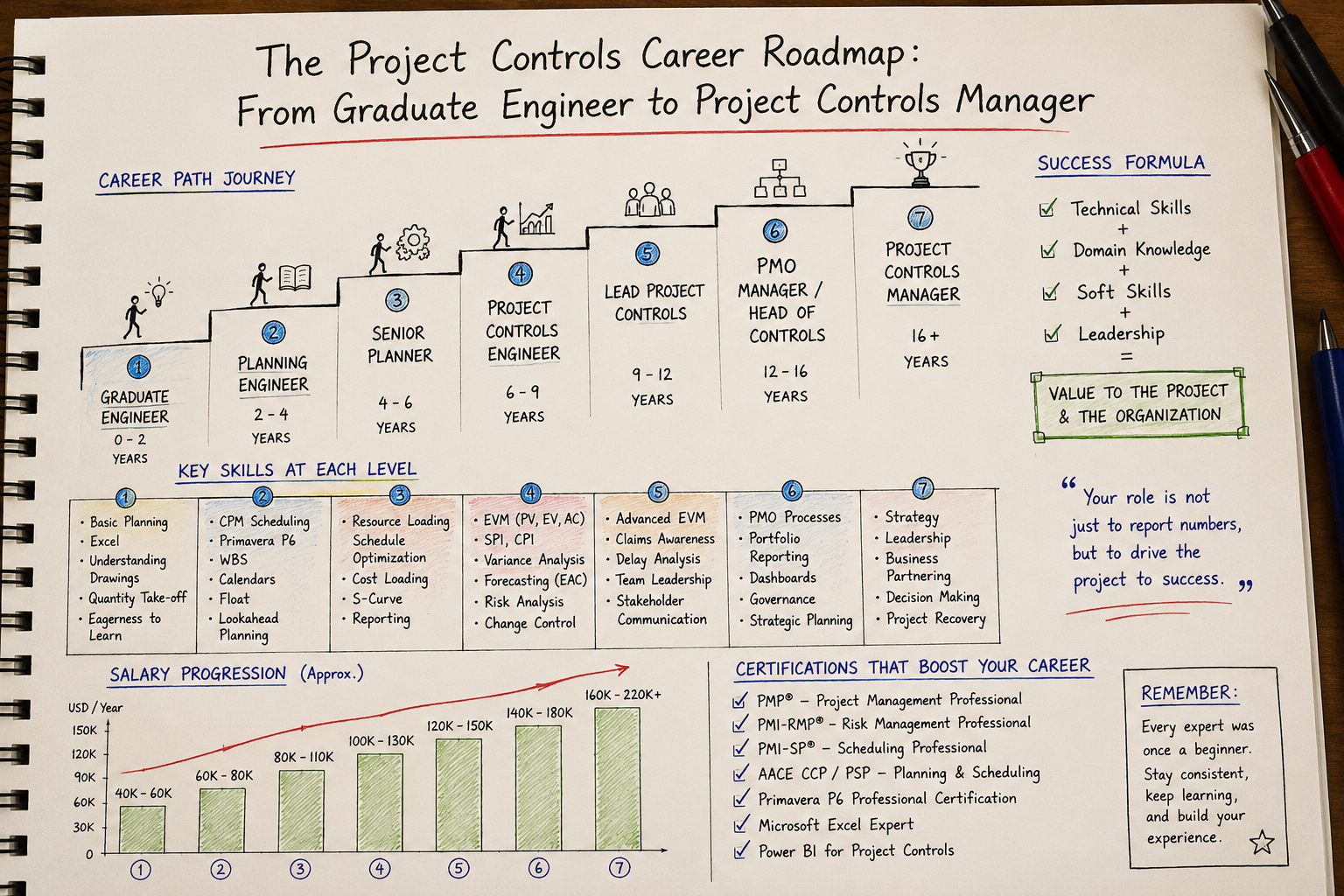
The Project Controls Career Roadmap: From Graduate Engineer to Project Controls Manager

Why most project controls careers drift (and how to stop yours doing the same)
I have spent more than seventeen years inside capital project organisations — owner side, contractor side, consultancy side — across construction, energy and infrastructure. The single most common career conversation I have with planners and cost engineers is some version of the same sentence: 'I have been doing this for six years and I do not really know what comes next.' That is not a talent problem. It is a map problem. Project controls, unlike structural engineering or accounting, does not have a single licensing body that publishes a tidy career ladder. Most people learn the staircase the hard way, by tripping on it.
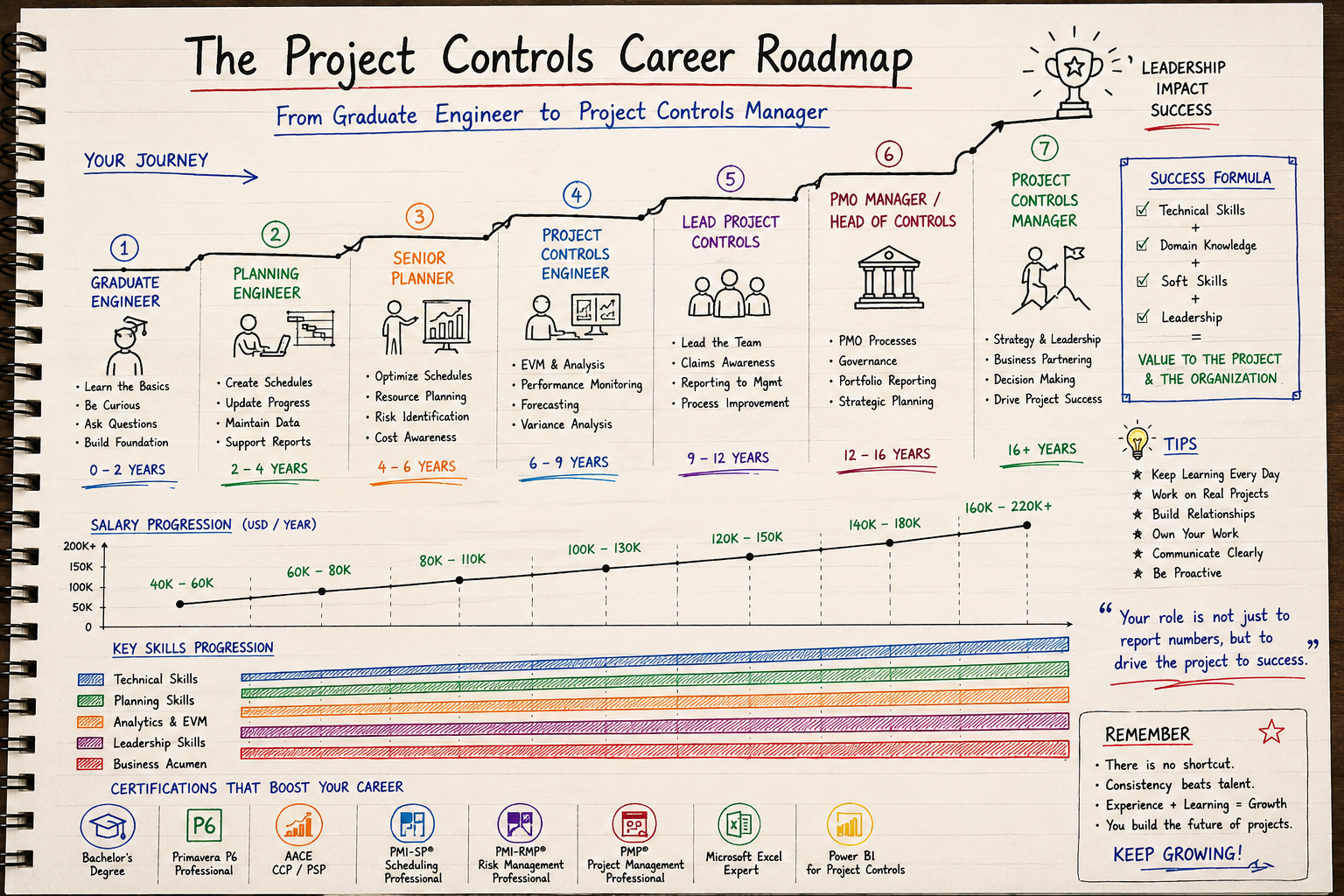
This roadmap is the map I wish someone had handed me on day one. It walks through the seven standard rungs from graduate engineer to project controls manager, what each rung actually delivers, the skills and certifications that move you up, indicative salary bands by experience, the lateral moves that compound seniority, and the mistakes that I see again and again on CVs that have stalled. Treat it as a checklist, not a horoscope — your timeline will be faster or slower depending on sector, region and the projects you happen to land on, but the shape of the journey is remarkably consistent.
Rung 1 — Graduate Engineer (0–2 years): build the foundation, not the CV
The first two years are not about job titles. They are about building the muscle memory that everything else rests on. A graduate engineer on a real project spends the week reading drawings, doing quantity take-offs, learning the basics of planning software, sitting in coordination meetings without saying very much, and asking questions that more senior people are too embarrassed to ask. None of that is glamorous. All of it compounds.
The skills to prioritise are the unsexy ones: Excel to a real working level (not just SUM and VLOOKUP — pivot tables, INDEX/MATCH, basic Power Query), the ability to read engineering and architectural drawings, fluency in one scheduling tool to the point where it is no longer in the way, and a curious habit of walking to site or to the workshop whenever you have a free hour. The juniors who progress fastest are not the ones who know the most theory — they are the ones who can answer 'what is actually happening on the project?' in plain language, because they have personally seen it.
Rung 2 — Planning Engineer (2–4 years): own a baseline and defend it
By year two the technical floor should be solid. A planning engineer at this stage is trusted to build a small but real schedule — a discipline, a building, a system — in Primavera P6 or Microsoft Project, develop the WBS with the project team, set up the activity calendars, identify the critical path and run the weekly progress update on their own. The cost-engineering equivalent owns a cost centre, produces monthly cost reports and is starting to flag variances before the PM asks.
The career-shaping habit at this rung is learning to write. Short, factual, decision-grade variance commentary — three bullet points, no adjectives, no excuses — is worth more than another beautifully formatted Gantt. Pair that with a working understanding of float, lookahead planning and lookback analysis, and you have the toolkit that gets you to senior. Refresh the basics in the Planning and Scheduling track and use the Critical Path calculator on a real project of your own before the next update.
Rung 3 — Senior Planner (4–6 years): analysis becomes the centre of gravity
Senior is the first rung where the role becomes analytical rather than transactional. You are now expected to optimise schedules under resource constraints, run schedule risk analysis, generate S-curves and earned-value reports, defend the baseline in a contractor schedule review, and translate the result into a probabilistic forecast that survives challenge from the commercial team. You are also expected to mentor the juniors who are doing what you were doing two years ago — that part matters more than people realise.
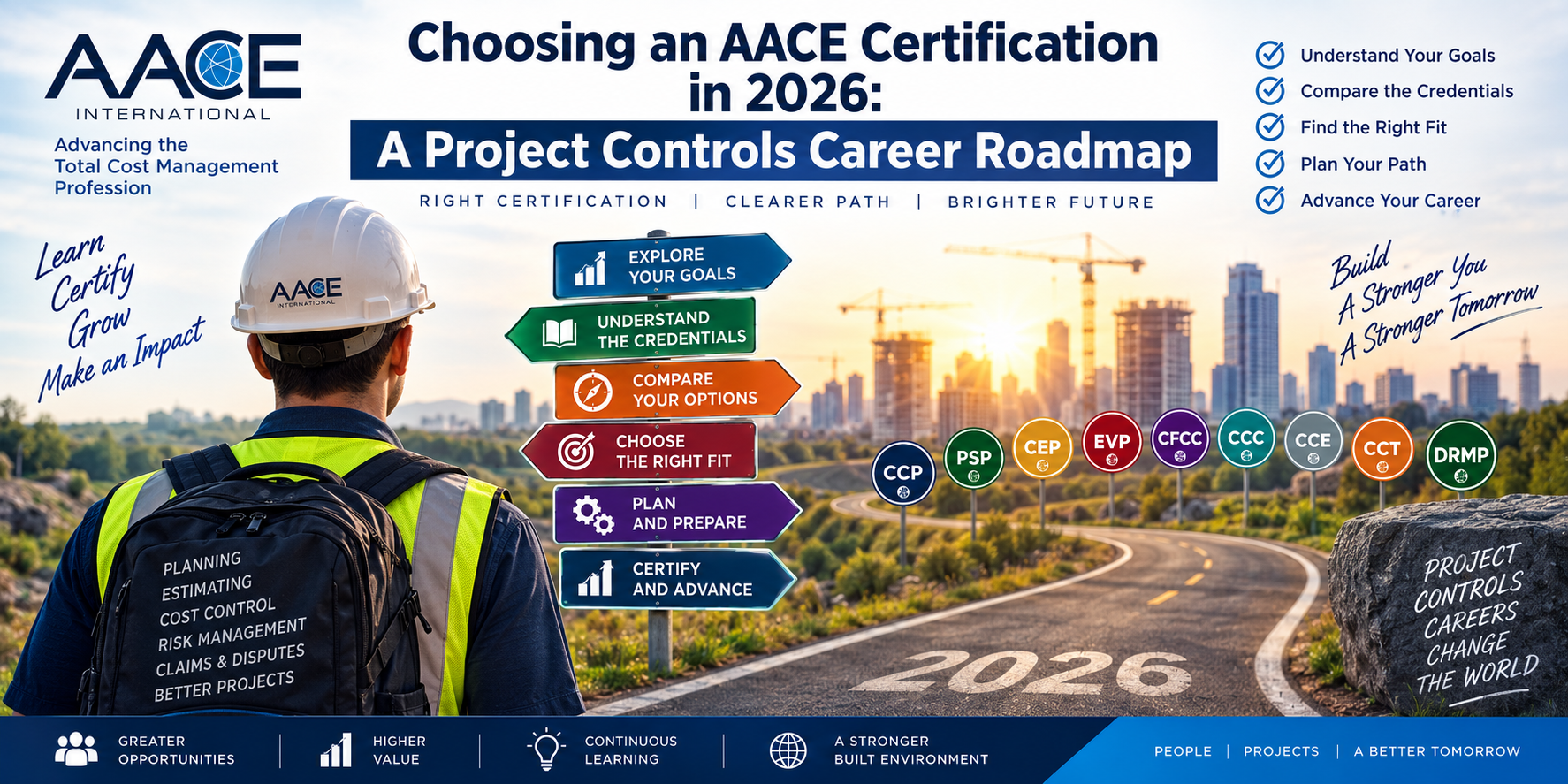
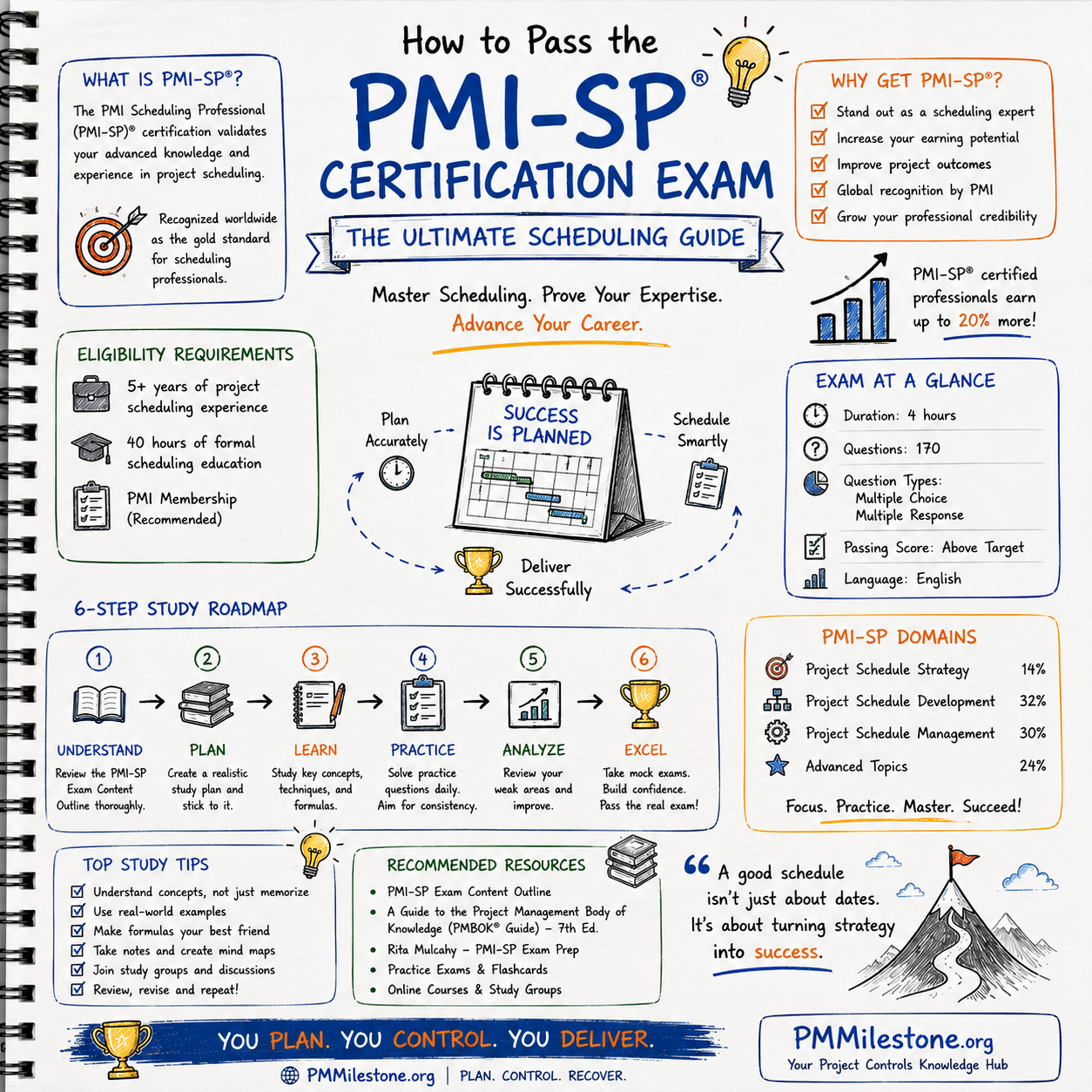
This is the rung where certifications start to differentiate. The AACE Planning & Scheduling Professional (PSP) is the most credible scheduling credential. PMI-SP is a respected alternative. A formal Primavera P6 certification signals tool fluency. None of these makes you a better planner overnight — but on a CV they signal you have studied the discipline systematically. Pair the studying with deliberate practice: run the SPI, CPI, EAC and Schedule Variance calculators against your own monthly data and write a one-page narrative explaining the trend.
Rung 4 — Project Controls Engineer (6–9 years): integrate scope, time, cost and risk
At Rung 4 the role broadens out of pure planning. A project controls engineer is responsible for integrating scope, schedule, cost, risk and reporting into a single coherent picture. That means full earned value management — PV, EV, AC, SPI, CPI — running variance analysis, generating credible estimates at completion, owning the change-control register, and producing the monthly project controls report that goes to the project manager and the client.
Two skills compound fastest here. The first is contract literacy: read the programme clauses, understand the difference between extension of time, prolongation cost and disruption, and learn how the contract treats float ownership. The second is forecasting discipline — the willingness to publish a forecast that you can defend, and to update it monthly with evidence rather than wishful thinking. The PMP becomes a sensible credential at this stage, and the PMI Risk Management Professional (PMI-RMP) is well placed for engineers who lean toward the risk and forecasting side.
Rung 5 — Lead Project Controls (9–12 years): leadership, claims awareness and stakeholder gravity
Lead is the first rung where you coordinate other controls professionals rather than producing all the output yourself. You might oversee three to six planners and cost engineers, integrate their work into a single project controls report, and own the interface with the contractor or the client. You are also the person the project manager turns to when something is going wrong and they need a defensible story for the board by Friday.
What changes at this level is the audience. You spend more time in the project manager's office and the client's project review than you do in the scheduling tool. Claims awareness becomes essential — you do not need to be a claims consultant, but you should be able to recognise when a delay event is reimbursable, what evidence pack will be required, and when to involve the commercial and legal teams. Sharpen your delay analysis vocabulary in the Construction Delay Analysis pillar and read the Project Forecasting guide for the integrated cost-and-schedule view.
Rung 6 — PMO Manager / Head of Controls (12–16 years): standards, governance and portfolio thinking
The PMO manager rung moves you from a single project to a portfolio. You are now responsible for the standards, tools, training, governance and reporting that every project in the function uses. The audience shifts again — from project managers to executive sponsors, capital committees and, on the largest programmes, the board itself.
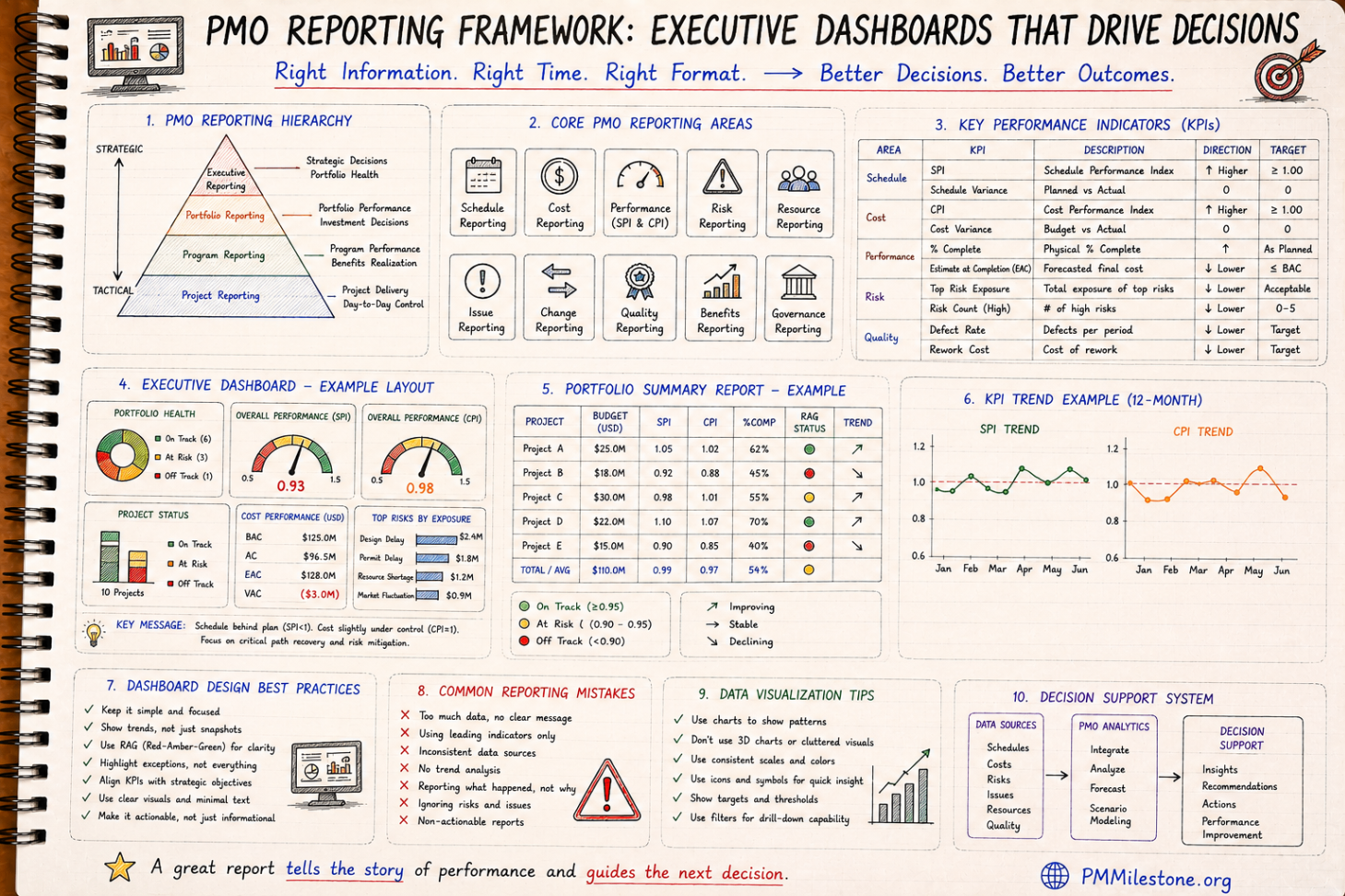
Three skills compound at this level. The first is portfolio thinking: prioritising scarce capital across competing projects, designing portfolio KPIs that actually drive behaviour, and balancing the noise of individual project variances against the signal of portfolio trend. The second is governance design: stage gates, change boards, assurance reviews and the wiring between them — the topic of the PMO Reporting & Executive Dashboards pillar. The third is influence at the executive layer — the ability to walk into a CFO's office with one slide and a one-page narrative and leave with a decision.
Rung 7 — Project Controls Manager (16+ years): strategy, business partnering and project recovery
Project controls manager is the senior leadership rung. You own the controls function for a major capital programme or a complete capital-delivery organisation. The role has very little to do with scheduling tools and almost everything to do with strategy, talent, capital allocation and — when projects go sideways — recovery.
By this point you are hired on the breadth and quality of the decisions you have demonstrably influenced, not on years served. The fastest route here is not waiting in line; it is moving sideways at Rung 5 or 6 — contractor to client, project to portfolio, operational to strategic — so the range of decisions on your CV is wider than your competitors. Pair the Risk Management for Mega Projects article with the PMO Reporting pillar and read both before you sit in front of an executive search firm.
Salary progression: indicative bands and the levers that move them
Compensation in project controls follows a fairly predictable curve, but with wide regional and sector variation. The bands below are indicative US-dollar equivalents for a typical major-project market. Adjust upward for oil & gas, LNG, nuclear and mining (often +30–60%), and downward for commercial real estate and small-scale infrastructure (often −20%).
Three levers reliably push you above the band for your rung: scarce technical skills (schedule risk analysis, integrated cost-schedule modelling, advanced EVM, AI-assisted forecasting), client-facing experience on flagship projects, and the ability to lead and grow a team. Benchmark your number against the PM Salary Calculator and the PMP Salary by Country tool before your next review conversation.
Certifications that actually boost your career (and the ones that do not)
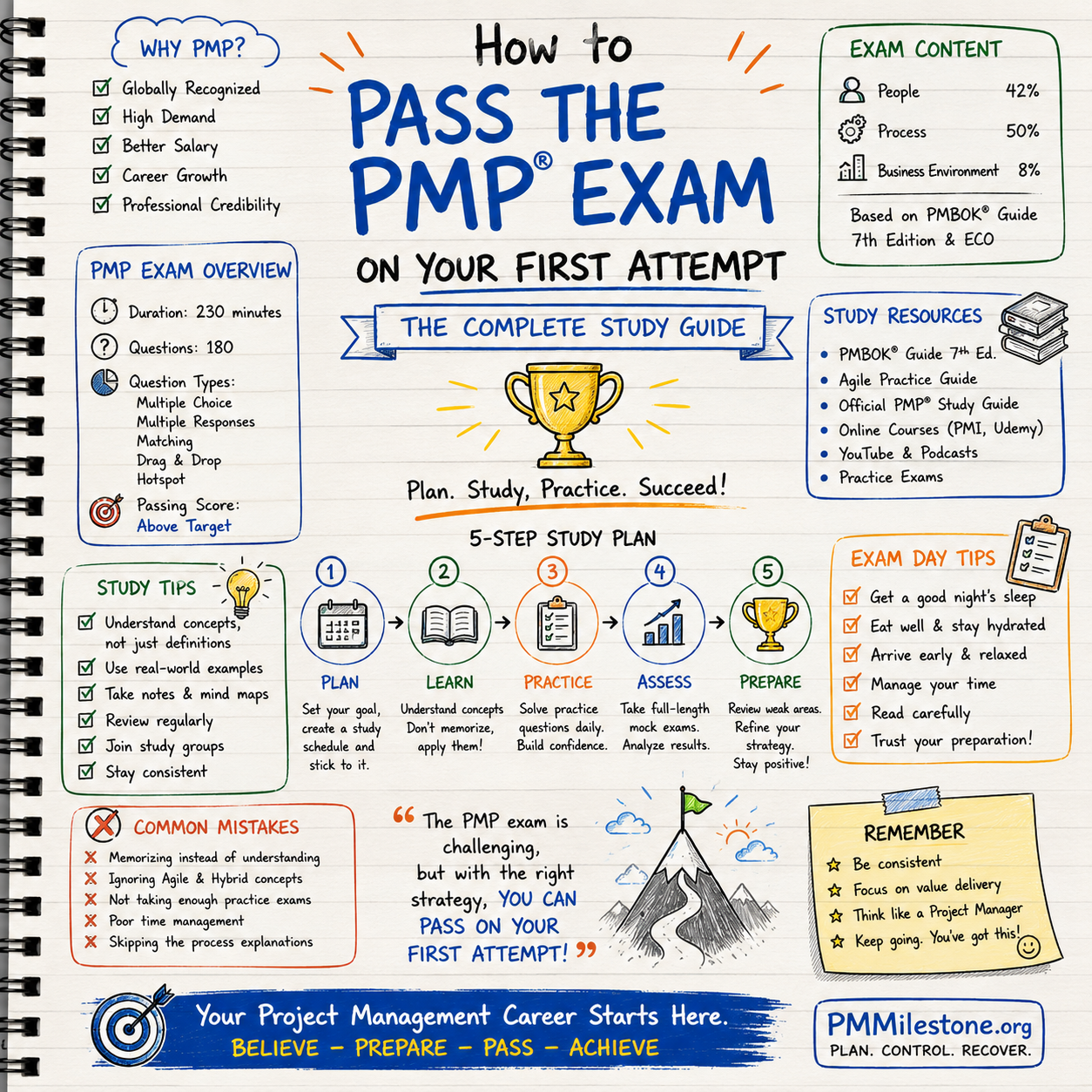
There are dozens of project controls certifications. Only a handful materially move CVs. The reliable ones are: PMP (broad project management baseline from Rung 4), PMI-RMP (risk specialism, valuable from Rung 4 upward), PMI-SP and AACE PSP (scheduling specialisms, valuable from Rung 3), AACE CCP (cost engineering, valuable from Rung 3 on the cost side), Primavera P6 Professional (tool fluency, useful at Rungs 1–3), Microsoft Excel Expert (useful early), and Power BI for project controls reporting (a Rung 3–4 differentiator).
What does not work is collecting certifications as a substitute for project experience. Hiring managers can spot a CV with six logos and no decisions on it. Pick two — one broad (PMP) and one technical (PSP, CCP or RMP) — and invest the rest of your time in measurable project outcomes and in your written communication.
The success formula: four ingredients, one outcome
After almost two decades of hiring, mentoring and watching careers unfold, I have not seen a meaningful exception to this formula: technical skills, plus domain knowledge, plus soft skills, plus leadership, equals value to the project and the organisation. Drop any of the four and the career flattens. Technical-only engineers become brilliant operators who never reach the room where decisions are made. Domain-only engineers become walking encyclopaedias who cannot translate knowledge into action. Soft-only engineers become facilitators who add no analytical weight. Leadership without the other three is empty.
Your job, at every rung, is to invest deliberately in the weakest of those four ingredients — not the strongest. That is what compounds.
Common mistakes I see on stalled CVs
First: collecting certifications instead of decisions. The CV tells me what you studied, not what you delivered. Second: staying in one company at one project type for ten years. Variety of decisions matters more than tenure. Third: avoiding the client-facing rooms because they are uncomfortable. Those rooms are exactly where careers are built. Fourth: outsourcing your written communication. Variance commentary is your shop window — write it yourself. Fifth: dismissing soft skills as 'fluff'. By Rung 5, soft skills are 60% of the job.
Your next two years: a deliberate plan
Use this roadmap as a checklist. Identify the rung you are on. Read the description of the rung above it. List the three or four skills, certifications or deliverables you do not yet have. Pick the two highest-leverage ones and put them on a development plan with a 12-month deadline. Tell your manager you want feedback on those two specifically. Revisit every six months.
Careers in project controls do not progress because of time served. They progress because someone — usually you — made the path deliberate. The rest of the PMMilestone Academy is designed to give you the technical depth at each rung; this roadmap is the spine that holds it together. Pair it with the Project Controls Fundamentals track, the Earned Value Management track and the PMO Reporting pillar for the full picture.
Frequently asked questions
How long does it realistically take to reach project controls manager?
Sixteen years or more is typical end-to-end. Flagship projects with strong sponsors compress the curve; small portfolios with few leadership opportunities stretch it. The shape is consistent — speed varies.
Do I need a PhD or a master's degree to reach senior project controls roles?
No. A bachelor's in engineering, quantity surveying, construction management or a related discipline is sufficient. Post-graduate study can help on the analytics and research side but does not replace project experience.
Should I learn Power BI or Python?
Yes. Reporting and analytics fluency is now a baseline at Rung 3 and a differentiator at Rung 4. Power BI is the easier entry; Python or DAX unlock forecasting work later.
Owner side or contractor side — which pays more?
Contractor side often pays more at junior rungs through site allowances. Owner side typically pays more from Rung 5 upward and offers a faster route to portfolio and PMO leadership roles.
Is the PMP worth doing as a planner?
Yes, as a baseline credential from Rung 4 onward. Pair it with a technical certification like PSP or CCP that signals depth in your specialism.
Next steps on PMMilestone
Use these pages to deepen the topic, verify terminology, compare real cases and move from theory into applied project controls practice.
Related calculators
Open the calculators referenced in this article and run them against your own project numbers.
PM Salary Estimator
Estimate project manager compensation by experience.
Open CareerPMP Salary Calculator by Country
Estimate PMP-certified PM salary by country.
Open PMOPM Maturity Assessment
Score PM maturity across 5 dimensions.
Open CareerPM Skills Gap Analyzer
Quantify the gap between required and current skills.
Open CareerPM Resume Score Tool
Score your PM resume 0–100.
OpenOther learning tracks
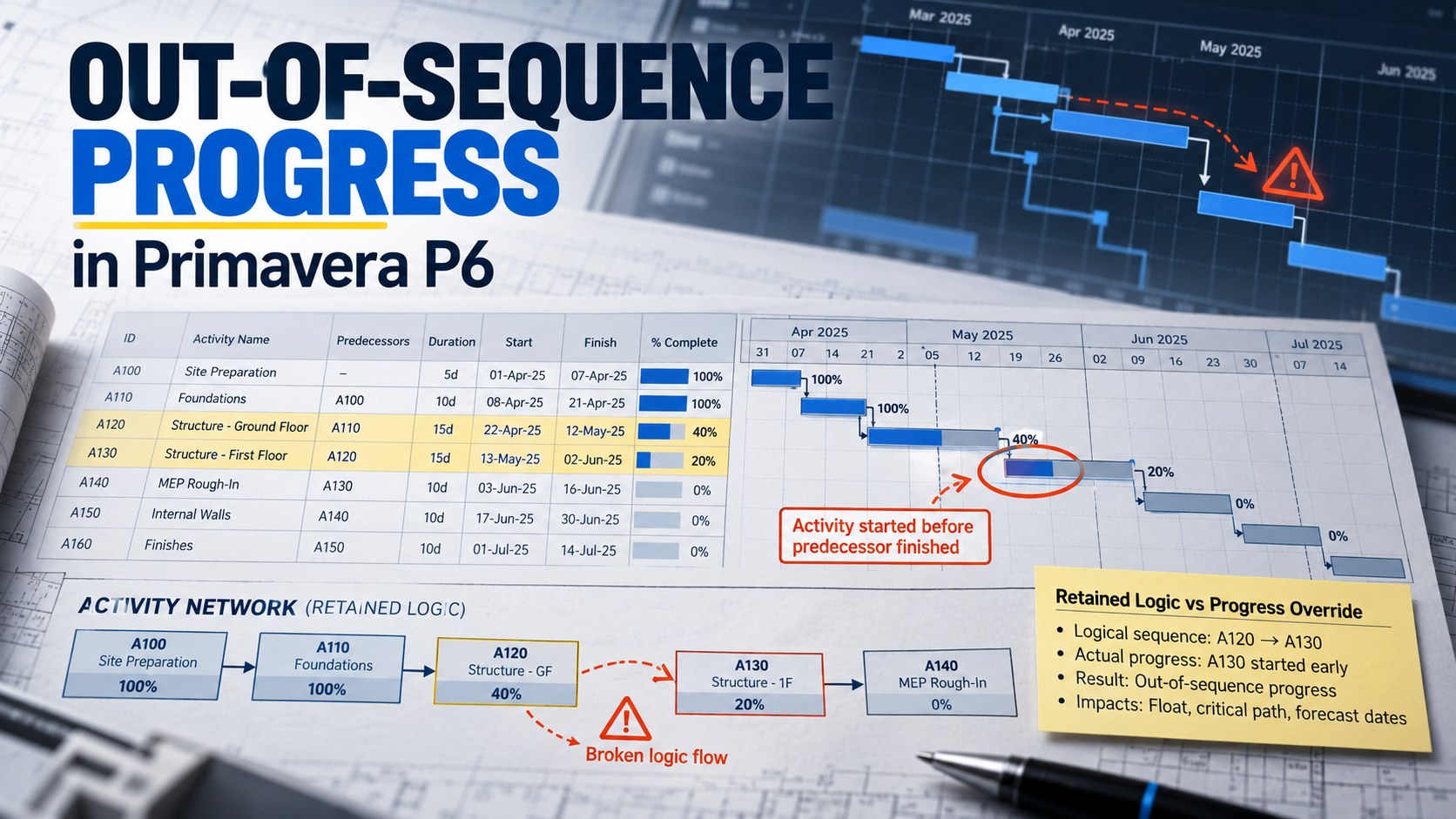
How to Fix Out-of-Sequence Activities in Primavera P6 Before They Distort Your Critical Path
Repair out-of-sequence progress with a five-step workflow, a DN600 pipeline example, scheduling-option comparisons and a monthly evidence checklist.
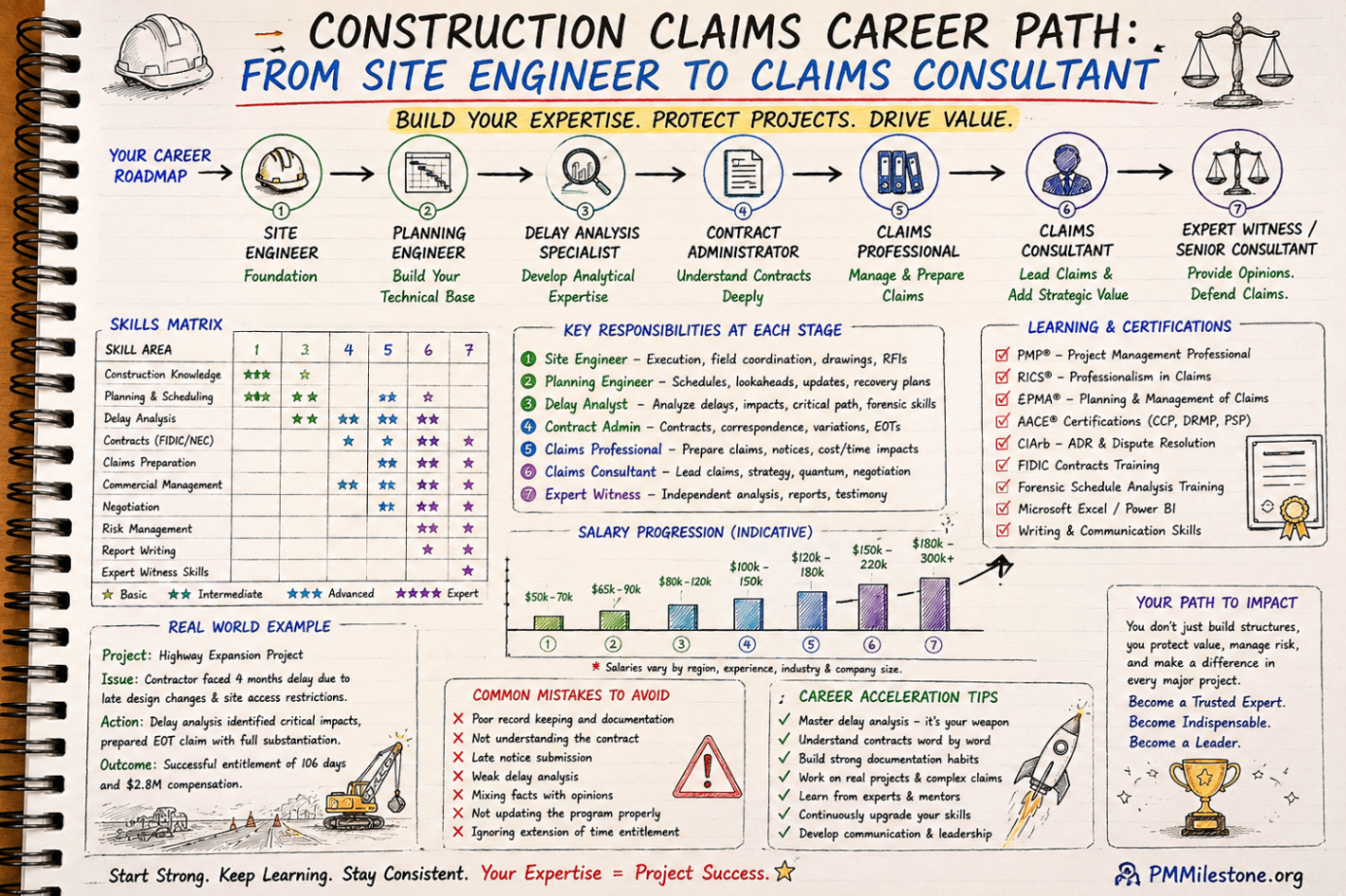
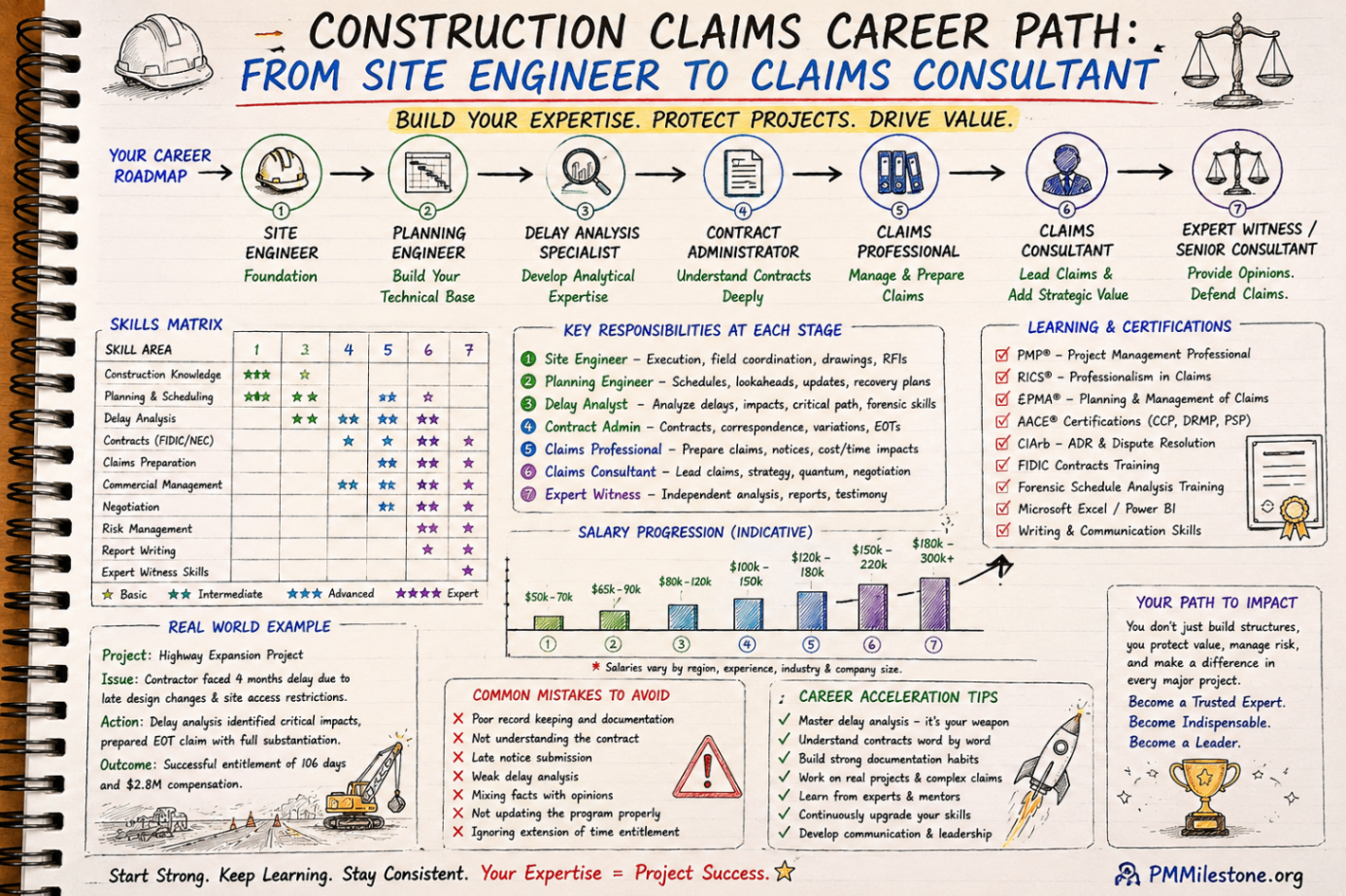
Construction Claims Career Path
A practical roadmap for engineers moving from site delivery into planning, delay analysis, claims, commercial controls and senior claims consulting.
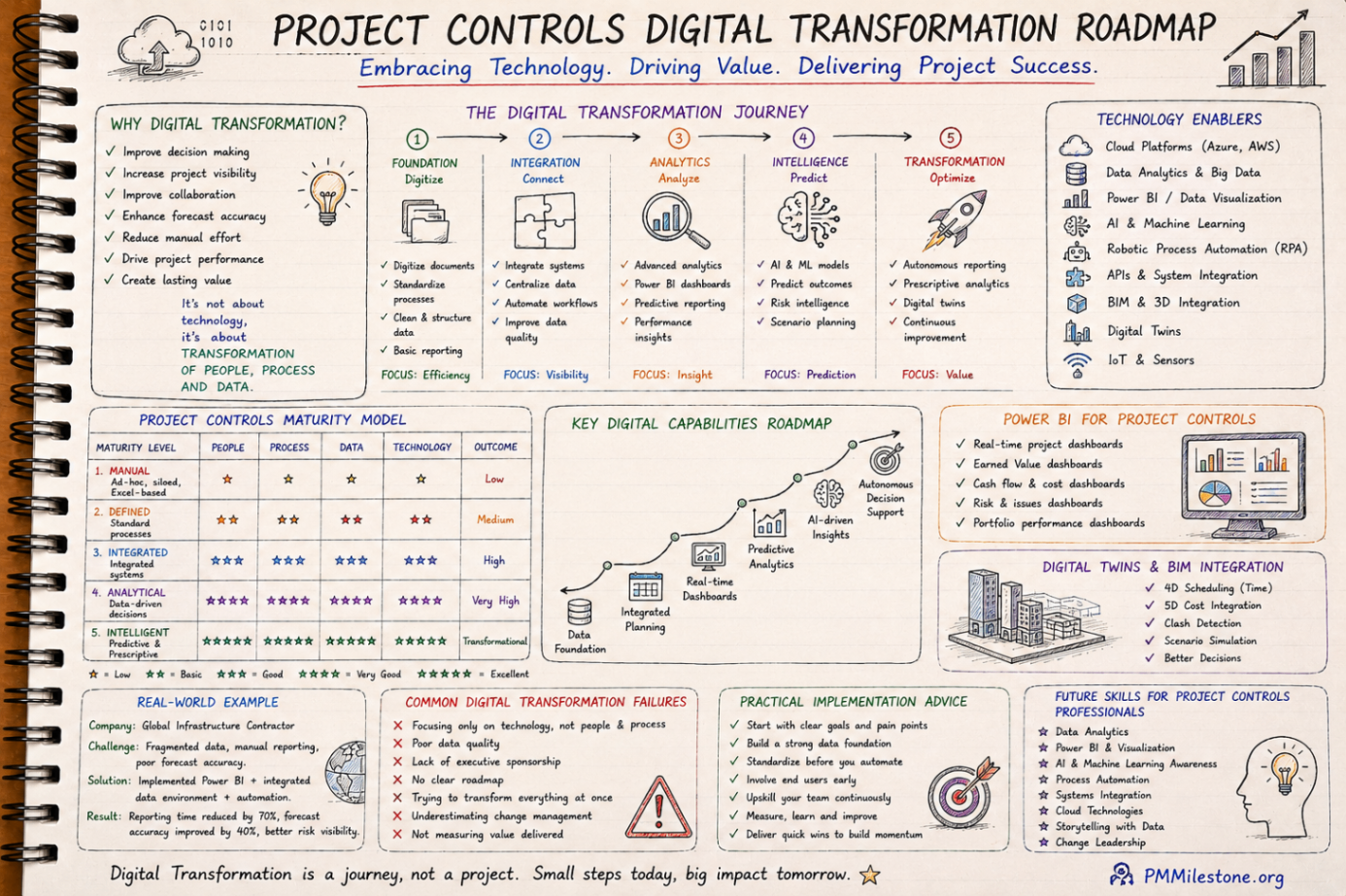
Project Controls Digital Transformation Roadmap
A future-focused guide to modern project controls through data integration, reporting automation, Power BI, AI, BIM and digital PMO capability building.