Project Controls Career Roadmap: From Junior Planner to PMO Director

Why project controls is one of the most underrated careers in engineering
Project controls sits at the intersection of engineering, finance and management. The people who do it well end up controlling the information that boards use to release billions of dollars of capital — which is why senior controls professionals quietly run some of the most consequential decision rooms in the construction, energy and infrastructure industries. Despite that influence, the career path is poorly documented. Most planners learn it by accident: a graduate engineer is asked to update a schedule once, becomes the de facto planner, and ten years later is still discovering whole disciplines they never knew existed.
This roadmap fixes that. It lays out the nine standard rungs of a controls career, what each rung actually requires, and the specific moves — technical, behavioural and political — that get people promoted. It also covers the lateral jumps (cost-to-planning, planning-to-risk, contractor-to-client) that compound seniority faster than staying inside one silo. Read it once end-to-end and use it as a checklist when you plan your next two years.
Rung 1: Junior Planner / Cost Engineer (0–2 years)
The first two years are about building the muscle memory of the trade. A junior planner spends their week updating progress, chasing percent-complete from site engineers, drawing simple Gantt charts and fixing the schedule when the software complains. A junior cost engineer is doing the same with commitments, accruals and invoice reconciliation. Both roles are deeply administrative and that is the point: you cannot forecast a project until you have personally lived through twenty weekly update cycles and watched what actually goes wrong.
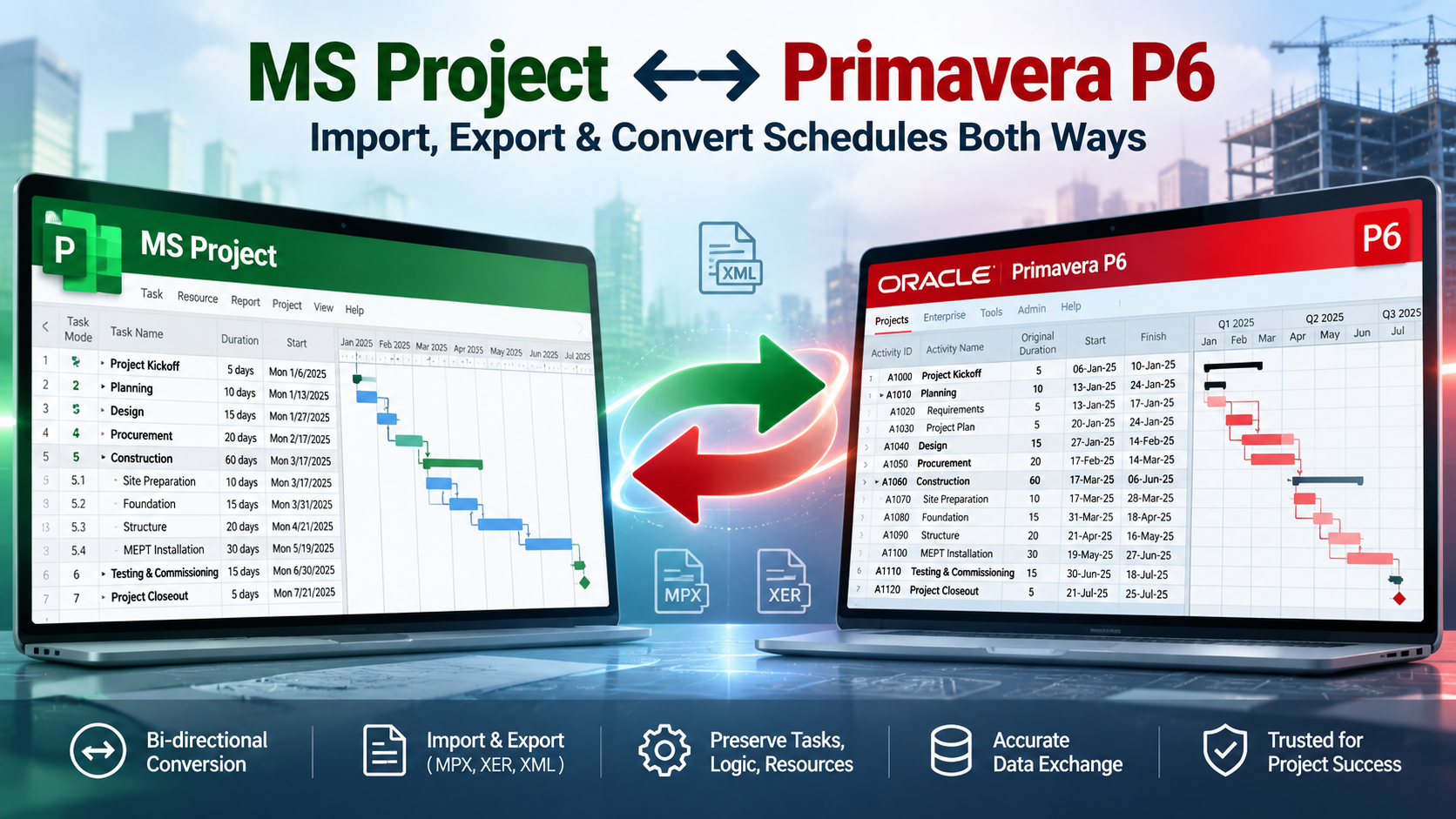
The skills to prioritise at this rung are practical, not theoretical. Learn one scheduling tool to fluency — Primavera P6 or Microsoft Project — and learn Excel to a level where pivot tables, INDEX/MATCH, XLOOKUP and basic Power Query are second nature. Read the contract or at least the schedule of rates and the programme clauses. Sit on site for a day a week if you can. The juniors who progress fastest are the ones who can answer the question 'why did this slip?' with a real story, not a copy-pasted variance comment.
Rung 2: Planner / Cost Engineer (2–4 years)
By year two the technical floor should be solid. A planner at this stage owns a discrete scope — a building, a system, a discipline — and is expected to produce a credible baseline, run weekly updates, identify critical path risks and present them to the project manager without help. The cost-engineering equivalent owns a cost centre, produces monthly cost reports and starts to forecast EAC for their package.
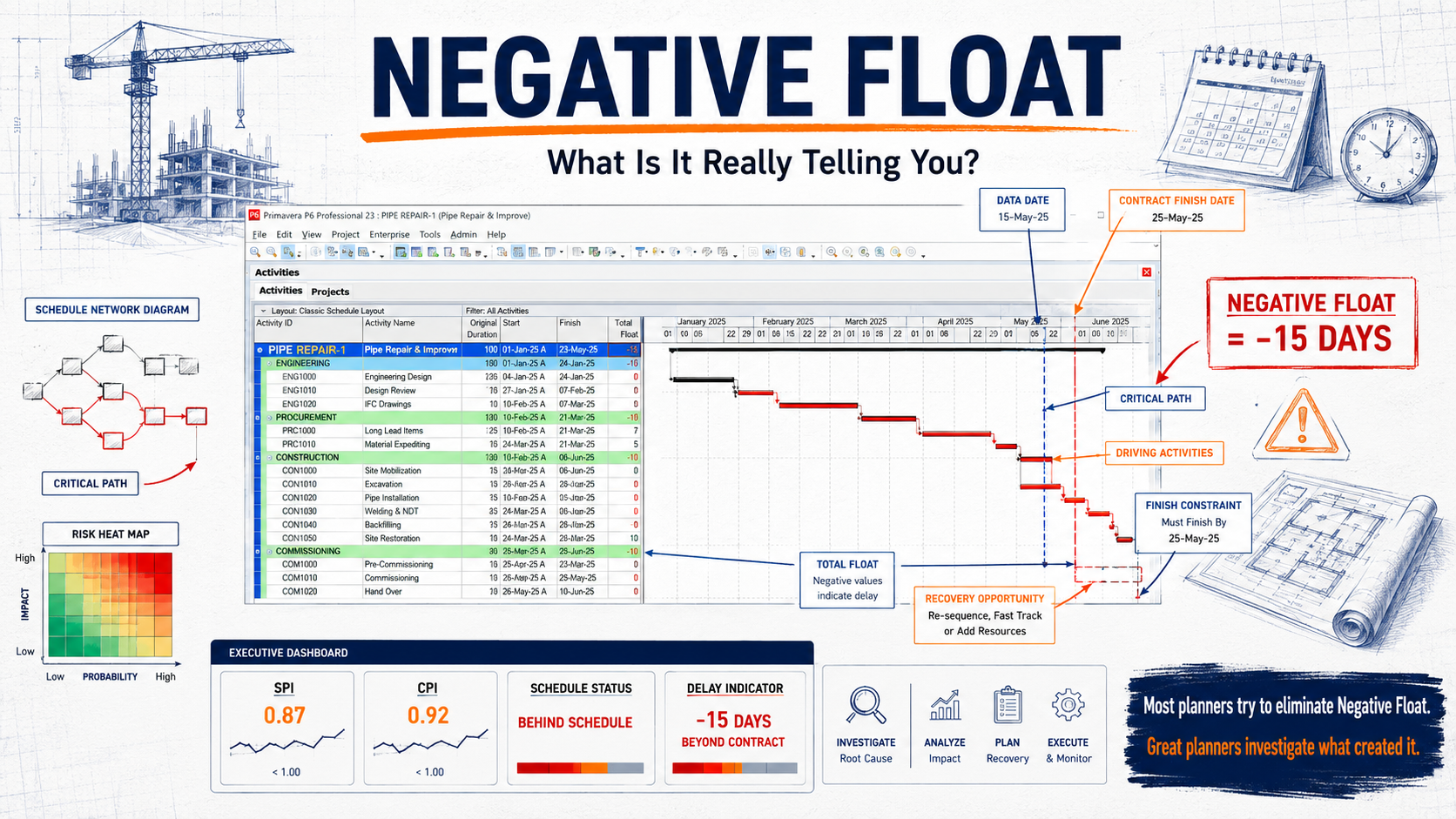
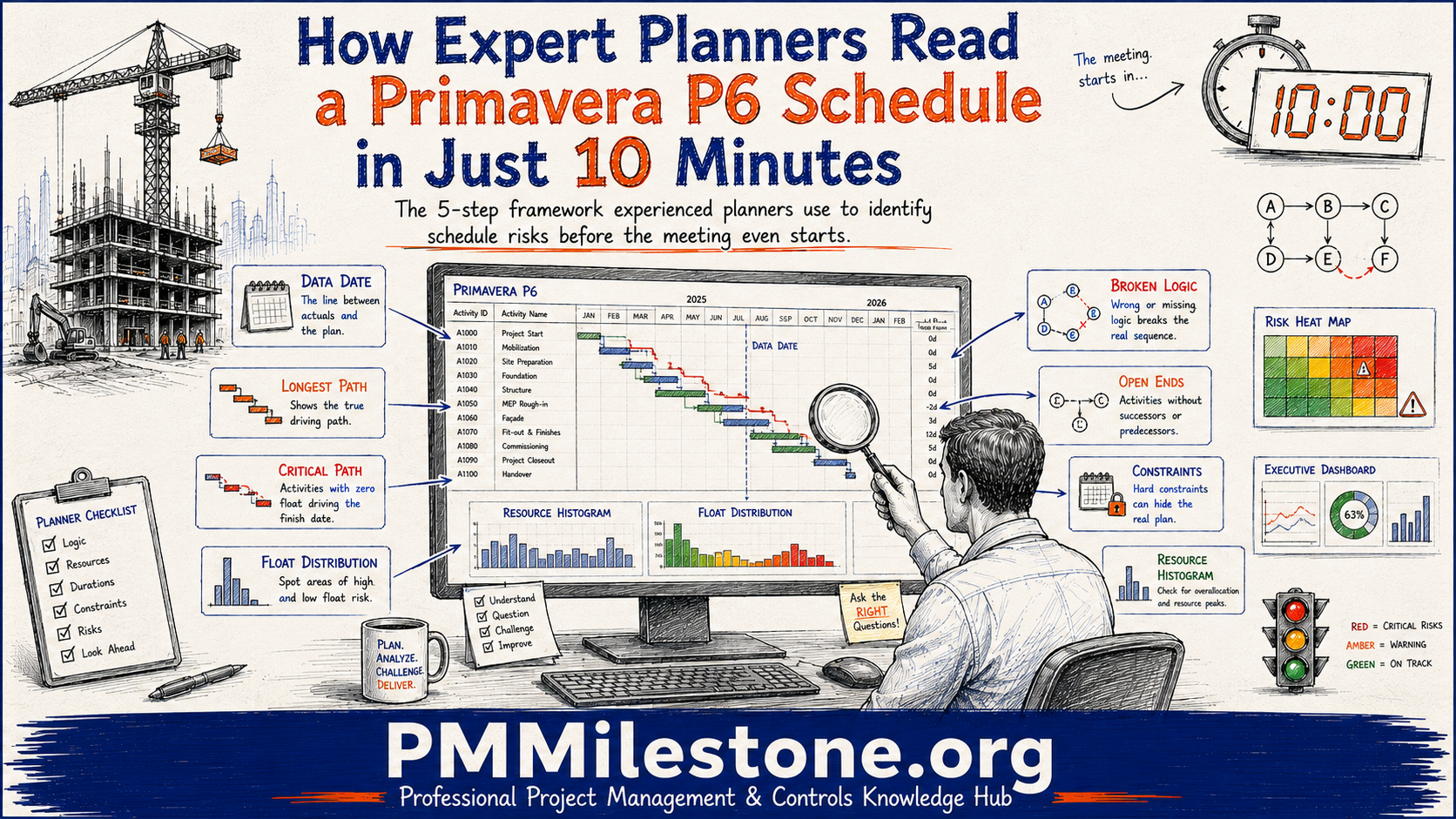
The single skill that separates good planners from average ones at this level is the ability to read a schedule like a network rather than a Gantt. That means understanding total float, free float, leads and lags, calendars, constraints, and the difference between data date, status date and reporting cut-off. The PMMilestone Academy article on planning and scheduling covers this in more depth. The other career-accelerating habit is learning to write — short, factual variance commentary that a project manager can paste straight into a board report is worth more than another beautifully formatted Gantt.
Rung 3: Senior Planner / Senior Cost Engineer (4–7 years)
Senior is the first rung where the role becomes analytical rather than transactional. A senior planner is trusted to build the baseline schedule for a major package, defend it in a contractor schedule review, run schedule risk analysis (SRA) using P-percentile distributions, and translate the result into a probabilistic completion date. A senior cost engineer is doing the same for the cost forecast — Monte Carlo on key uncertainties, contingency drawdown curves, and an EAC that survives challenge from the commercial team.
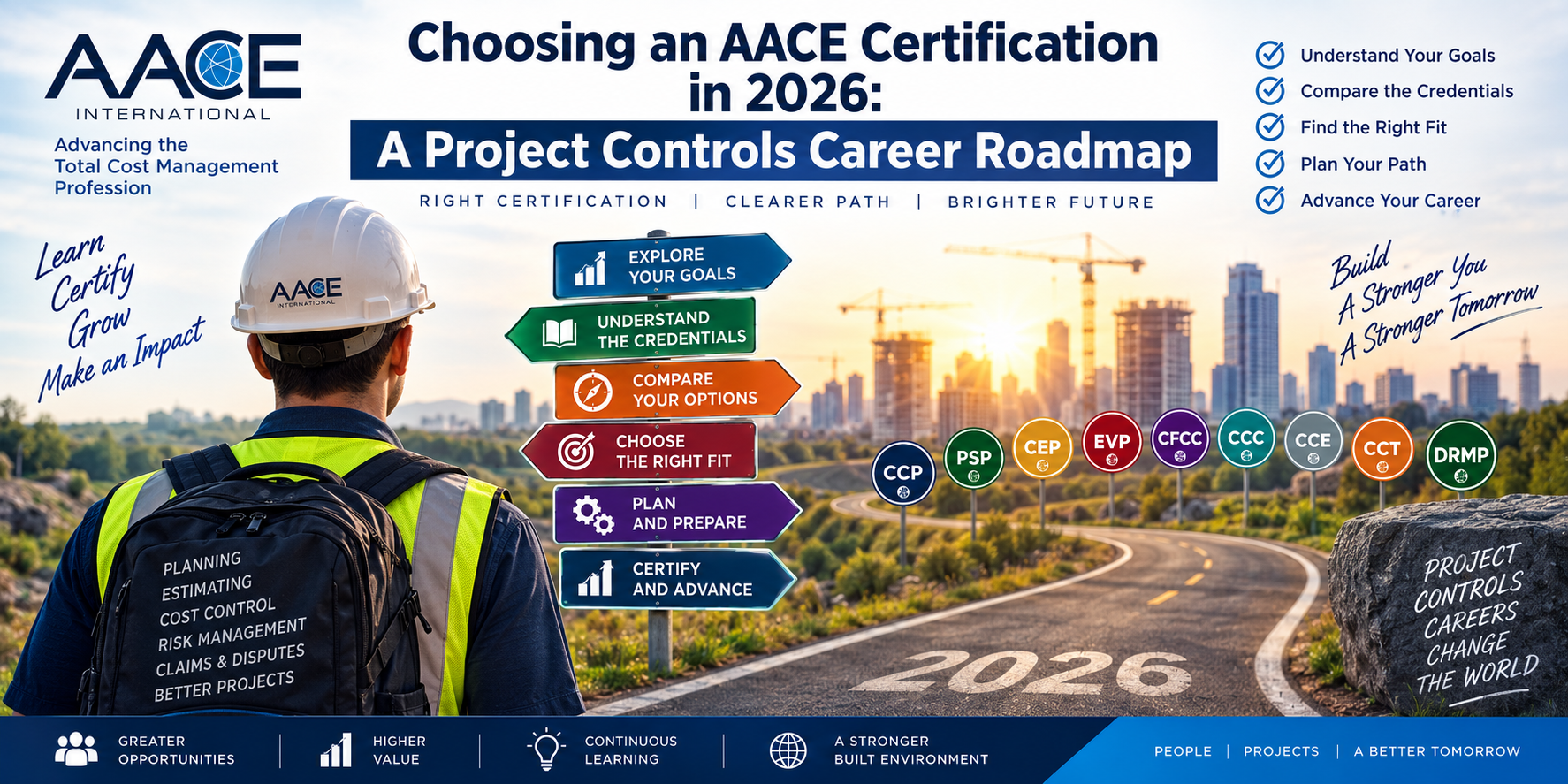
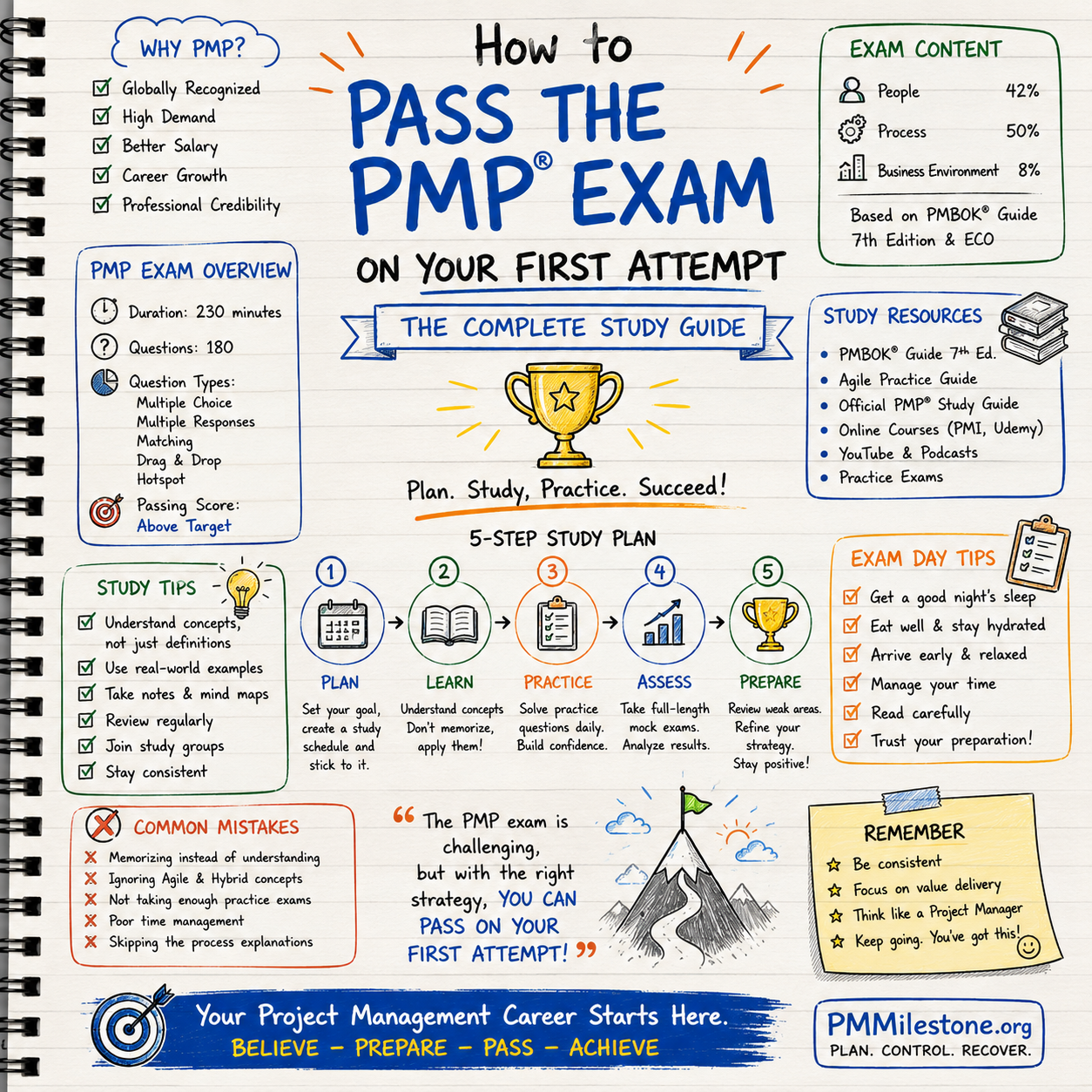
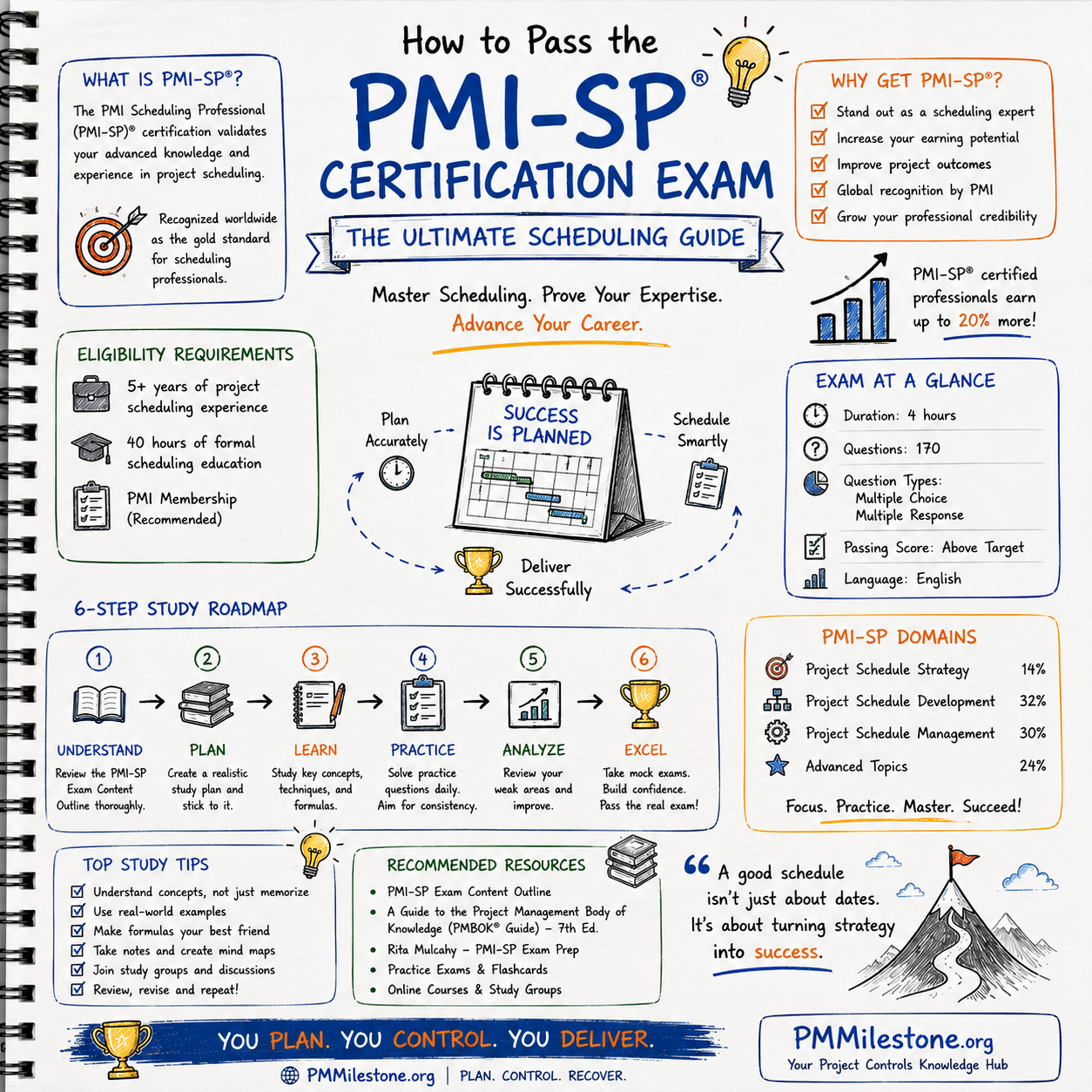
This is also the rung where certifications start to differentiate. The AACE Certified Cost Professional (CCP) and Planning & Scheduling Professional (PSP) credentials are well respected on the cost and planning sides respectively. PMI's PMI-SP is a recognisable scheduling certification, and the PMP itself becomes a baseline expectation by the time you reach Rung 4. None of these credentials make you a better planner overnight, but they signal to hiring managers that you have studied the discipline systematically rather than learned it by osmosis.
Rung 4: Lead Planner / Lead Cost Engineer (7–10 years)
The lead role is the first one where you are coordinating other planners rather than producing all the output yourself. A lead planner on a $500 million project might oversee three or four discipline planners, integrate their schedules into a single project programme, and own the interface with the contractor and the client. The lead cost engineer is doing the equivalent across cost packages.
What changes at this level is the audience. You spend more time in the project manager's office and the client's project review than you do in the scheduling tool. Your written and verbal communication has to be flawless because you are now the person the project manager trusts to summarise a 12,000-activity schedule in three bullet points. The technical depth still matters — you will still be the one called in to diagnose why the contractor's progress claim does not match the physical site — but the lever has shifted to judgement, integration and influence.
Rung 5: Planning Manager / Project Controls Manager (10–14 years)
At the manager rung you own the entire controls function on a single major project or a portfolio of medium ones. That means scope control, schedule, cost, risk, change, document control and reporting — all reporting into you, even if you do not personally lead every discipline. Your job is to design the controls system for the project: cadence, deliverables, definitions, tools and the rules of engagement between contractor and client teams.
The skills that matter here are systems thinking, contract literacy and people management. You will be writing or approving the project controls execution plan, defining the change-control process, signing off the risk register, and managing a team of five to fifteen specialists. The technical scheduling skill that got you to Rung 4 is still useful but no longer the bottleneck. Read the Project Controls Fundamentals article for a refresher on how the disciplines integrate at this level.
Rung 6: PMO Lead / Head of Project Controls (14–18 years)
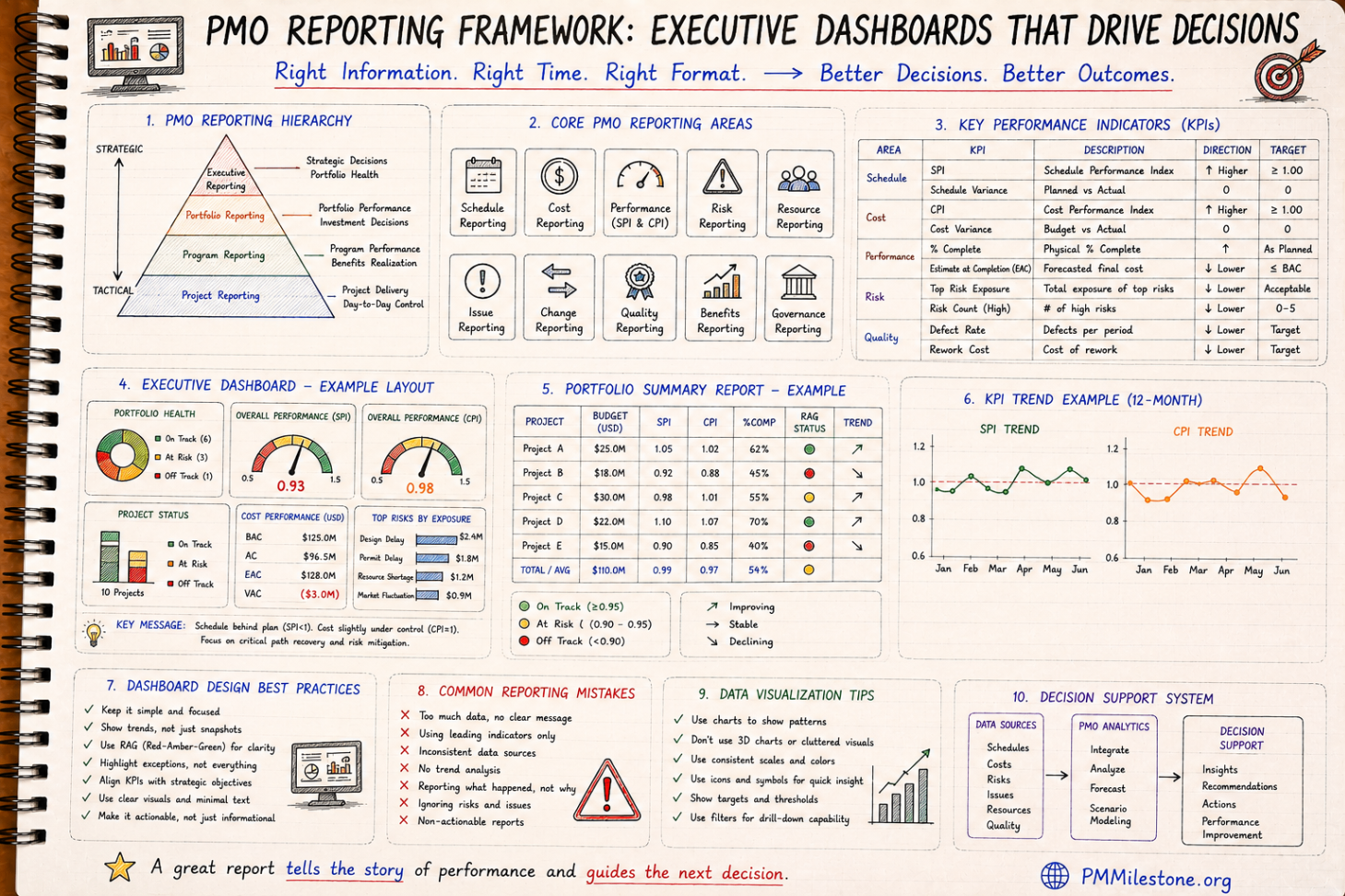
The PMO lead role moves you from a single project to a portfolio. You are now responsible for the standards, tools, training and reporting that every project in the organisation uses. The audience shifts again — from project managers to executive sponsors, capital committees and, on the largest programmes, the board itself.
Three skills compound at this level. The first is portfolio thinking: prioritising scarce capital across competing projects, designing portfolio-level KPIs that actually drive behaviour, and balancing the noise of individual project variances against the signal of portfolio trend. The second is governance design: stage gates, change boards, assurance reviews and the wiring between them. The third is influence at the executive layer — being able to walk into a CEO's office with one slide and a one-page narrative that gets a decision in fifteen minutes.
Rung 7: PMO Director / Head of Capital Delivery (18+ years)
Director-level controls leaders run capital-delivery functions for owners, contractors or consultancies. They are often accountable for billion-dollar portfolios, sit on the executive committee, and frequently report to the board. By this point the role has very little to do with scheduling tools and almost everything to do with strategy, talent and capital allocation.
The fastest route to this rung is not waiting in line. It is moving sideways at Rung 5 or 6 — from contractor to client, from project to portfolio, from operational to strategic — to broaden the range of decisions you have made. Directors are hired on the breadth and quality of decisions they can demonstrably point to, not on years of service. If your CV reads like one project type at one company for fifteen years, the path becomes much steeper.
Salary bands and what drives them
Compensation in project controls follows a fairly predictable curve, but with wide regional and sector variation. Oil & gas, LNG, nuclear and mining typically pay 30–60% above commercial real estate for the same rung. Owner-side roles pay a modest premium over contractor-side for senior rungs and a discount at junior rungs. Locations with thin labour markets — remote sites, offshore, expat assignments — pay materially more in total cash.
Three levers drive salary above the band: scarce technical skills (schedule risk analysis, advanced EVM, integrated cost-schedule modelling, AI-assisted forecasting), client-facing experience on flagship projects, and the ability to lead and grow a team. The PM Salary Calculator and PMP Salary by Country tool in the calculators library are useful starting points for benchmarking your number against the market.
Certifications: what is worth it and what is not
For planners, the AACE PSP and PMI-SP are the two most credible scheduling certifications. The AACE CCP and EVP are the cost and earned-value equivalents. The PMP is broad project management, useful as a generalist baseline. PRINCE2 is widely recognised in UK and EU public-sector projects. The RICS and CIOB certifications are valuable on commercial real estate and construction owner-side. Niche credentials — Primavera P6 user certification, Power BI Data Analyst, Microsoft Project specialist — are useful at junior rungs to demonstrate tool fluency.
What is not worth it is collecting certifications as a substitute for project experience. Hiring managers can spot a CV that has six logos and no decisions on it. Pick two — one broad (PMP or PRINCE2) and one technical (PSP, CCP, or RMP) — and invest the rest of your time in measurable project outcomes and in your written communication.
The lateral moves that actually compound
Three lateral moves accelerate a controls career more than another year in the same seat. The first is moving from contractor to client side once you reach Rung 3 or 4 — the client perspective on schedule, cost and risk is fundamentally different and adds a dimension that pure contractor planners rarely develop. The second is moving from a single discipline (planning, cost, risk) into integrated controls leadership at Rung 5 — generalists progress faster than specialists past this point. The third is moving from a smaller project at a higher rung to a larger project at a lower rung when the larger project is genuinely transformational — a senior planner on a flagship LNG project will out-earn a planning manager on a small refurbishment within five years.
Putting it together: your next two years
Use this roadmap as a checklist. Identify the rung you are on now. Read the description of the rung above it. List the three or four skills, certifications or deliverables you do not yet have. Pick the two highest-leverage ones and put them on your development plan with a 12-month deadline. Tell your manager you want feedback on those two specifically. Revisit every six months.
Careers in project controls do not progress because of time served. They progress because someone — usually you — made the path deliberate. The rest of the Academy is designed to give you the technical depth at each rung; this roadmap is the spine that holds it together.
Frequently asked questions
How long does it realistically take to reach planning manager?
Ten to fourteen years is typical, faster on flagship projects with strong sponsors and slower on small portfolios with few opportunities to lead.
Is the PMP worth doing as a planner?
Yes as a baseline credential past Rung 3, but pair it with a technical certification such as PSP or CCP that signals depth in your specialism.
Owner side or contractor side — which pays more?
Contractor side often pays more at junior rungs through site allowances; owner side typically pays more from Rung 5 upward and offers a faster route to portfolio roles.
Should I learn Power BI?
Yes. Reporting and analytics fluency is now a baseline skill at Rung 3 and a differentiator at Rung 4. Pair it with a scripting language like Python or DAX for forecasting work.
Next steps on PMMilestone
Use these pages to deepen the topic, verify terminology, compare real cases and move from theory into applied project controls practice.
Related calculators
Open the calculators referenced in this article and run them against your own project numbers.
PM Salary Estimator
Estimate project manager compensation by experience.
Open CareerPMP Salary Calculator by Country
Estimate PMP-certified PM salary by country.
Open PMOPM Maturity Assessment
Score PM maturity across 5 dimensions.
Open CareerPM Skills Gap Analyzer
Quantify the gap between required and current skills.
Open CareerPM Resume Score Tool
Score your PM resume 0–100.
OpenOther learning tracks
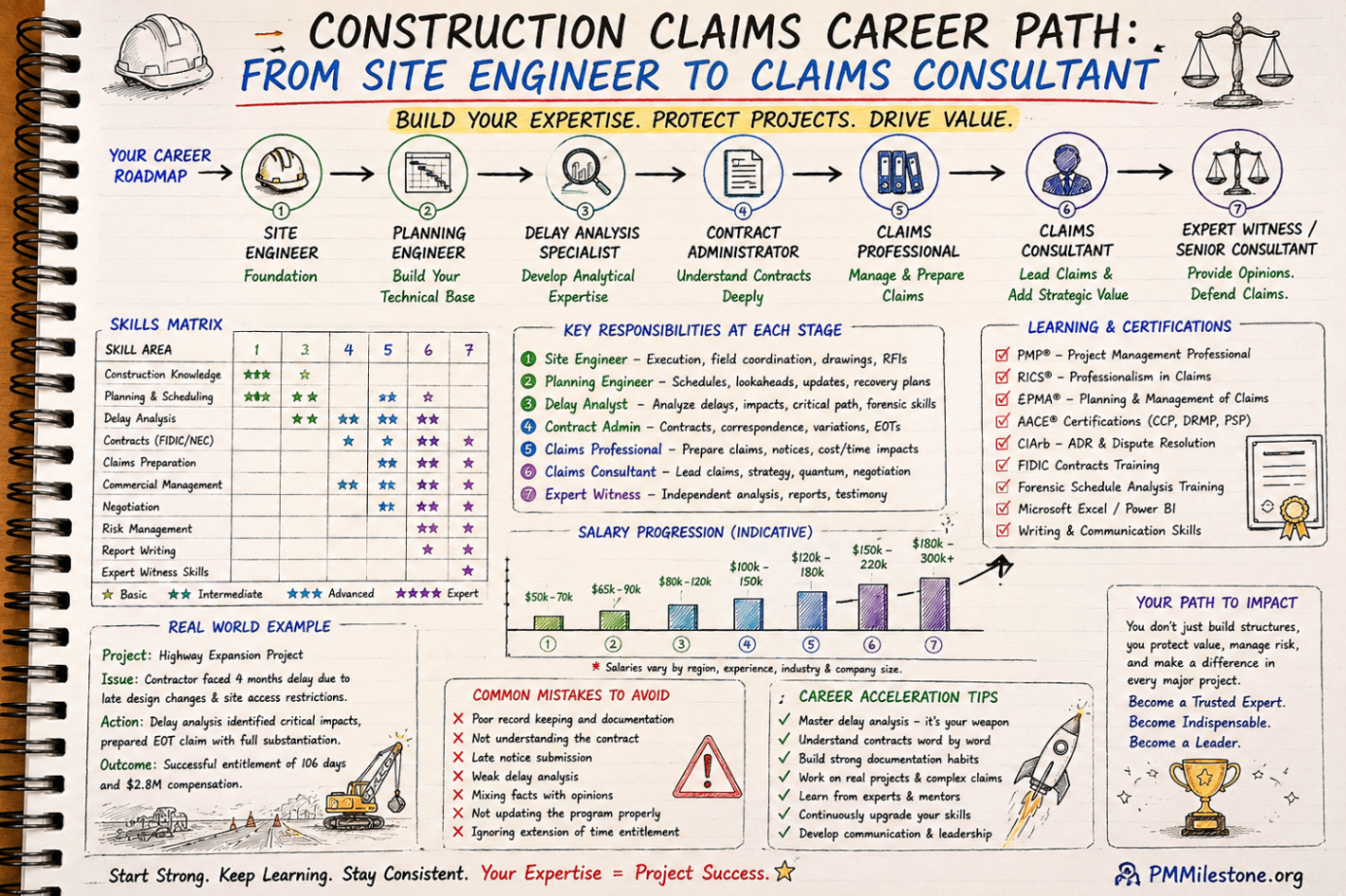
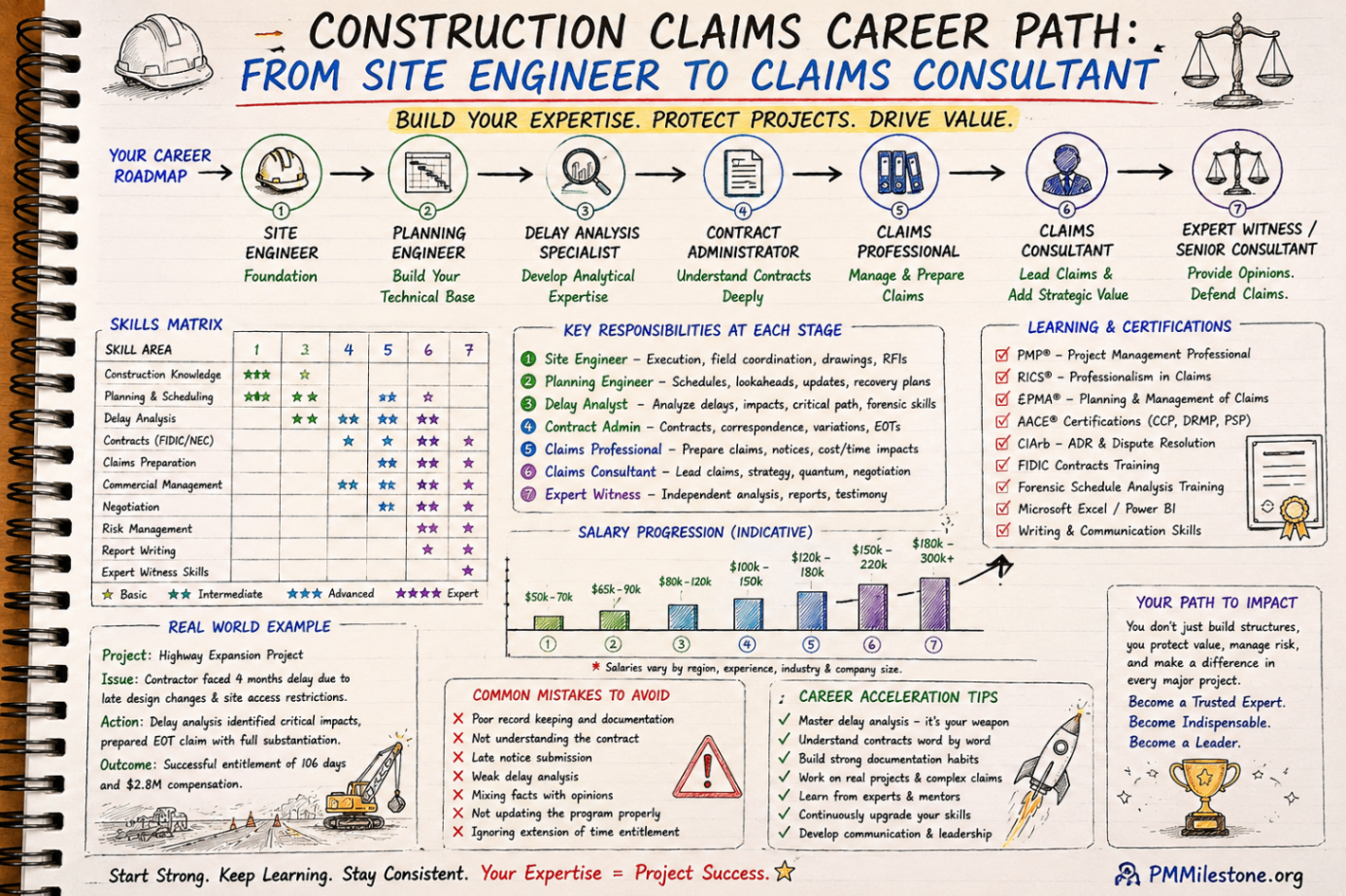
Construction Claims Career Path
A practical roadmap for engineers moving from site delivery into planning, delay analysis, claims, commercial controls and senior claims consulting.
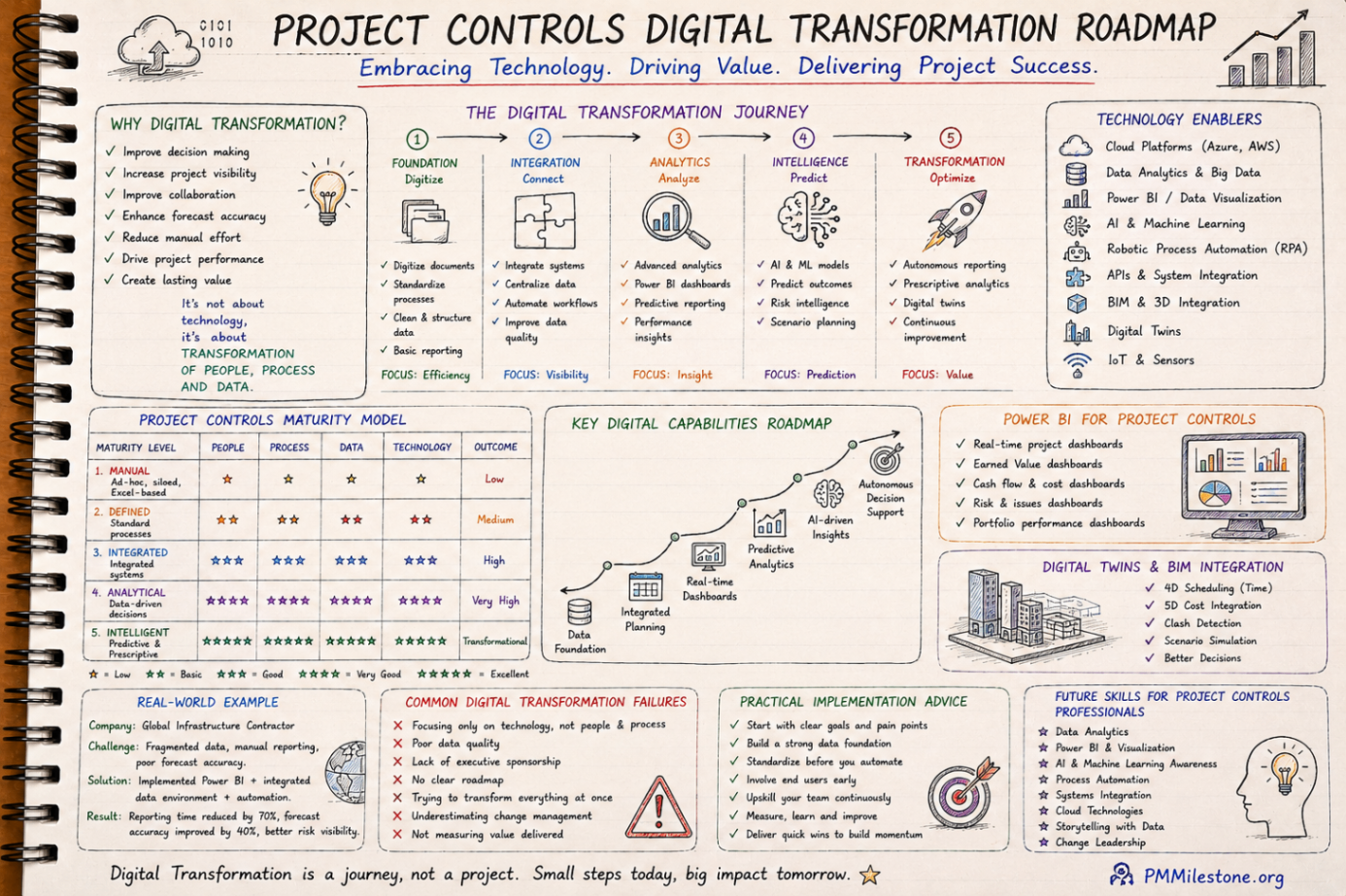
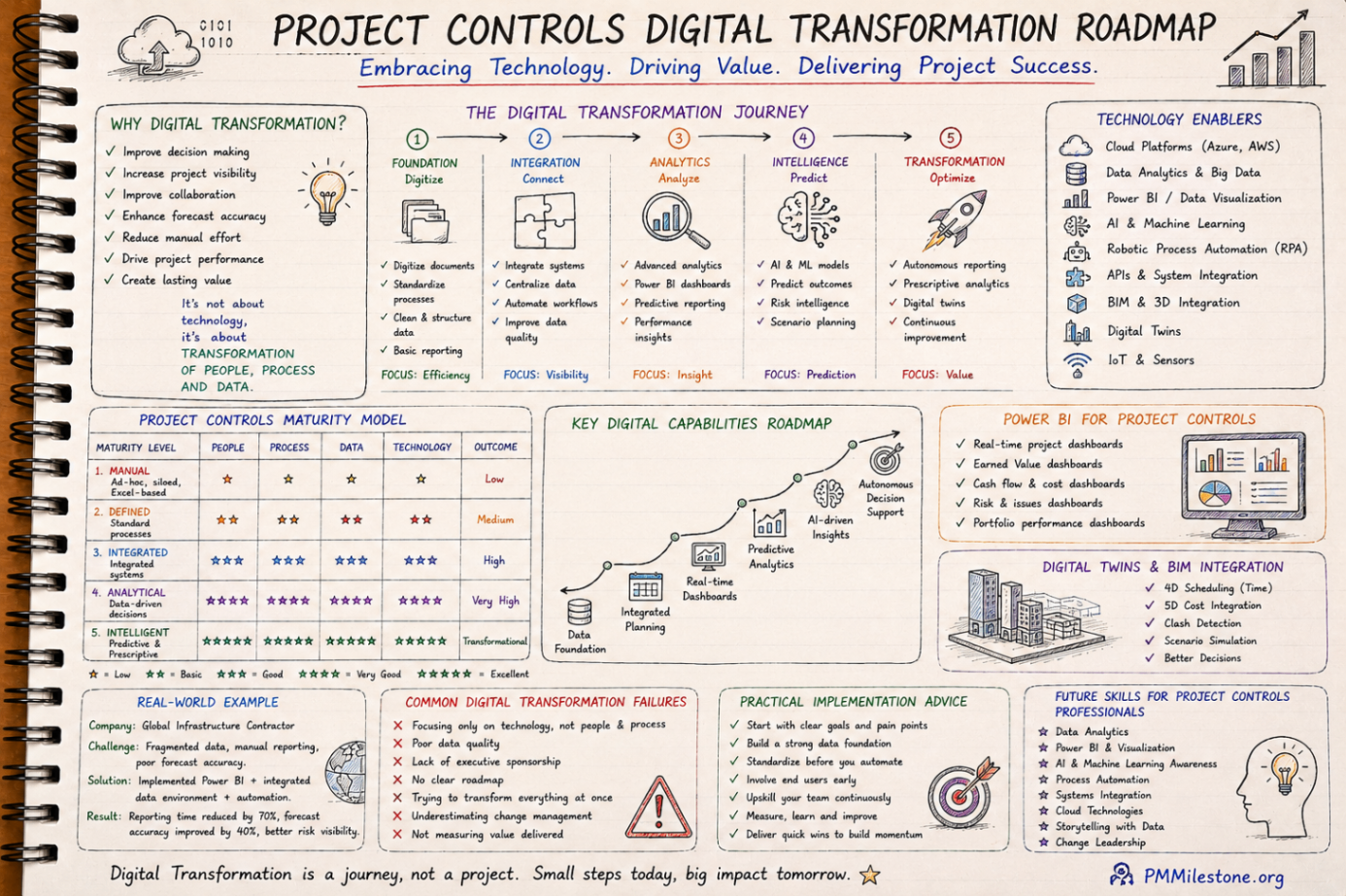
Project Controls Digital Transformation Roadmap
A future-focused guide to modern project controls through data integration, reporting automation, Power BI, AI, BIM and digital PMO capability building.
Project Controls Fundamentals
Scope, schedule, cost, risk, quality and reporting — the six disciplines that hold every successful capital project together, taught from first principles.