Will AI Replace Project Managers by 2030? A Practical, No-Hype Guide

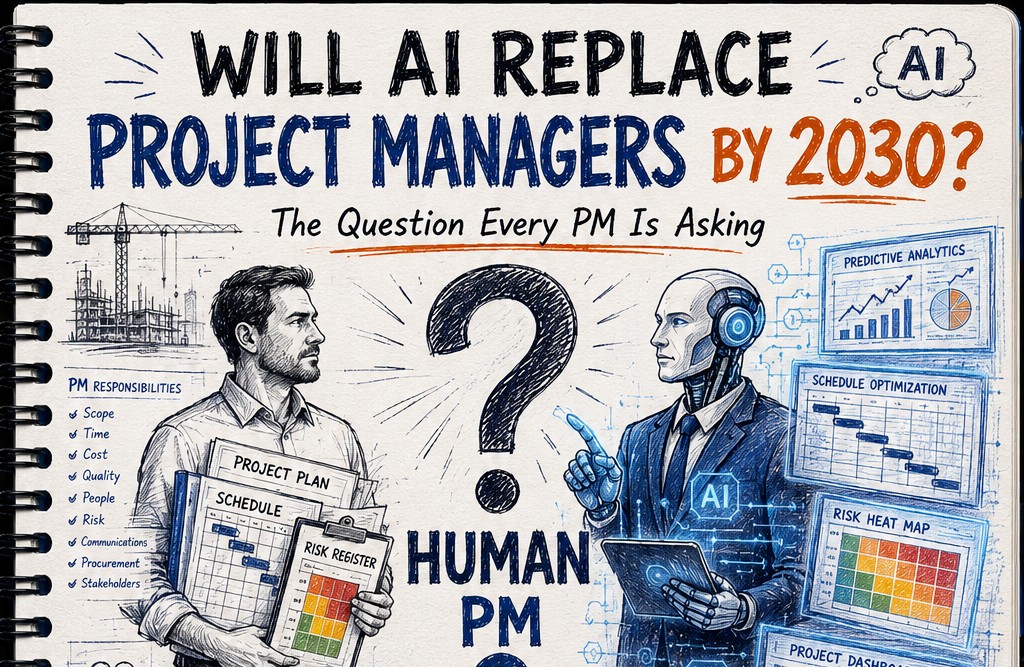
The question every PM is asking
It is the question landing in every project office right now, from graduate planners to programme directors: will artificial intelligence make project managers obsolete by 2030? Search trends are climbing, LinkedIn feeds are full of confident predictions in both directions, and a lot of good professionals are quietly worried about their future. This guide gives a straight answer based on real construction and infrastructure delivery, not speculation.
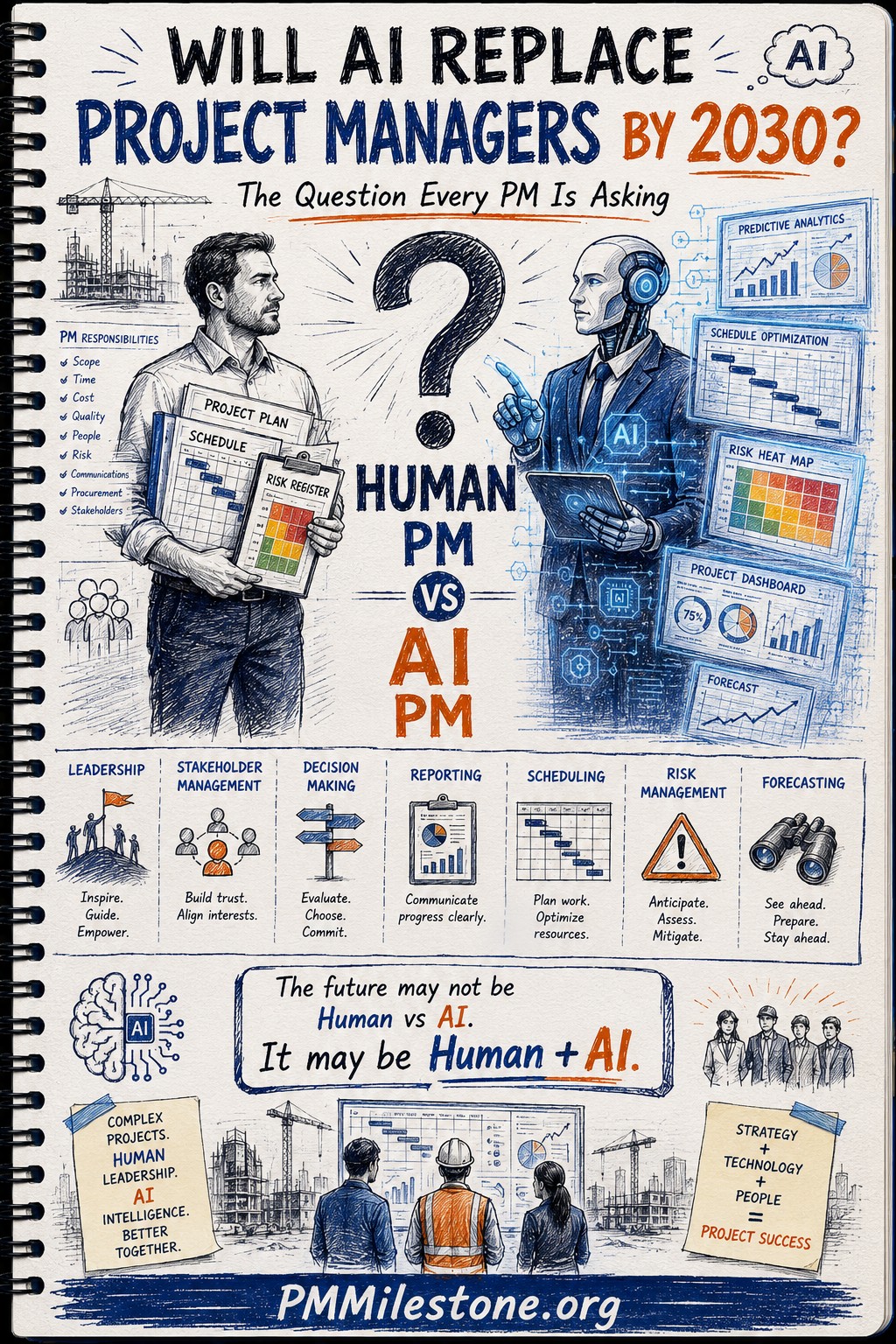
Short answer: AI will not replace project managers. It will replace the manual, repetitive tasks inside the job — and reward the professionals who use the freed-up time well. The future of project management is not human versus AI; it is human plus AI. Complex projects still need human leadership; AI adds the intelligence; together they deliver outcomes neither could deliver alone.
To see why, you have to separate the two halves of the job: the parts built from data and rules, and the parts built from people and judgement. The first half is automating fast. The second half is becoming more valuable, not less.
Where the worry comes from
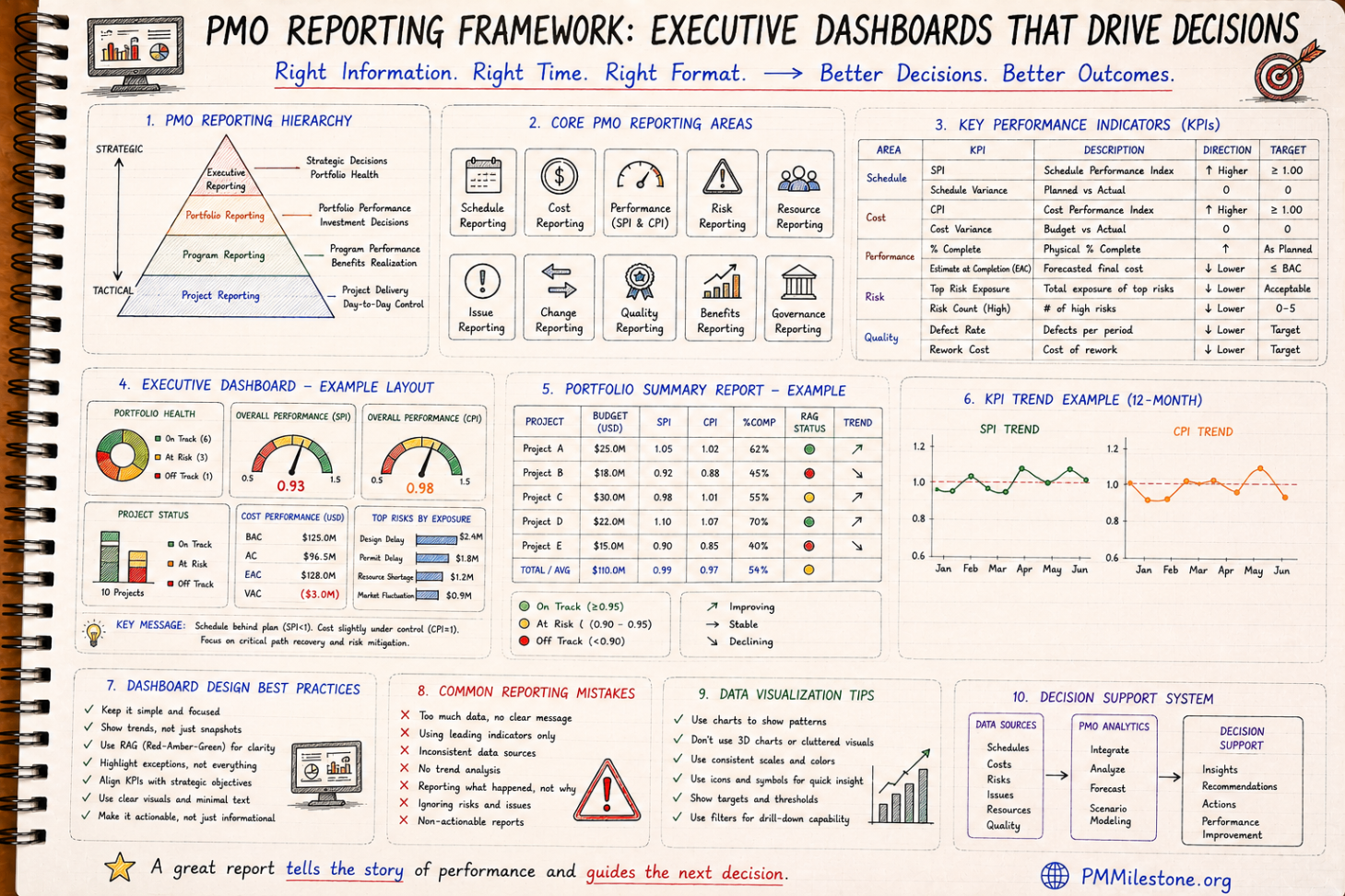
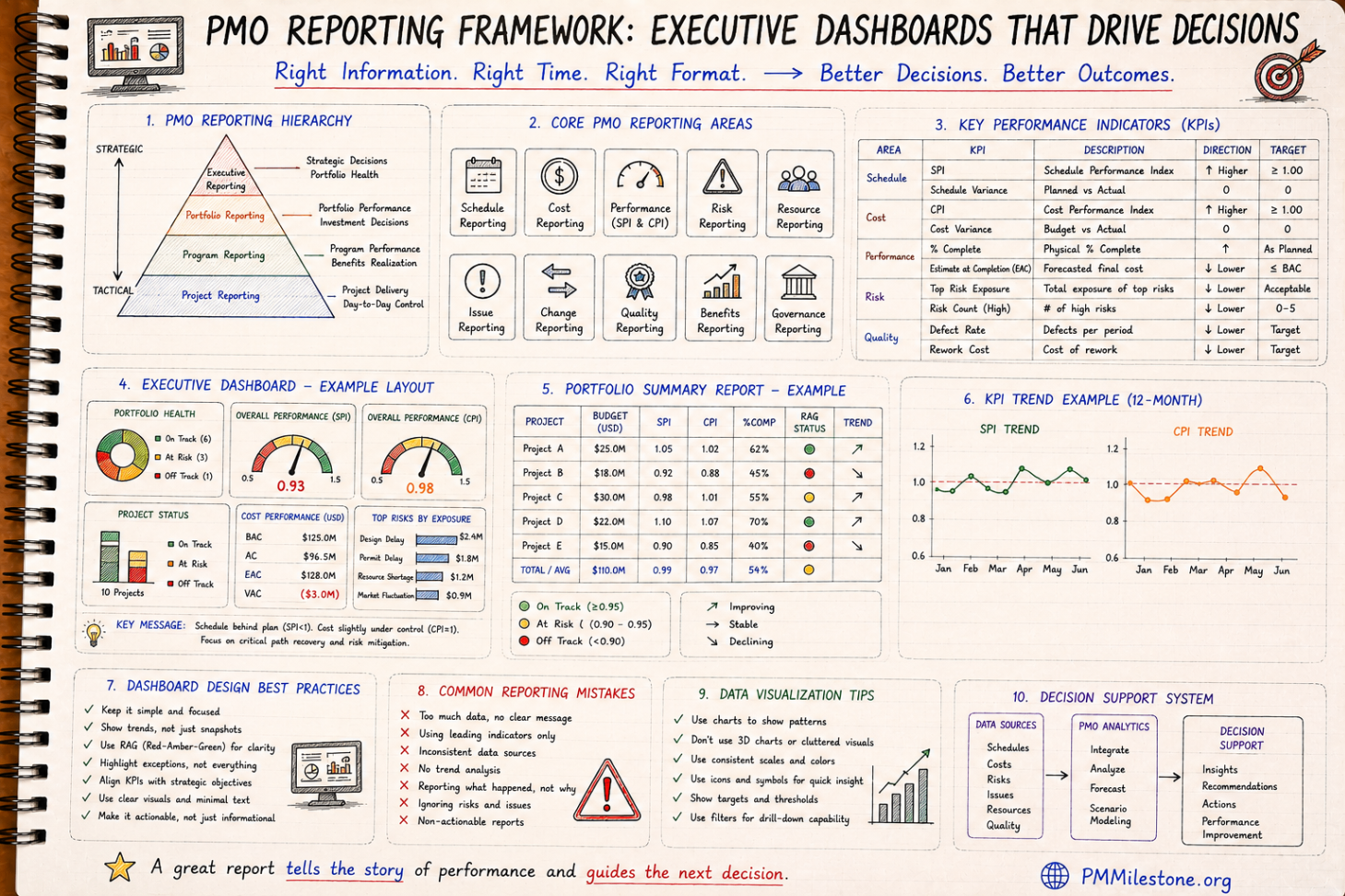
The anxiety is understandable. A modern project controls toolset can already auto-generate status reports, run instant critical-path analysis, build live executive dashboards, monitor risk continuously and forecast completion dates from progress trends. Watching software do in seconds what used to take a team days makes the replacement question feel very real.
But there is a difference between automating tasks and replacing a profession. Spreadsheets did not replace accountants. CAD did not replace engineers. Primavera did not replace planners. Each automated a layer of repetitive work and pushed the professionals above it into higher-value territory. AI is doing the same to project management — faster and more visibly, but on the same trajectory.
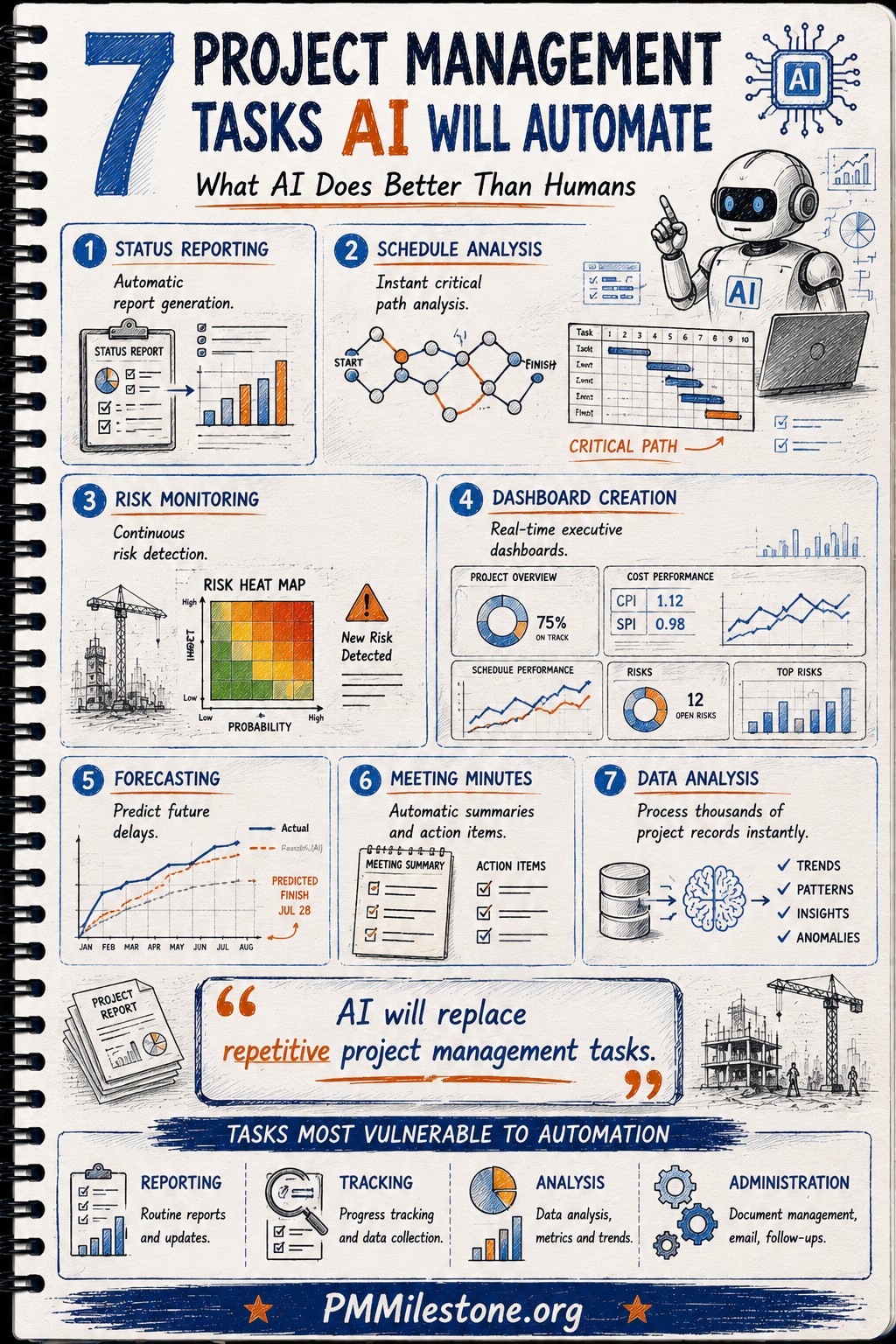
The seven project management tasks AI will automate
These are the repetitive, rules-based tasks most exposed to automation. On real projects they are already moving onto the machine. The honest career advice is simple: let them. Holding on to manual reporting and manual analysis is not what makes a project manager valuable in 2030.
- 1. Status reporting
Automatic, template-driven report generation from live data.
- 2. Schedule analysis
Instant critical path, float and logic checks across thousands of activities.
- 3. Risk monitoring
Continuous detection of new and rising risks from project signals.
- 4. Dashboard creation
Real-time cost, schedule and risk performance views.
- 5. Forecasting
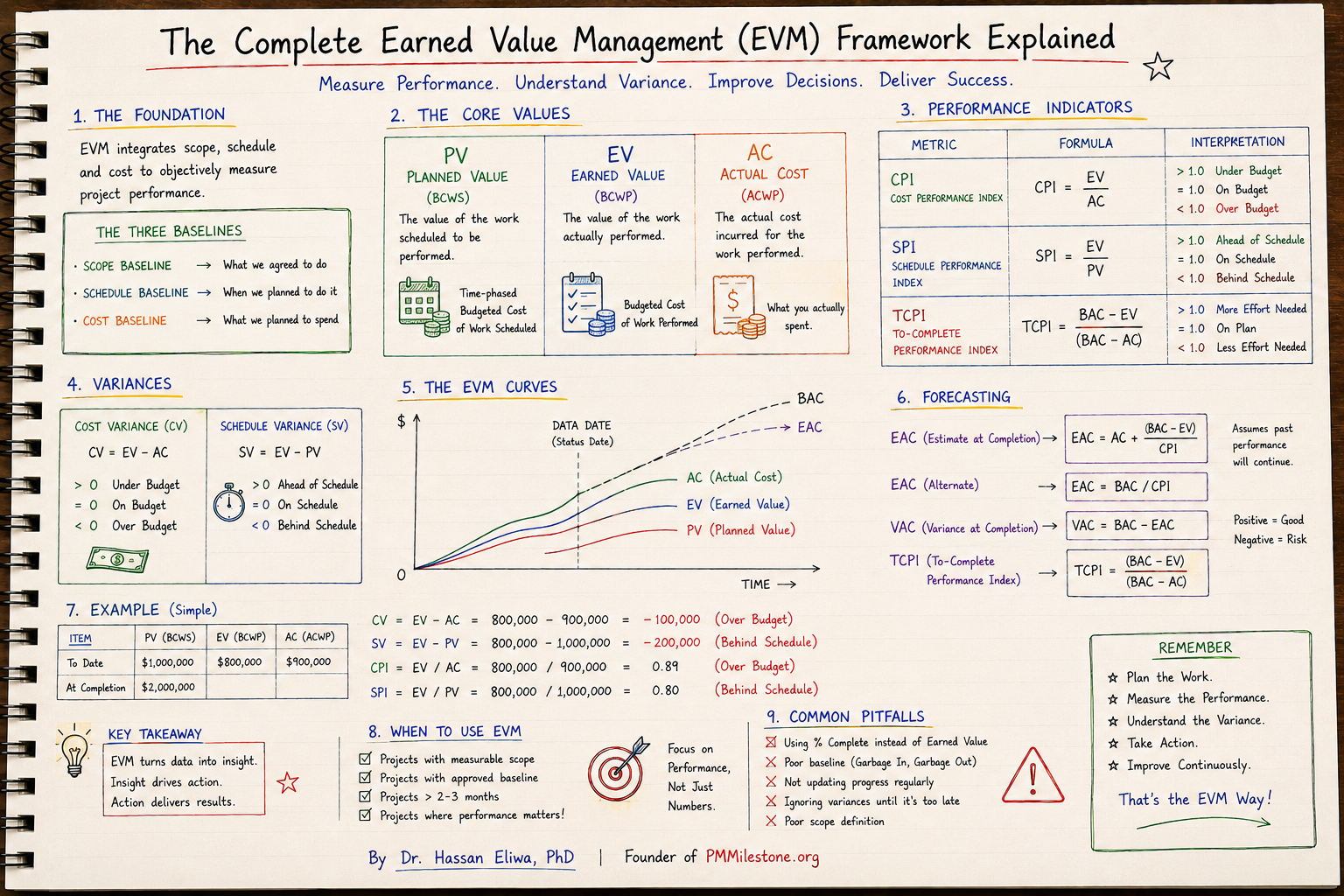
Predicting likely delays and EAC ranges from actual trends.
- 6. Meeting minutes
Automatic summaries, decisions and action items.
- 7. Data analysis
Processing thousands of project records instantly to surface outliers and patterns.
On a recent treatment-plant programme, the monthly schedule update used to take the planning team two days — importing progress, re-running the critical path, drafting the narrative. A scheduling assistant now does the analysis and a first-draft narrative in minutes. The team did not shrink. It redeployed those two days into proactive recovery planning and stakeholder engagement — the work that actually protects the end date. That is the pattern to copy.
What AI cannot replace: the seven human essentials
Now the other half of the job — the part no model has been able to take, because it is not made of data. This is where experienced project managers earn their keep, and it is where the value is concentrating fastest as the automatable layer shrinks.
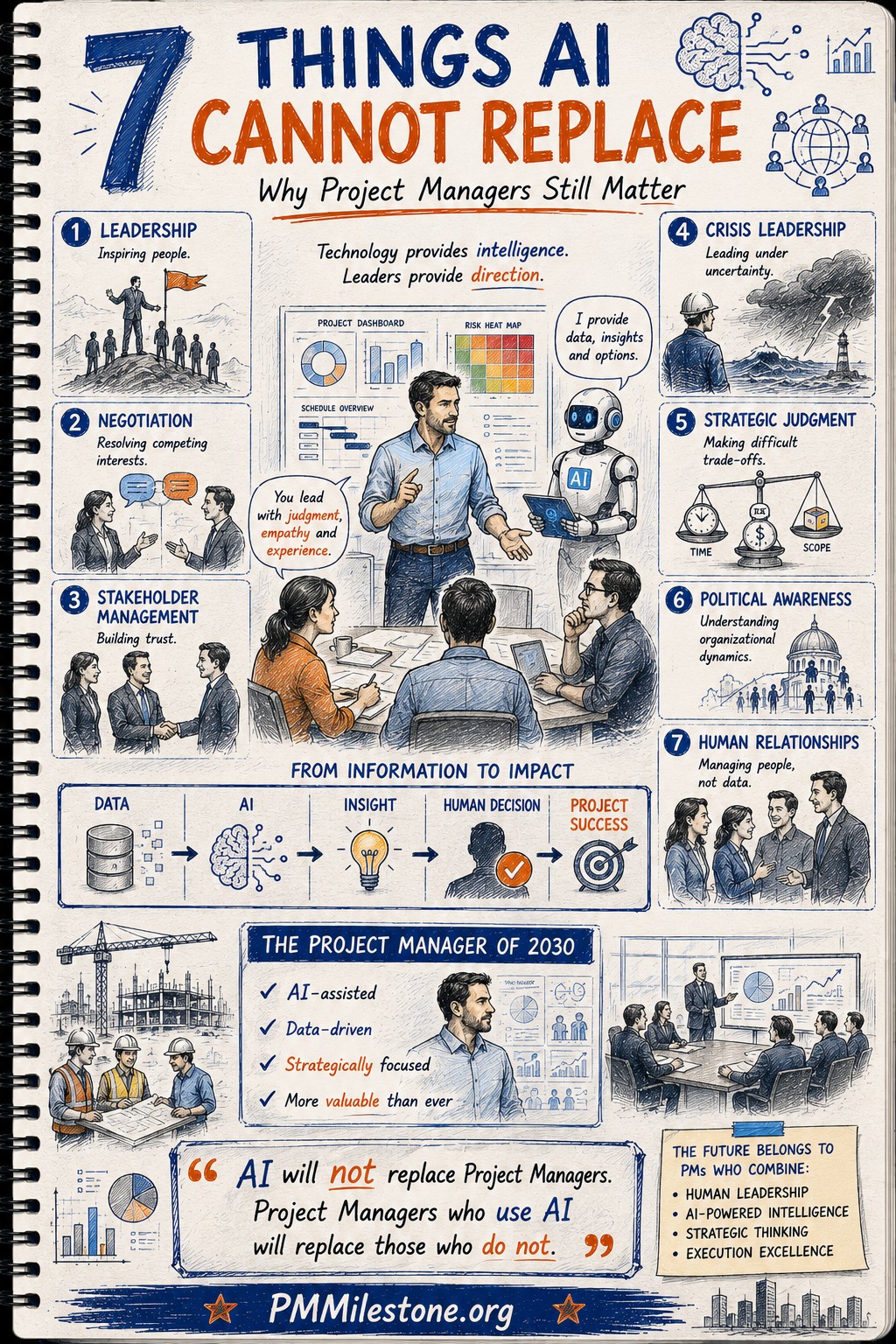
- Leadership
Inspiring and aligning a team behind a goal under uncertainty.
- Negotiation
Resolving competing interests where both sides are partly right.
- Stakeholder management
Building the trust that surfaces problems early enough to fix them.
- Crisis leadership
Holding a team together and deciding under genuine uncertainty.
- Strategic judgement
Trading off time, cost, scope and quality with consequences in mind.
- Political awareness
Reading organisational dynamics no register or dashboard captures.
- Human relationships
Managing people, not data — the part of the job AI is structurally unable to own.
A bridge package showed all-green on the dashboard while a quiet dispute brewed between the main contractor and a utility provider over a service diversion. No metric flagged it — it was not a number, it was a relationship turning cold. A short series of face-to-face conversations resolved it before it became a formal claim. AI can monitor the data; only a person can manage the people behind it. The same lesson runs through almost every entry in the Project Failure Database and the Mega Project Case Studies.
Human vs AI: who owns what
Here is the division of labour in one view. Notice the pattern: AI owns analysis and volume; humans own judgement and people. Every row is a place where one side without the other produces weaker outcomes than the two working together.
| Capability | AI does it well | Humans still own it |
|---|---|---|
| Speed & volume | Processes thousands of records instantly | Knows which numbers actually matter |
| Schedule analysis | Finds the critical path in seconds | Decides how to recover the slip |
| Reporting | Drafts the report automatically | Frames the message for the board |
| Forecasting | Projects a likely finish date | Judges whether the forecast is credible |
| Risk | Flags emerging risk from the data | Negotiates the mitigation with people |
| Leadership | — | Inspires, aligns and leads under pressure |
Technology provides intelligence. Leaders provide direction. Project success happens where the two meet — and a human always stands at that meeting point.
How to future-proof your career: a practical checklist
This is the part that matters most. The professionals who thrive by 2030 will not be the ones who feared AI or ignored it — they will be the ones who put it to work. The checklist below is the one I give to engineers I mentor, and it is the same shape on every continent and every project type I have worked on.
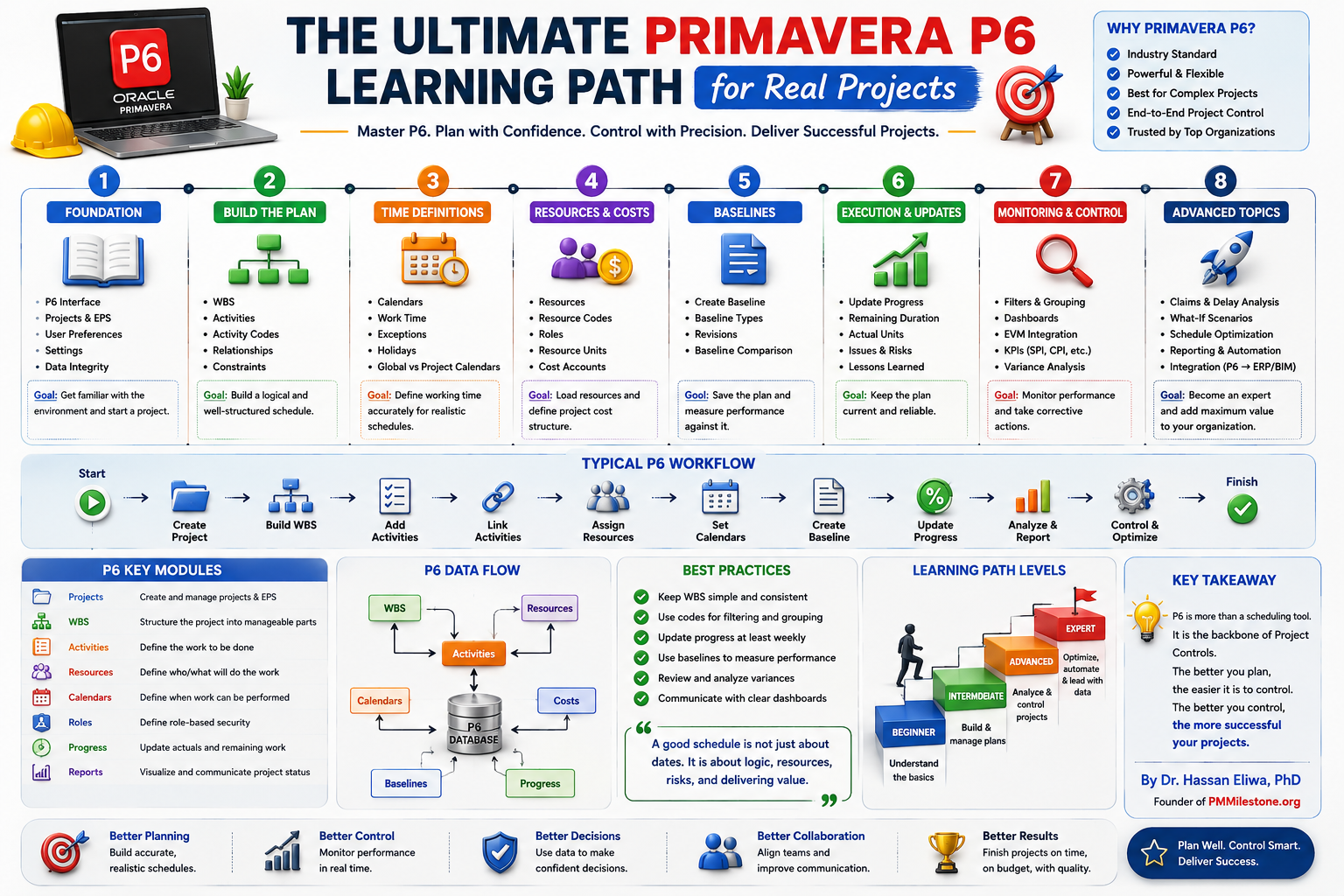
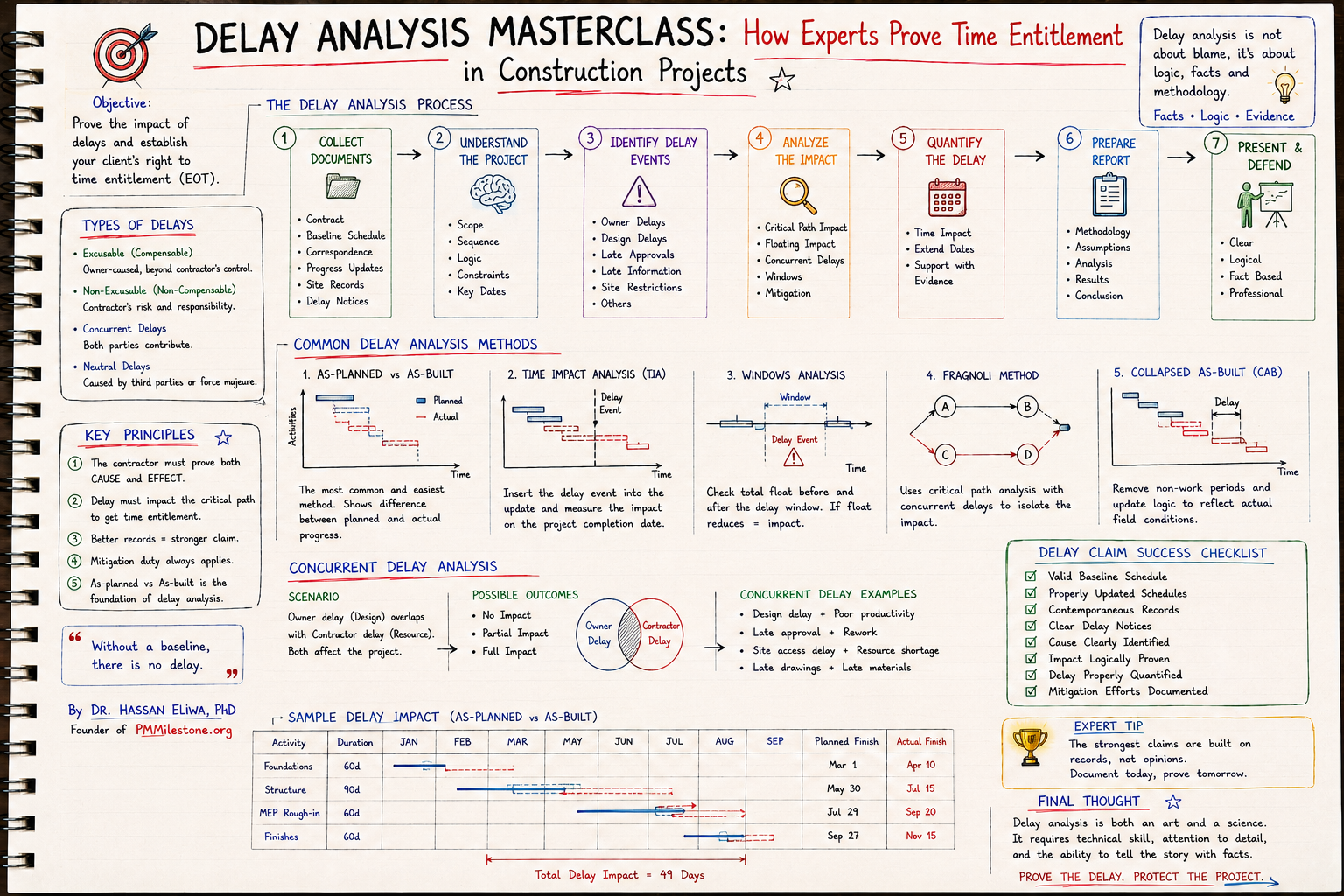
1. Master the fundamentals first. You cannot judge AI output you do not understand. Get genuinely strong on critical path, float, earned value and delay analysis — the disciplines covered across our Learning Tracks and Knowledge Pillars. The Project Controls Glossary is a good place to pressure-test your own vocabulary.
2. Adopt the tools deliberately. Learn to drive AI scheduling, reporting and forecasting assistants — then verify their output every time. Pair them with the calculators on PMMilestone, for example the CPI Calculator, SPI Calculator, TCPI Calculator and Earned Schedule Calculator, so you always know what the model should have produced.
3. Reinvest the saved time. Spend the hours AI gives back on site walks, stakeholder relationships and recovery planning — not on watching more dashboards. The Project Recovery Playbooks and Delay Claims Library are good targets for that reinvested time.
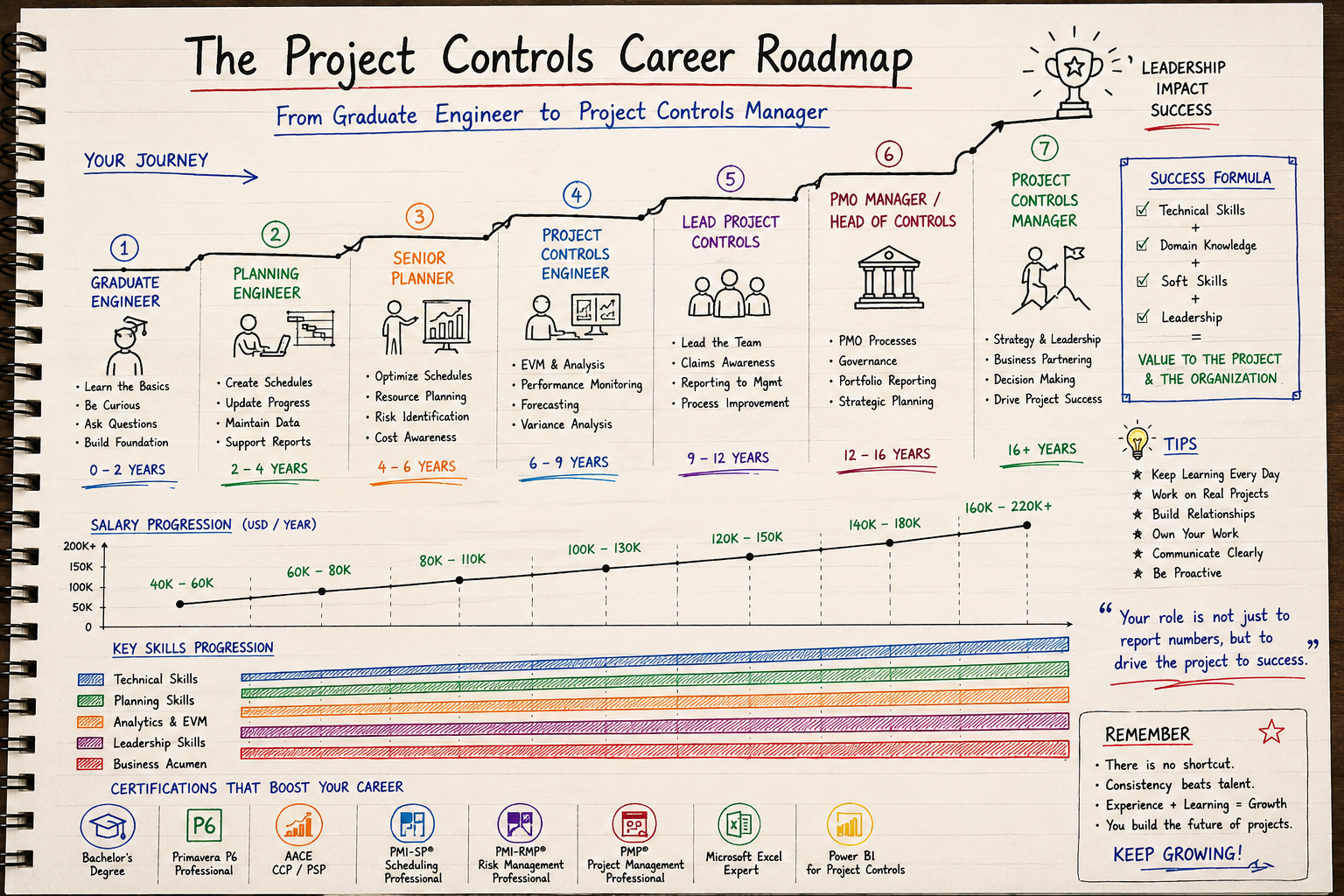
4. Build the human skills hard. Negotiation, communication, leadership and stakeholder management are now your differentiators. They are the part of the job no model in 2030 will own.
5. Become the translator. Practise turning AI analysis into clear decisions and recommendations a project board can act on. The PM who can stand in front of a steering committee and convert machine output into a confident, accountable recommendation is the PM who keeps getting promoted.
Run a personal time audit for one week. Mark every task "automatable" or "judgement". Then set a target to push more of your week into the judgement column each quarter. That single habit quietly turns you into the irreplaceable person on the team — the one nobody wants to lose when the next restructure lands.
The bottom line
The future of project management is not human versus AI — it is human plus AI. Complex projects still need human leadership; AI adds the intelligence; together they deliver better outcomes than either alone. AI will not replace project managers. Project managers who use AI will replace those who do not.
If you want a structured way to act on that, start with the PMMilestone Academy, pick a Learning Track that matches your next twelve months, and pair it with the relevant Knowledge Pillars. The research behind this guidance sits in the Publications library, and the full context for the framework lives on the Founder and About pages.
Frequently asked questions
Will AI replace project managers by 2030?
No. AI will automate routine reporting, scheduling and analysis tasks, but the core of project management — leadership, negotiation, stakeholder management and judgement under pressure — stays human. The role evolves rather than disappears.
Which project management tasks will AI automate first?
Status reporting, critical-path and schedule analysis, risk monitoring, dashboard creation, forecasting, meeting minutes and large-scale data analysis. Any task that follows the same rules every time is a prime candidate for automation.
How can project managers stay relevant in the age of AI?
Master the fundamentals, adopt AI tools deliberately, verify their output, reinvest the saved time into stakeholder and recovery work, and sharpen the human skills — negotiation, leadership and strategic judgement — that AI cannot replicate.
Do I still need Primavera P6 and project controls skills if AI does the analysis?
Yes, more than ever. You cannot trust or challenge an AI's schedule or forecast without understanding the underlying logic. Fundamentals like critical path, float, earned value and delay analysis are what make you a competent supervisor of the tools.
Is AI accurate enough to manage projects on its own?
AI is strong at analysis and pattern detection but blind to site reality, organisational politics and human relationships. It produces data, insight and options; a person must still own the decision, the accountability and the people. Always validate AI output before acting.
What will the project manager role look like in 2030?
AI-assisted and data-driven: the machine handles analysis and reporting while the project manager focuses on strategy, leadership and stakeholders. Done well, this makes the role more strategic and more valuable than the version that came before.
Where this article connects
Curated cross-links: related Academy articles, the Knowledge Pillars this topic draws on, and the calculators referenced in the FAQs above.
Related Academy articles
Relevant Knowledge Pillars
Calculators referenced in the FAQs
Related learning for this topic
Hand-picked Learning Tracks, Knowledge Pillars, publications and case data that extend this article.
Next steps on PMMilestone
Use these pages to deepen the topic, verify terminology, compare real cases and move from theory into applied project controls practice.
Related calculators
Open the calculators referenced in this article and run them against your own project numbers.
CPI Calculator
Cost Performance Index — measure cost efficiency.
Open Earned ValueSPI Calculator
Schedule Performance Index — measure schedule efficiency.
Open ForecastingTCPI Calculator
To-Complete Performance Index — required efficiency to finish on budget.
Open ScheduleEarned Schedule Calculator
Time-based schedule performance (SPI(t)).
Open PMOPM Maturity Assessment
Score PM maturity across 5 dimensions.
OpenOther learning tracks
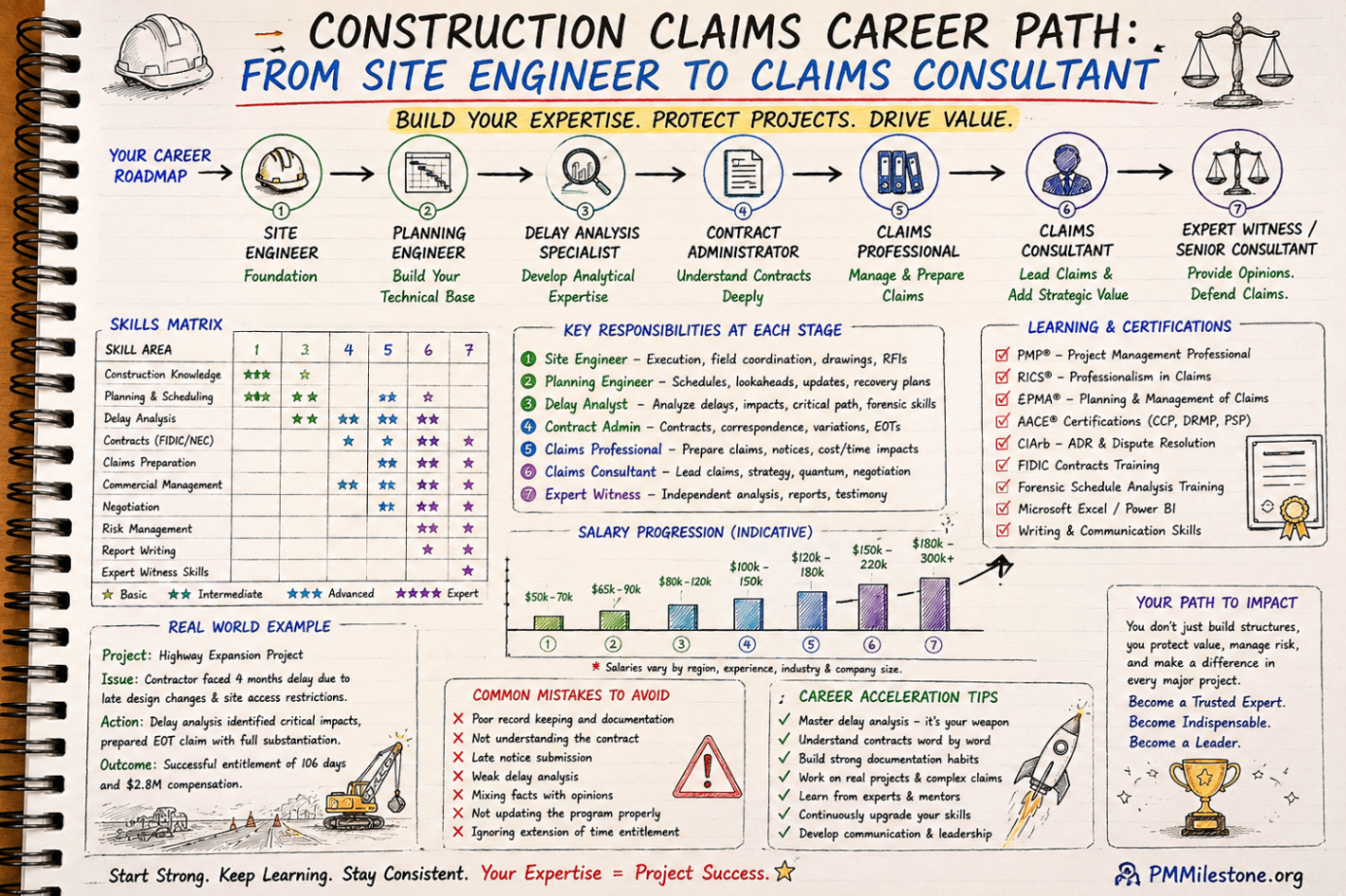
Construction Claims Career Path
A practical roadmap for engineers moving from site delivery into planning, delay analysis, claims, commercial controls and senior claims consulting.
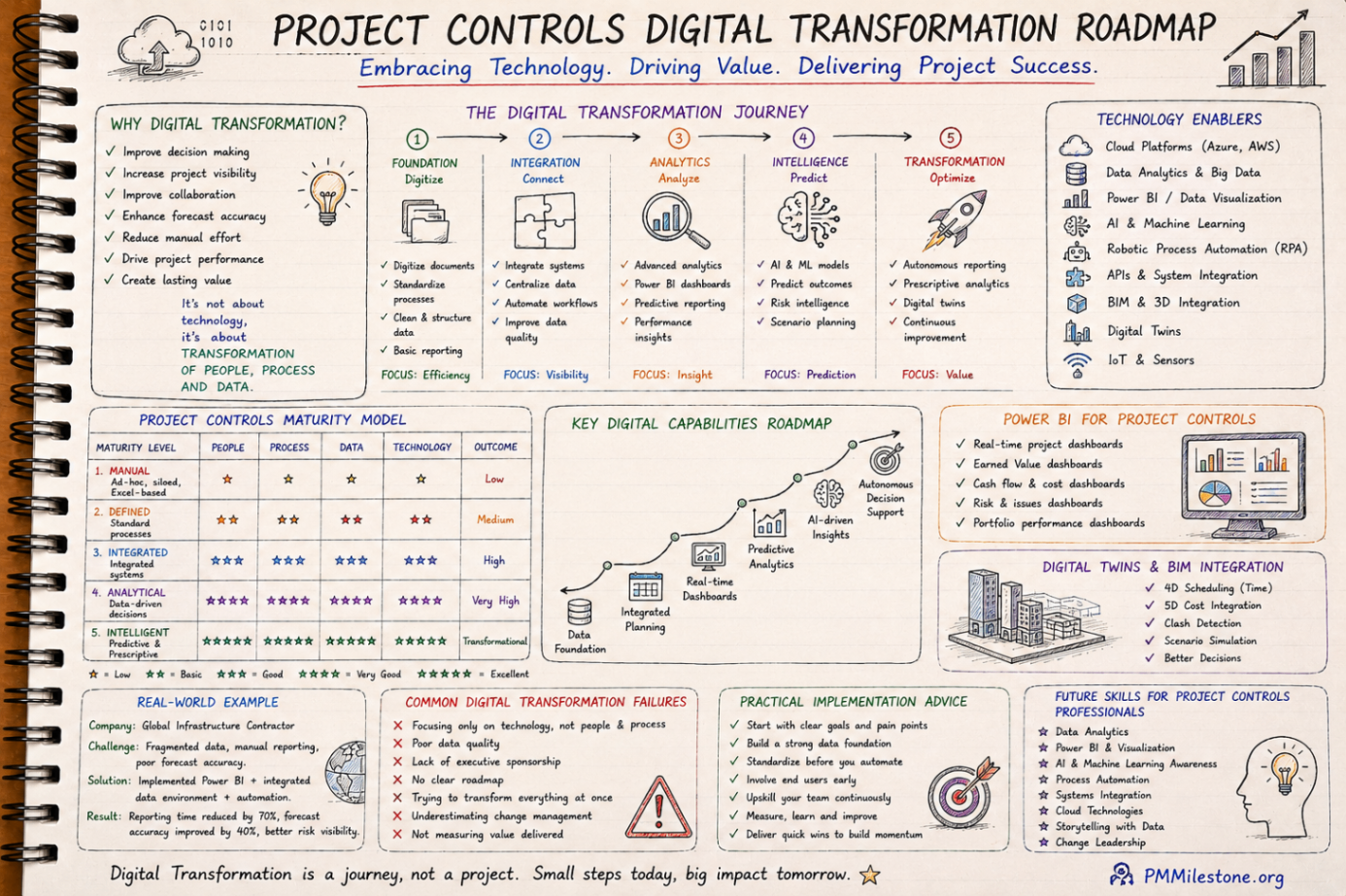
Project Controls Digital Transformation Roadmap
A future-focused guide to modern project controls through data integration, reporting automation, Power BI, AI, BIM and digital PMO capability building.
Project Controls Fundamentals
Scope, schedule, cost, risk, quality and reporting — the six disciplines that hold every successful capital project together, taught from first principles.