How to Write a Schedule Narrative That Survives Review: A Monthly Update Template for Planners

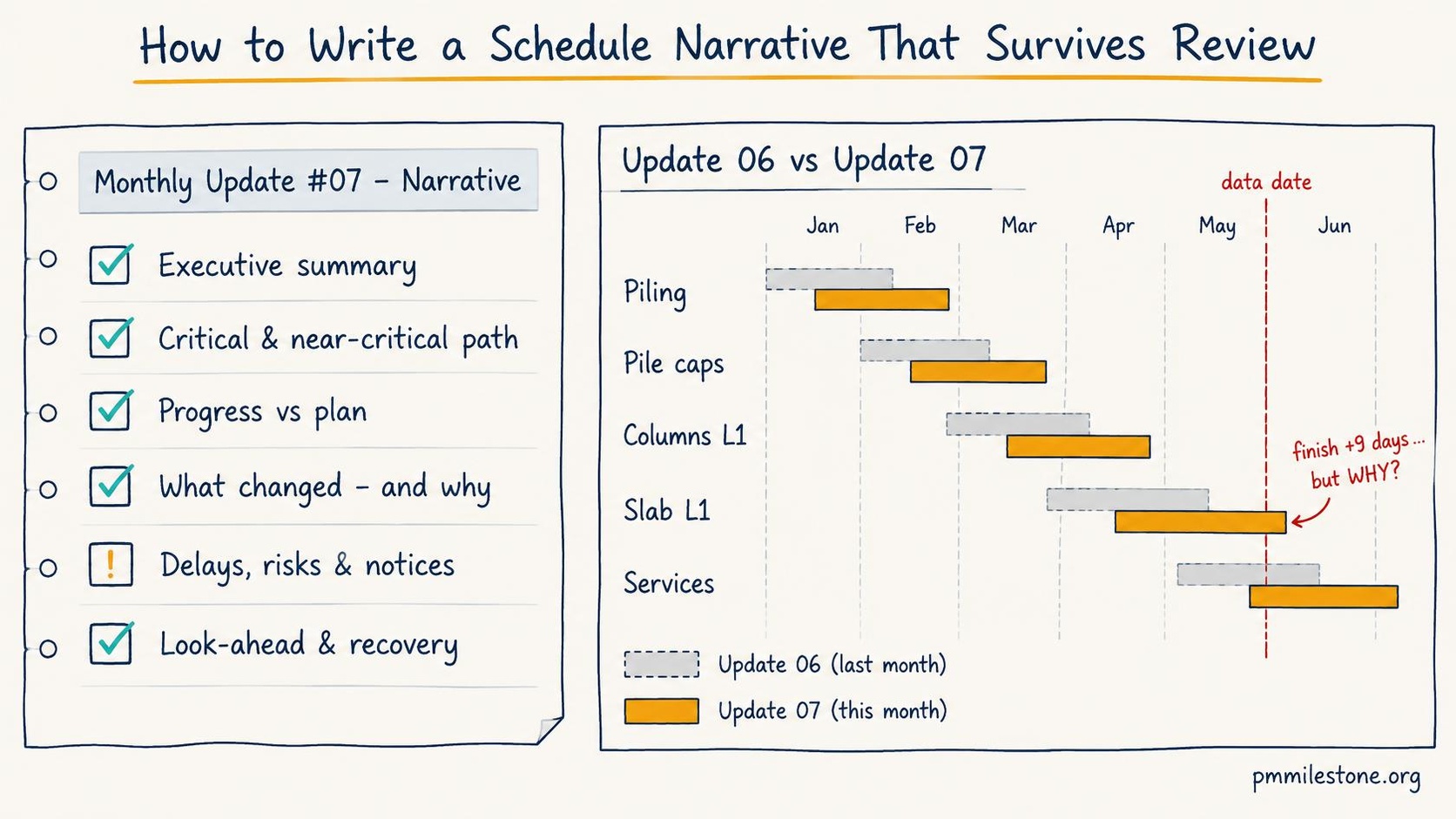
The month the finish date moved and nobody could say why
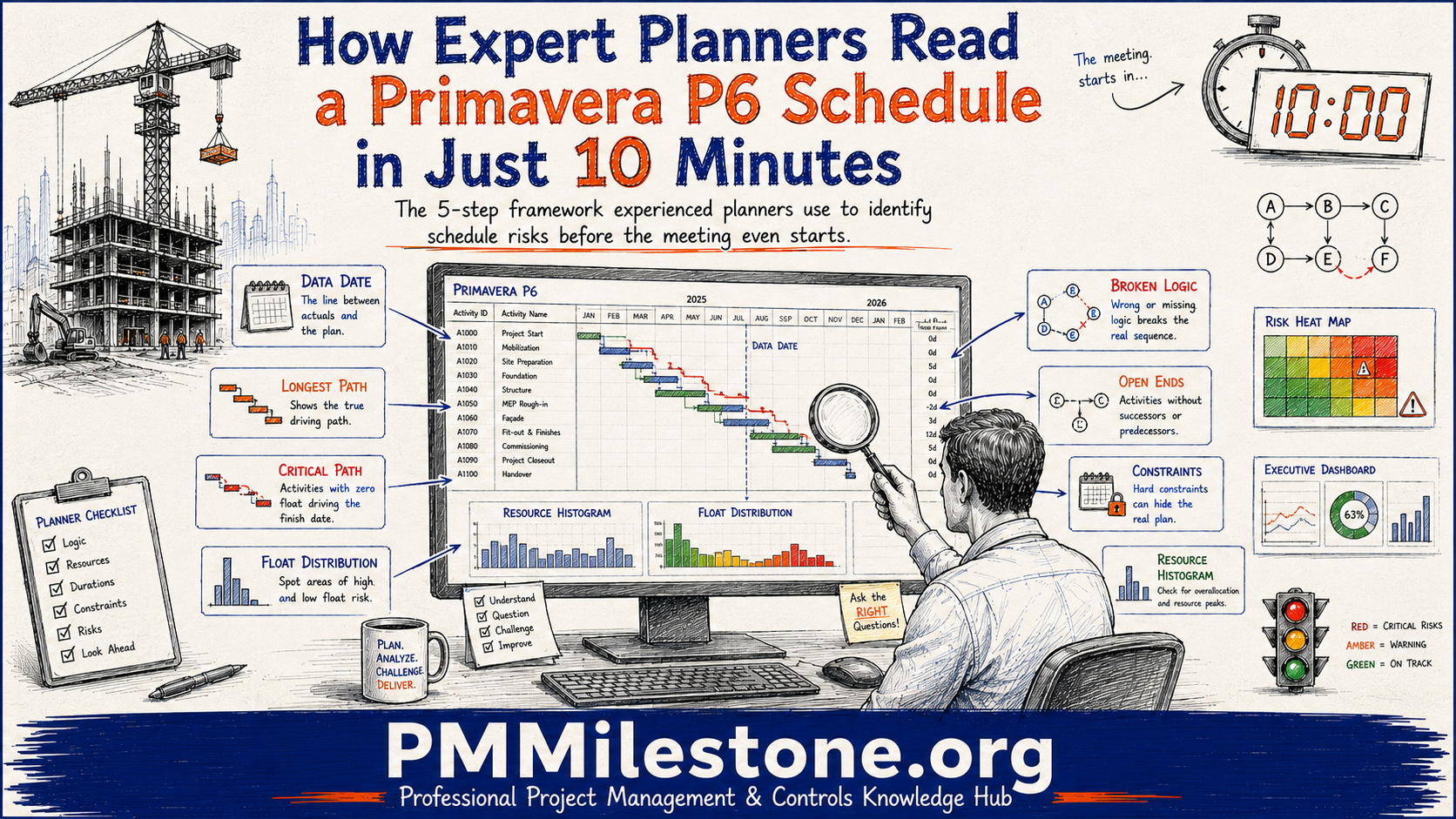
Picture a monthly progress meeting on a mid-size building job. The planner puts the updated programme on the screen. The forecast completion has slipped nine working days since last month. The project director asks the obvious question: why? The planner opens Primavera P6, starts scrolling through activity IDs, and the room goes quiet while everyone watches bars move.
Nothing was wrong with the schedule. The logic was sound, progress had been recorded properly, and the nine days were real. What was missing was the written explanation that should have travelled with the file: a schedule narrative that answers the question before anyone has to ask it.
That gap is more common than most of us like to admit. SmartPM’s State of Construction Scheduling 2026 report found that 76% of respondents lean on the schedule for leadership decisions, yet only 24% of general contractors are very confident their updates reflect reality. A good narrative does not fix a bad schedule, but it is the single cheapest way to show that a schedule is being managed rather than merely recalculated.
This guide covers how to write one: the structure I recommend, the wording that holds up when an engineer, a client reviewer or a delay expert reads it, the mistakes that quietly weaken a contractor’s position, and where AI drafting tools genuinely help in 2026.
By Dr. Hassan Eliwa, PhD, Founder of PMMilestone.org. Explore his research and publications.
What a schedule narrative is, and the three documents people confuse
A schedule narrative is the written report that accompanies a programme submission and explains, in plain language, what the schedule says and why. It turns an XER or MPP file, which only a scheduler can read, into something a project director, client representative or contract administrator can act on.
The term gets used loosely, so it helps to separate three related documents. They overlap, but they answer different questions and they are written at different moments. Mixing them up is how a monthly update ends up as a forty-page restatement of the baseline assumptions.
| Document | When it is written | Main question it answers | Typical length |
|---|---|---|---|
| Basis of Schedule (AACE RP 38R-06) | Once, when the baseline is developed; revised only on re-baseline | How was this schedule built? Scope, calendars, duration sources, logic approach, assumptions, exclusions | 10–25 pages |
| Baseline narrative | With the baseline submission | What is the plan? Milestones, critical path, sequencing strategy, key constraints | 5–15 pages |
| Update narrative | Every reporting period (usually monthly) | What happened, what changed, what it means and what we will do | 3–8 pages |
This article focuses on the update narrative, because it is the one written most often, under the most time pressure, and the one most likely to be read months later by someone trying to reconstruct what happened. If your contract also requires a basis of schedule, write it once and refer to it; do not repeat it every month.
Why most narratives get skimmed, or used against their author
When I review programme submissions, weak narratives tend to fall into three patterns. Each one is understandable when you are writing at 9 pm on the day the update is due, and each one costs more than it saves.
The data dump. Pages of exported activity lists, a full Gantt chart and a table of every activity’s percent complete. It looks thorough. In practice it hands the reader the job of finding the story, and most readers will not do it.
The cheerleader. “Good progress continues across all areas. The project remains on track.” Two sentences, no numbers, no mention of the near-critical path that lost eleven days of float. When the slippage eventually surfaces, earlier narratives like this make the team look either unaware or evasive.
The silent re-plan. Logic is changed, durations are shortened or a constraint is added to hold a milestone, and none of it is mentioned. This is the dangerous one. A reviewer comparing two updates will find the changes eventually, and undisclosed changes are among the first things a delay expert examines. Once found, they cast doubt over every other update in the series.
| What you see | What it usually means | Risk |
|---|---|---|
| No number appears in the first paragraph | The writer has not decided what the headline is | ● Medium |
| Finish date moved, but no driver is named | The planner has not traced the path that moved | ▲ High |
| No section on logic or duration changes | Changes were made but not disclosed, or not tracked | ▲ High |
| Delay events listed with no dates or notice references | Records will be hard to rely on later | ▲ High |
| Look-ahead section copied from last month | Narrative is being treated as a formality | ● Medium |
The four questions every update narrative must answer
Before worrying about headings and templates, it helps to know what the narrative is actually for. Strip away the formatting and every good update narrative answers four questions, in this order.
What happened? Actual progress during the period, recorded against the schedule and supported by site records. What changed? Every modification to the schedule model itself, separate from progress. So what? The effect on the forecast finish, key milestones and the critical and near-critical paths. Now what? The actions, owners and risks for the coming period.
If a reviewer can answer all four from your narrative alone, without opening the schedule file, the narrative is doing its job. If they cannot, it is not finished, however long it is.
- 1What happened?
Actual starts and finishes · progress vs last month · evidence: diaries, photos, dockets
- 2What changed?
Logic, durations, constraints, calendars · added or deleted activities · a reason for each
- 3So what?
Movement of the finish date · critical and near-critical paths · float used, and by whom
- 4Now what?
Recovery actions with owners · notices and risks to watch · four-to-six-week look-ahead
If a reviewer can’t answer all four from the narrative alone, it isn’t finished.
A seven-part structure that works on almost any project
Owners and contracts often prescribe their own template, and where they do, follow it. Where they do not, or where the template is thin, the structure below has worked well for me across building, transport and water projects. It maps directly onto the four questions and keeps the most important information on the first page.
- 1. Submission ID
Update no., data date, file, options
- 2. Summary
Three sentences, numbers first
- 3. Critical path
Longest + near-critical paths
- 4. Progress
By area, planned vs actual
- 5. Changes
Logic, durations, constraints
- 6. Delays & risks
Events, notices, status
- 7. Look-ahead
Actions, owners, dates
Same headings, same order, every month — consistency is what makes the series useful
Part 1 — Submission identification
Start with the facts that let anyone reproduce your result: update number, data date, file name, the previous update it is compared against, the scheduling option for out-of-sequence progress (Retained Logic, Progress Override or Actual Dates), and whether the critical path is defined by longest path or total float. This takes five lines and saves hours of argument later. Two people running the same file with different settings will get different answers, and the narrative should make clear which answer you are reporting.
Part 2 — Executive summary in three sentences
Senior readers often read only this part, so write it last and make every word count. I use a three-sentence rule: where the forecast finish sits against last month and against the contract date; what drove the movement; and what decision or action is needed from the reader.
Part 3 — Critical and near-critical paths
Describe the longest path in words, from the data date to completion, naming the work rather than listing activity IDs: “piling to the north core, pile caps, level 1 columns, level 1 slab, roof structure, façade close-up, commissioning.” Then do the same for the next two or three paths with their total float. Near-critical paths are where next month’s surprise is hiding.
If the critical path has shifted since the last update, say so explicitly and explain why. A path that moves from structure to services in one month is either a real development or a sign of a modelling problem, and the reader deserves to know which. The Float Erosion Analyzer is a quick way to see which paths are consuming float fastest before you write this section.
Part 4 — Progress against plan
Report progress by area, stage or work package, not activity by activity. A short table showing planned versus actual completion for each major area, with a one-line comment wherever the variance is significant, tells the reader far more than an export of percent-complete values. Tie key statements to evidence: daily diaries, inspection records, delivery dockets, drone surveys or photographs. You do not need to attach them all; you need to show they exist and where they are filed.
Part 5 — Changes to the schedule model
This is the section most often missing, and the one that matters most if the project ever ends up in a dispute. List every change to logic, durations, calendars, constraints and the activity list itself, with the activity ID, what changed, why, and who agreed it. A simple change log table is enough.
Most standard forms expect this transparency. NEC4 requires each revised programme to show actual progress and the effects of implemented compensation events, and FIDIC 2017 requires the programme to be accompanied by a supporting report. Under NZS 3910 and similar forms, the engineer will reasonably expect changes in method to be explained. Even where the contract is silent, an undisclosed change will be found by anyone who runs a comparison between two updates.
| Activity ID | Change made | Reason | Agreed by |
|---|---|---|---|
| ST1040 | Duration 10d → 14d | Revised crane availability after tower crane relocation | Site manager, 28 Oct |
| ST1060 → ST1070 | FS changed to SS + 3d | Slab formwork now follows column pours bay by bay | Construction manager, 29 Oct |
| MS0200 | Constraint removed | Interim milestone no longer contractual after variation V12 | Contract administrator, 30 Oct |
| SV2100–2140 | Five activities added | Level 1 services split by zone to match crew sequence | Services coordinator, 30 Oct |
Part 6 — Delays, risks and notices
For each delay event, record what happened, the date it first became known, the activities affected, the reference of any notice issued, and its current status. Keep the language factual. Describe cause and effect on the programme; leave entitlement conclusions to the commercial and contractual process. A narrative that reads like an advocate’s submission is easy to dismiss, while one that reads like a careful contemporaneous record is very hard to argue with.
Include the main schedule risks for the next period as well, not just events that have already happened. A risk named in the October narrative that materialises in December is evidence that the team was managing the project with its eyes open. The Delay Impact Calculator is useful for a first-pass estimate before a proper time impact analysis.
Part 7 — Look-ahead and recovery
Close with the next four to six weeks: the critical work starting, the decisions and information required from others, and the recovery actions with an owner and a date against each. “Explore acceleration options” is not an action. “Confirm availability of a second formwork crew for level 2 by 8 November, owner: construction manager” is.
Worked example: rewriting a weak paragraph
The example below is a composite based on the kind of narrative I see regularly on building projects, with the names and figures changed. The “before” version is not dishonest; it is simply unusable. The “after” version takes perhaps ten extra minutes to write.
“Progress during October was generally good. Some delays were experienced with precast deliveries which have impacted the programme. The team is working hard to recover time and the project is expected to finish close to the planned date.”
“Precast columns for level 1 (ST1040) arrived 9 working days later than the 6 October date in Update 06 (supplier letter PC-017, notice NTC-008 issued 10 October). ST1040 is on the longest path, so the forecast completion moved from 3 March to 14 March. Near-critical path 2 (services rough-in) now carries 6 days of float, down from 15. Recovery: resequencing the level 2 slab pour (decision required by 15 November) recovers up to 6 days.”
Look at what changed. The rewrite names the activity, quantifies the delay, references the evidence and the notice, connects the event to the longest path, flags the near-critical path that is quietly eroding, and ends with a decision the reader can make. Nothing in it is opinion. Every sentence can be checked.
Lessons learned: what reviewers actually notice
A few lessons repeat so often that they are worth stating plainly.
The narrative is evidence, whether you intend it or not. Months or years later, the narratives may be the clearest contemporaneous record of what the team knew and when. Write each one as though a careful stranger will read it with the schedule file open beside them.
Consistency beats brilliance. Twelve plain narratives with identical headings are more useful than three excellent ones and nine missing. Reviewers trust a series they can compare month to month.
The narrative improves the schedule. Being forced to explain every change in writing is one of the best defences against lazy fixes such as unexplained constraints, deleted logic or quiet duration cuts. If you cannot justify a change in a sentence, it probably should not be in the model.
Expert tips that save time every month
Using AI to draft the narrative: what to hand over and what to keep
This is where the conversation in project controls has moved fastest over the past year. AI tools can now read schedule exports, compare two updates and produce a first draft of a narrative in minutes. Used carefully, that is a real time saving. Used carelessly, it produces confident paragraphs about causes the tool cannot possibly know.
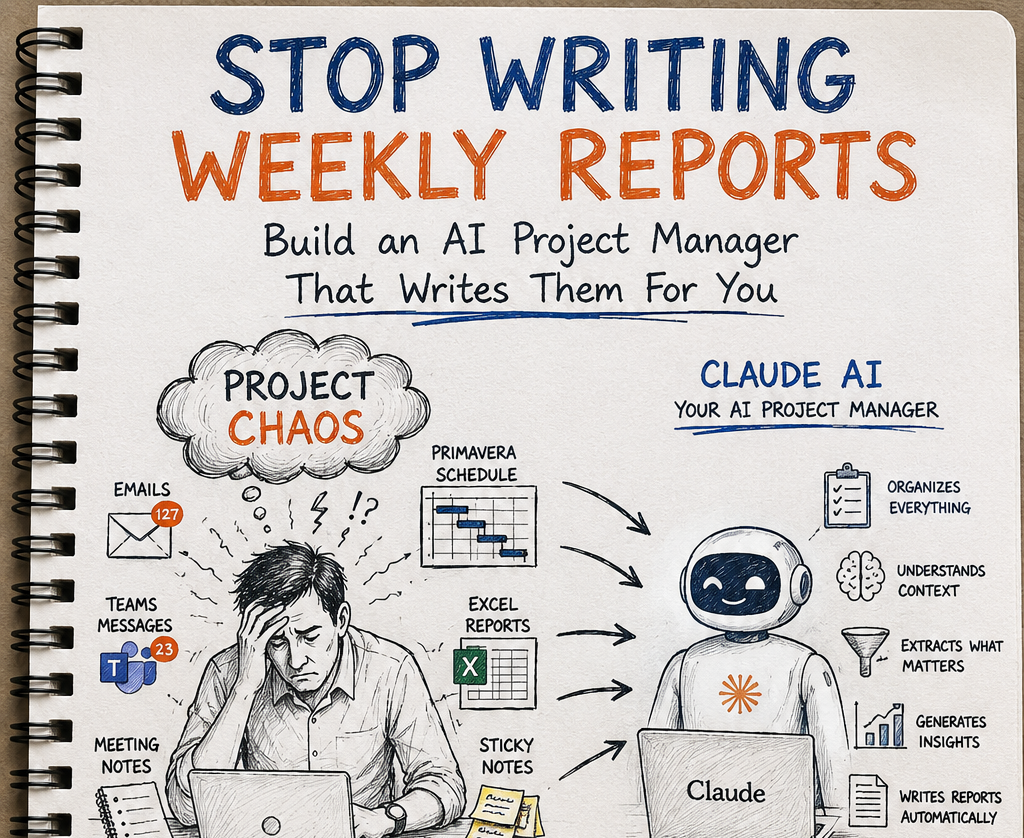
The rule I apply is simple: AI can describe what changed between two files, but only people who were on the project can say why. A model can see that ST1040 finished nine days late; it cannot know that the supplier’s letter arrived on 10 October. If you would not let a graduate planner sign off a cause without checking, do not let a model do it either. I cover the wider workflow in Stop Writing Weekly Reports: Build an AI Project Manager.
| Task | AI suitability | Why |
|---|---|---|
| Comparing two updates and listing changed dates, logic and durations | ✔ Strong | Mechanical, checkable, tedious by hand |
| Drafting the progress section from exported data | ✔ Good, with review | Saves time; numbers must be spot-checked |
| Tightening wording and removing vague adjectives | ✔ Good | Pure editing task |
| Explaining the cause of a delay | ⚠ Human only | Requires site knowledge and records the model does not have |
| Statements about entitlement or responsibility | ✖ Never delegate | Contractual consequences; must be reviewed by the commercial team |
| Uploading client schedules to public AI tools | ✖ Check first | Confidentiality obligations in most contracts |
A checklist to run before every submission
| # | Check | ✔ |
|---|---|---|
| 1 | Update number, data date, file name and scheduling options stated | ☐ |
| 2 | Executive summary gives finish date movement in the first sentence | ☐ |
| 3 | Longest path described in words, not just activity IDs | ☐ |
| 4 | Two to three near-critical paths listed with total float | ☐ |
| 5 | Progress reported by area with variances explained | ☐ |
| 6 | Every logic, duration, constraint and calendar change logged with a reason | ☐ |
| 7 | Each delay event dated, linked to activities and to a notice reference | ☐ |
| 8 | Recovery actions have an owner and a date | ☐ |
| 9 | No unexplained adjectives: every claim has a number or a source | ☐ |
| 10 | Narrative saved alongside the schedule file with the same version number | ☐ |
Key takeaways
Write it as if someone will read it in two years
Most narratives are read once, quickly, by people who are busy. A few are read slowly, years later, by people who are paid to find weaknesses. Write for the second group and the first group will be well served too.
Next month, try one change: write the three-sentence summary before you open the schedule to tidy it. If you cannot write those three sentences, you have just found the most important thing to investigate before the meeting.
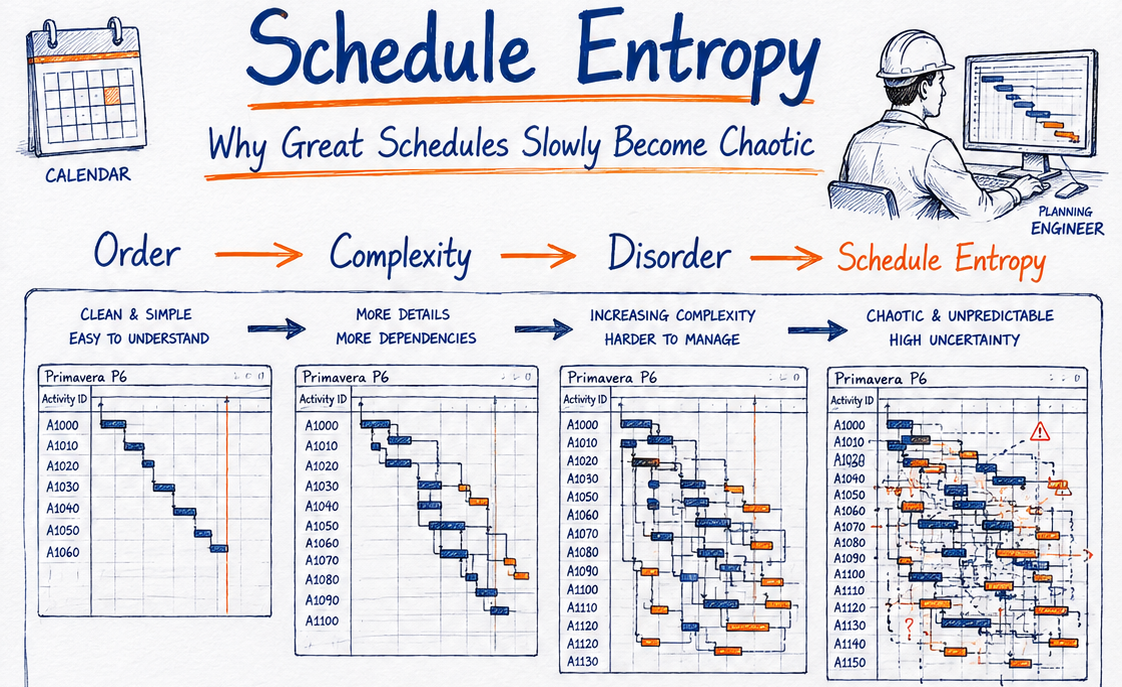
Continue with Schedule Entropy: Why Great Schedules Become Chaotic, How to Fix Out-of-Sequence Activities in Primavera P6 and Construction Delay Analysis: Choose the Right Method. Check terms in the Project Controls Glossary and test your float position with the Critical Path Risk Score.
Dr. Hassan Khames Eliwa, PhD, is a project controls specialist working across building, transport and infrastructure programmes, with more than twenty years of experience in planning, scheduling, earned value management, forensic delay analysis and claims. Read more on the founder page.
References
AACE International. Recommended Practice No. 38R-06: Documenting the Schedule Basis. Morgantown, WV: AACE International.
U.S. Government Accountability Office. (2015). Schedule Assessment Guide: Best Practices for Project Schedules (GAO-16-89G). Washington, DC: GAO.
Society of Construction Law. (2017). Delay and Disruption Protocol (2nd ed.). Leicestershire, UK: SCL.
NEC. (2017). NEC4 Engineering and Construction Contract, clauses 31–32. London: Thomas Telford.
FIDIC. (2017). Conditions of Contract for Construction (2nd ed.), Sub-Clause 8.3 Programme. Geneva: FIDIC.
SmartPM Technologies. (2026). The State of Construction Scheduling 2026.
Frequently asked questions
What is a schedule narrative?
A schedule narrative is the written report submitted with a programme that explains, in plain language, what the schedule shows and why. For monthly updates it covers progress, changes to the schedule model, movement of the forecast finish and critical path, delay events and notices, and the recovery actions planned for the next period.
What is the difference between a baseline narrative and an update narrative?
A baseline narrative explains the plan when the baseline is submitted: milestones, sequencing strategy, critical path and key constraints. An update narrative is written every reporting period and explains what happened, what changed in the model, how the finish date and critical path moved, and what will be done next. The basis of schedule (AACE RP 38R-06) is a third document describing how the schedule was built.
How long should a monthly schedule narrative be?
Most effective update narratives are three to eight pages. Length matters less than structure: the forecast finish and its movement should be in the first sentence, and every section heading should appear every month, even if it only says there were no changes.
What should the executive summary of a schedule narrative include?
Three sentences usually suffice: where the forecast finish sits against last month and the contract date, what drove the movement, and what decision or action is needed from the reader. Write it last, after the rest of the narrative is complete.
Should schedule logic changes be reported in the narrative?
Yes. Every change to logic, durations, calendars, constraints or the activity list should be logged with the activity ID, the change, the reason and who agreed it. Undisclosed changes are among the first things a reviewer or delay expert looks for, and finding them undermines confidence in every other update.
Can AI write a schedule narrative?
AI tools can reliably compare two schedule updates, list changed dates and logic, draft progress sections from exported data and tighten wording. They should not be trusted to explain why a delay happened or to make statements about entitlement or responsibility, and client schedules should not be uploaded to public tools without checking confidentiality obligations.
Is a schedule narrative contractually required?
It depends on the contract. Many specifications require a narrative with each programme submission, and standard forms such as FIDIC 2017 (Sub-Clause 8.3) require a supporting report with the programme. Even where it is not required, a narrative is the clearest contemporaneous record of what the project team knew and when.
Where this article connects
Curated cross-links: related Academy articles, the Knowledge Pillars this topic draws on, and the calculators referenced in the FAQs above.
Related Academy articles
Relevant Knowledge Pillars
Calculators referenced in the FAQs
Next steps on PMMilestone
Use these pages to deepen the topic, verify terminology, compare real cases and move from theory into applied project controls practice.
Related calculators
Open the calculators referenced in this article and run them against your own project numbers.
Float Erosion Analyzer
Track total float consumed on critical paths.
Open ScheduleDelay Impact Calculator
Estimate the financial impact of project delays.
Open ScheduleCritical Path Risk Score
Score the fragility of your critical path.
Open Earned ValueSPI Calculator
Schedule Performance Index — measure schedule efficiency.
OpenOther learning tracks
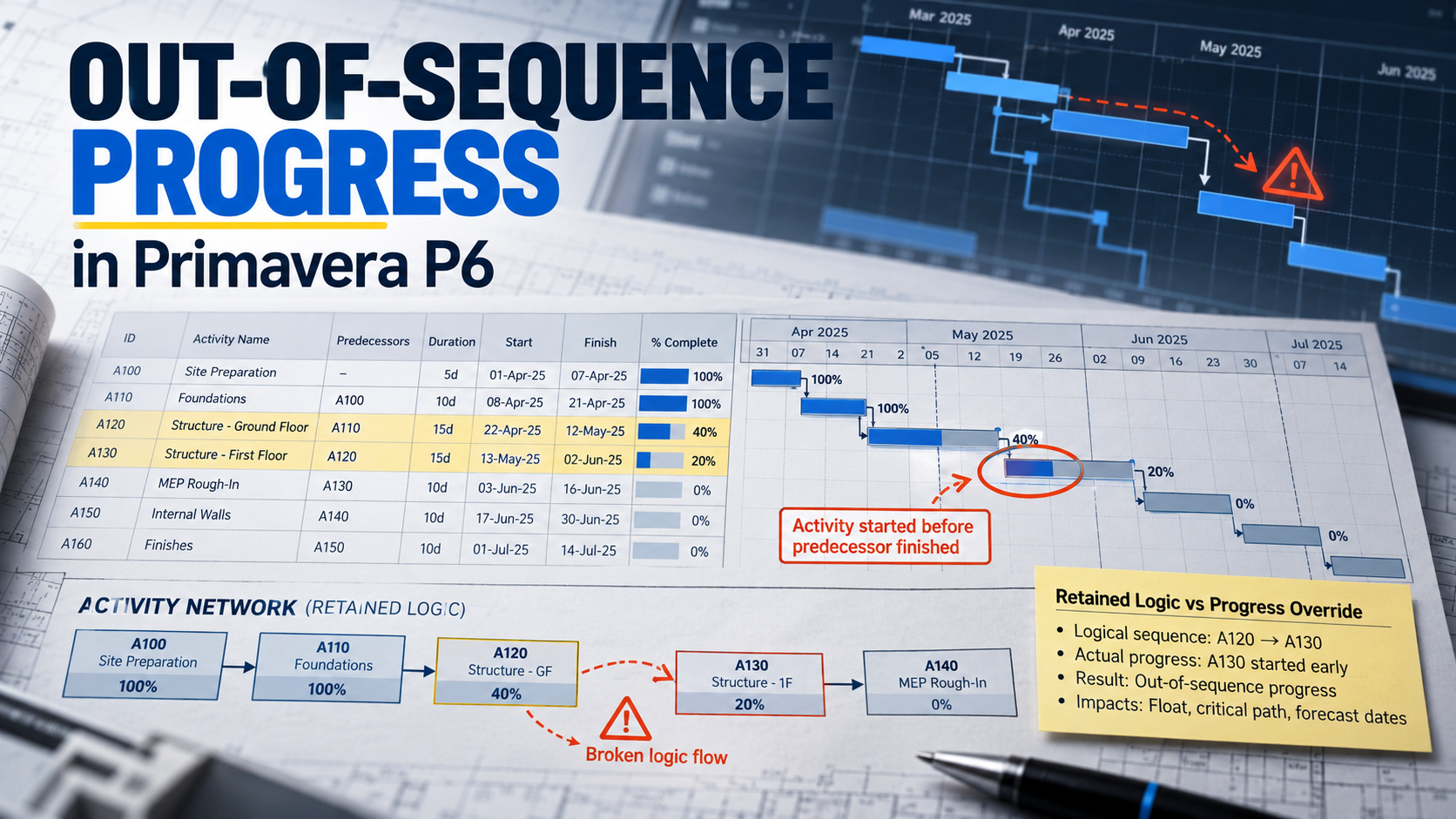
How to Fix Out-of-Sequence Activities in Primavera P6 Before They Distort Your Critical Path
Repair out-of-sequence progress with a five-step workflow, a DN600 pipeline example, scheduling-option comparisons and a monthly evidence checklist.
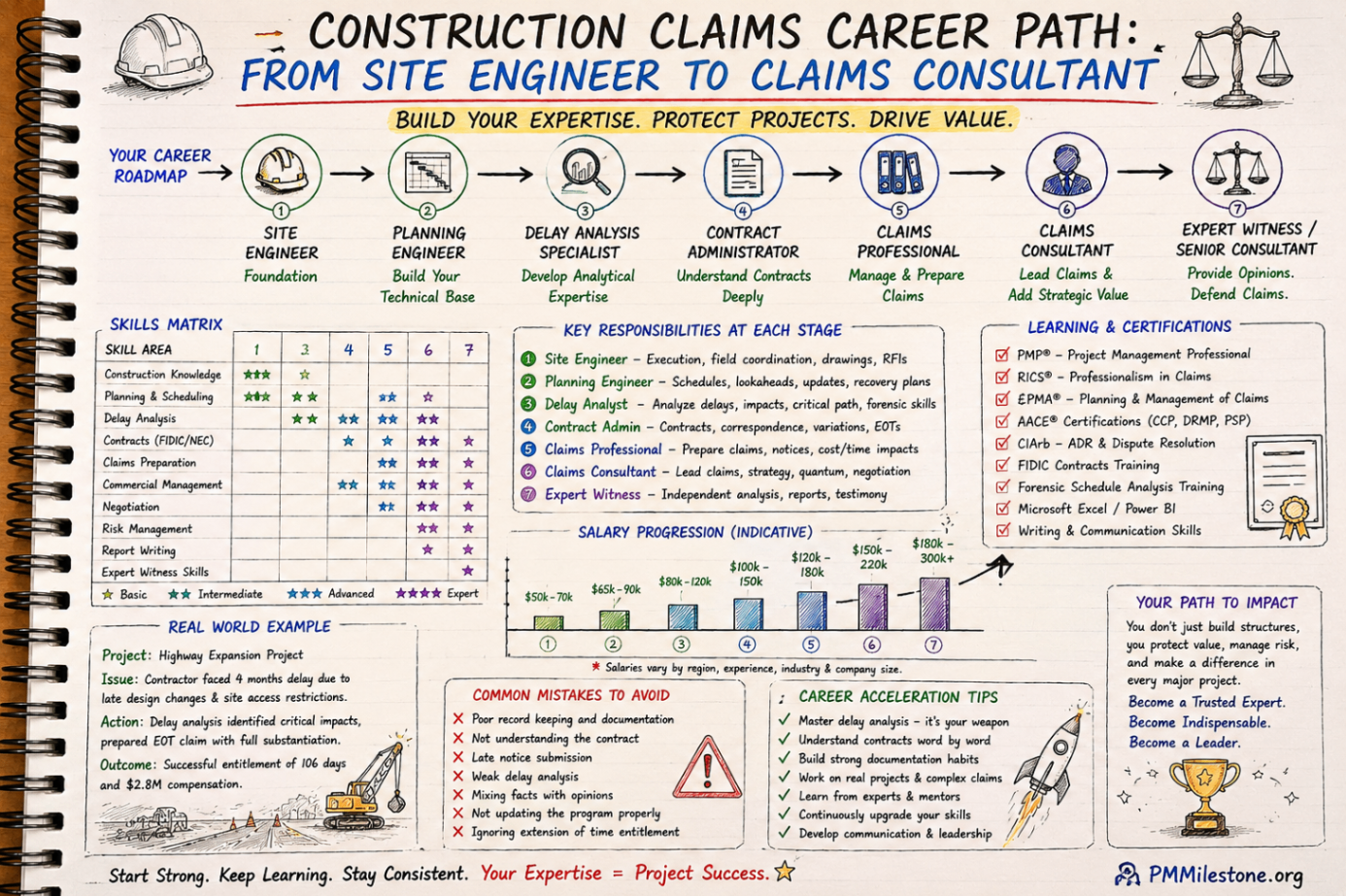
Construction Claims Career Path
A practical roadmap for engineers moving from site delivery into planning, delay analysis, claims, commercial controls and senior claims consulting.
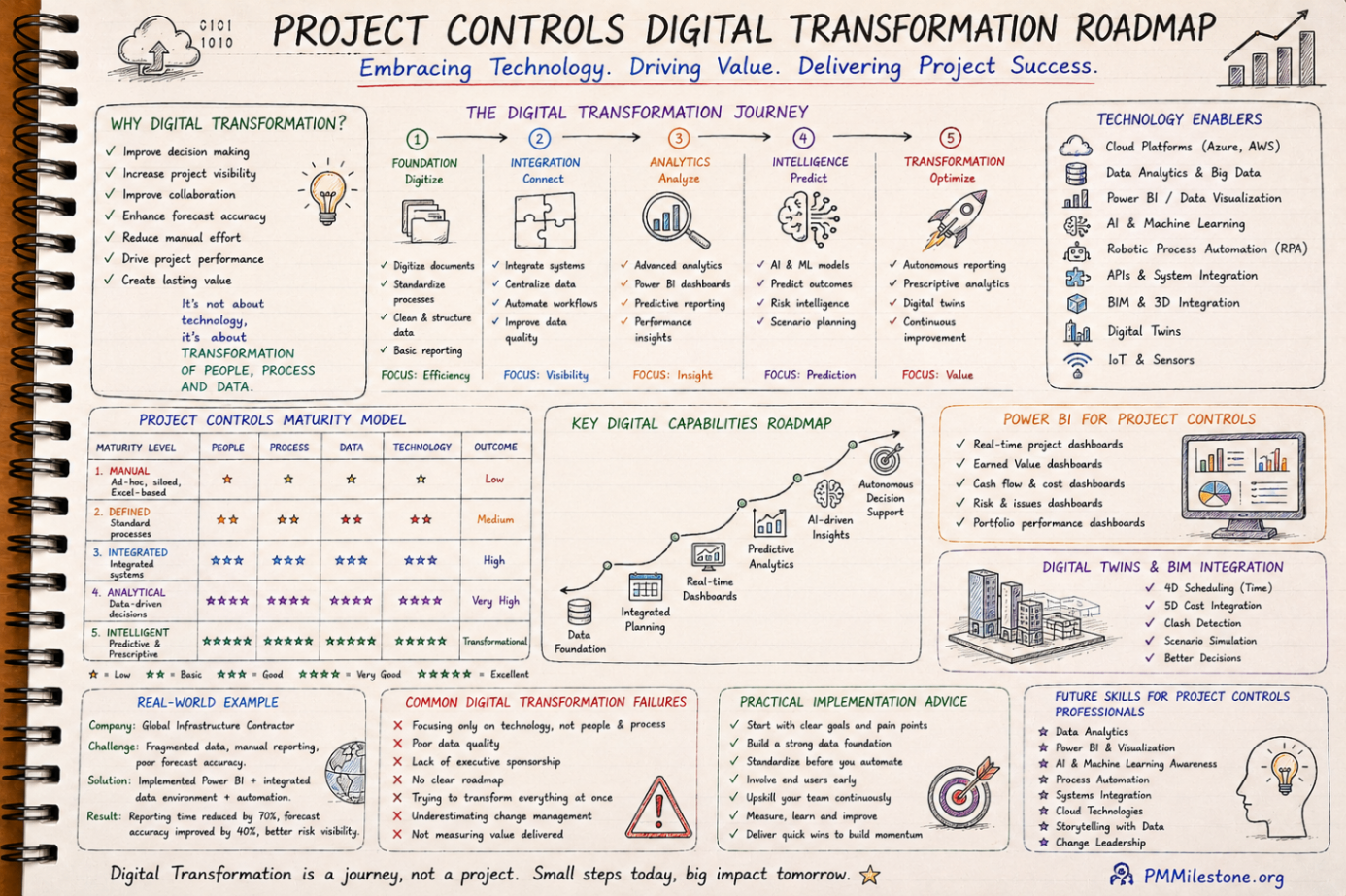
Project Controls Digital Transformation Roadmap
A future-focused guide to modern project controls through data integration, reporting automation, Power BI, AI, BIM and digital PMO capability building.